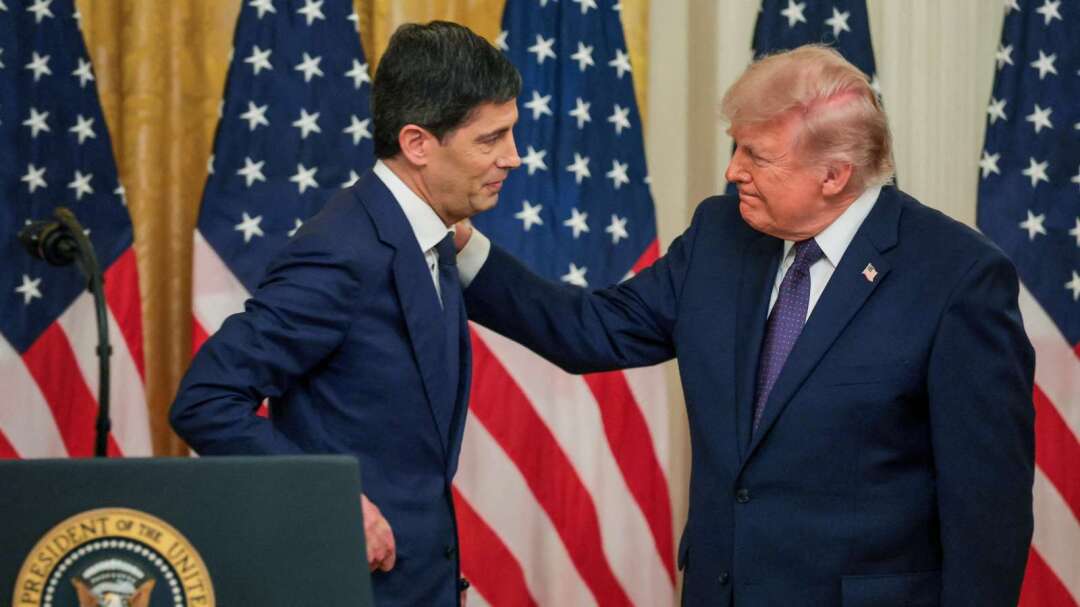
Bloomberg reported on Thursday (June 6) citing sources familiar with the matter that U.S. President Trump has had several unscheduled phone conversations with Kevin Warsh since he was confirmed as Chair of the Federal Reserve (Fed) in May—an indication of Trump’s latest attempt to exert greater influence over the central bank.
One insider said Trump asked Warsh about his economic forecasts and views during these calls but did not request specific policy actions. Another source described the communication between the two as irregular and infrequent, and it remains unclear whether they have directly discussed monetary policy. The existence of these calls was first disclosed by The Wall Street Journal.
White House spokesperson Kush Desai stated that Trump has repeatedly emphasized giving Warsh the necessary space to restore confidence in the Fed’s decision-making ability. While the president has the right to express opinions on the central bank, he has also consistently reaffirmed Warsh’s and the Fed’s independence. The Fed declined to comment.
Although past U.S. presidents have occasionally spoken or met with Fed chairs, such interactions are relatively rare. Trump has long demanded aggressive rate cuts from the Fed, and his level of intervention is seen as the most forceful White House pressure on the central bank in decades. However, Trump’s tone toward the Fed has softened since Warsh took office.
Last month, Warsh testified before Congress that Trump had not attempted to interfere with the central bank but avoided directly answering whether he had spoken with Trump since taking office. Warsh said he would not disclose private conversations with the president but pledged to maintain independence, adding that receiving calls from the president or the Senate Banking Committee chair does not make him uncomfortable.
In contrast, former Fed Chair Powell issued a public statement after meeting Trump in May 2025, emphasizing that they did not discuss monetary policy outlooks. Warsh, meanwhile, continues the long-standing practice of regularly meeting with Treasury Secretary Besent, maintaining high-level coordination between the Fed and Treasury Department.
Trump previously criticized Powell for cutting rates “too slowly” and even launched investigations into Fed headquarters renovation projects under Powell’s leadership. He also attempted to remove Fed Governor Lisa Cook—a move that failed—and reportedly considered similar action against Governor Michael Barr.
Yet Trump’s public treatment of Warsh differs markedly. At Warsh’s swearing-in, Trump said he wanted the Fed Chair to be “fully independent,” urging him to ignore political pressures and act solely based on his own judgment. When Warsh decided to hold interest rates steady after taking office, Trump refrained from blaming him directly, instead attributing the outcome to the Fed Board, which he criticized as “highly politicized.”
Nonetheless, Trump’s continued pressure on the central bank blurs the line between the executive branch and monetary authority, potentially undermining market confidence in the Fed’s independence. The Fed must currently navigate energy price volatility caused by the U.S.-Iran war, Trump’s shifting tariff policies, persistent inflation, and massive U.S. budget deficits.
According to The Wall Street Journal (WSJ), Trump has asked Warsh about the economic impact of the U.S.-Iran war and the rise of AI. Warsh typically presents a relatively positive economic outlook to Trump, though it remains unknown whether they have discussed interest rate policy directly.
FACT BOX
- Source: PR Times
- Category: News
- Organizations: Federal Reserve (Fed) / The White House / The Wall Street Journal