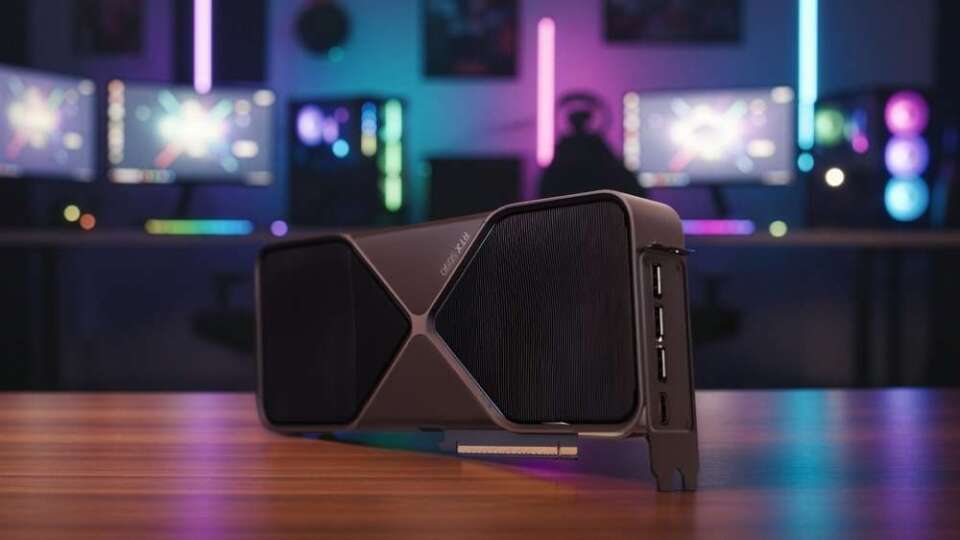
The first week of August brought a rare wave of price hikes to the graphics card market. Starting in late July, consumer GPU prices in China began rising rapidly, with popular models nearly changing prices daily. Some high-end models surged by thousands of RMB within days—reviving memories of the 2020–2021 mining boom, though this surge stems from entirely different causes.
According to a report by Shanghai Securities News from Shenzhen's Huaqiangbei market, the price increases have been astonishing. The RTX 5060 rose from its original 2,300–2,500 RMB (all figures in Chinese yuan unless otherwise noted) to 2,700–3,100 RMB, increasing by up to 800 RMB in just four days—an over 30% rise. The RTX 5080 jumped from over 9,000 RMB in early July to surpassing 11,000 RMB, a cumulative increase of about 1,700 RMB.
The RTX 5070 Ti saw its wholesale price rise from approximately 8,200 RMB on July 31 to 8,400 RMB the next day—an overnight increase of 200 RMB. The RTX 5090 was even more extreme, surging 4,000 RMB in just one week.
Distribution data shows that the RTX 5070 Ti now sells for as high as 10,700 RMB on some e-commerce platforms, compared to around 7,200 RMB in November 2025—nearly a 50% increase in less than a year. Some e-commerce platforms have temporarily delisted several graphics card models, not due to complete stockouts, but because upstream suppliers refuse to ship at previous prices.
Channels Lock Inventory as Two Giants Hike Prices
The direct cause of this surge is rising GPU supply-side costs. NVIDIA (NVDA-US) has issued a new round of price hike notices to downstream AIC (Add-in-Card) manufacturers for GPU kits, with increases of about 20% to 30%, covering both the latest GDDR7 memory and previous-generation GDDR6.
Reports indicate Samsung (KR005930) also raised memory prices by about 20% this quarter, prompting NVIDIA to follow suit. The memory chips used in graphics cards are essentially the same as those in standard memory products.
This marks NVIDIA’s third price increase since 2026. In January, NVIDIA raised prices by 10% to 15%; in May, it adjusted prices for high-end products, though the market impact was relatively limited.
This late-July price hike is the broadest yet, affecting everything from mid-range to flagship products. High-end cards like the RTX 5090 and RTX 5080 saw the most dramatic increases, but even mainstream models like the RTX 5060 were not spared.
AMD (AMD-US) has also followed suit. According to channel sources, AMD has notified partners that GPU + memory kit prices will rise by at least 10% starting in August. AMD had originally planned a July price hike but delayed it over concerns about market share loss. Now, following NVIDIA’s move, it has aligned its pricing.
For board manufacturers, a GPU kit price hike directly translates to higher total card costs. NVIDIA supplies AICs not with standalone GPU chips, but with complete kits including both GPU and memory—this being the most critical cost component of a graphics card. With GPU supply dominated by NVIDIA and AMD, and memory controlled by giants like Samsung and SK Hynix, board makers have almost no pricing power.
After the price hike notices were issued, channel players began holding back inventory. Multiple vendors in Huaqiangbei revealed that some AIC manufacturers have fully sealed their warehouses, halting large-scale shipments.
Stocks aren’t entirely gone, but upstream suppliers refuse to ship at old prices, turning existing inventory into scarce resources and driving prices higher.
AI Absorbs Production Capacity, Consumer Memory Takes a Backseat
The deeper cause of the graphics card price surge is inseparable from the rapid expansion of the AI industry. Rising video memory prices follow the same logic as DRAM and SSD price hikes—AI demand is absorbing massive storage production capacity.
Memory giants like Samsung and SK Hynix are now prioritizing wafer production for HBM (High Bandwidth Memory) used in AI accelerators. Since HBM offers far higher profit margins than consumer-grade GDDR memory, memory makers naturally favor the high-margin AI market amid strong AI compute demand.
A TrendForce report notes that among DRAM sub-markets, HBM has the highest profitability, followed by DDR5, with consumer GDDR ranking last. As a result, consumer-grade video memory supply is naturally squeezed, pushing prices upward.
Supply tightness is evident in memory chip pricing. Market data shows that a 2GB GDDR7 memory chip now sells for about $20, while a 3GB chip costs $60–70. Despite only a 50% capacity increase, the price is several times higher. With memory costs soaring, graphics card prices have little room to fall.
DIY Costs Rise Across the Board, AI Deployment Barriers Rise
Graphics cards were among the last PC hardware components to be affected by this price surge. Prior to this, memory, SSDs, and CPUs had already undergone price hikes. A Shanghai Securities News survey shows that the price of a similarly configured PC has increased by about 2,000 RMB since October last year.
Now that graphics card prices have surged, the cost-performance ratio of the DIY PC market has clearly declined. With CPU, memory, SSD, and GPU prices all rising—and GPUs being a major component of total system cost—consumers can now afford significantly lower hardware configurations for the same budget. The RTX 5060 has surpassed 3,000 RMB, and the RTX 5080 has broken the 10,000 RMB mark, with mid-range products now approaching the price levels of previous high-end cards.
On the other hand, local AI computing demand is also affected. High-capacity memory graphics cards are the main targets of price hikes because they can support larger AI models.
To run mainstream open-source models at a 7-billion-parameter quantized version, at least 6–8GB of VRAM is required. For fine-tuning or running larger models, 24GB of VRAM is becoming a baseline requirement.
In the RTX 50 series, 16GB VRAM is concentrated in models like the RTX 5070 Ti and above, while only the RTX 5090 offers 32GB capacity—precisely the models with the largest price increases.
NVIDIA’s CUDA ecosystem still holds a clear advantage in local AI development, while AMD’s ROCm and Intel’s OneAPI lag in compatibility and performance, making it difficult for many AI developers to avoid NVIDIA GPUs. However, with RTX 5090 prices continuing to rise, for individual users, using cloud AI services may become more cost-effective than investing in expensive hardware.
This round of GPU price hikes appears on the surface to be the result of cost increases by NVIDIA and AMD, but the deeper reason is that the entire consumer electronics industry is having its resources reallocated by AI demand. As long as AI compute demand continues to heat up, the compression of consumer-grade memory supply is unlikely to improve in the short term.
FACT BOX
- Source: PR Times
- Category: News
- Organizations: NVIDIA / AMD / TrendForce
- Products / services: RTX 5060 / RTX 5070 Ti