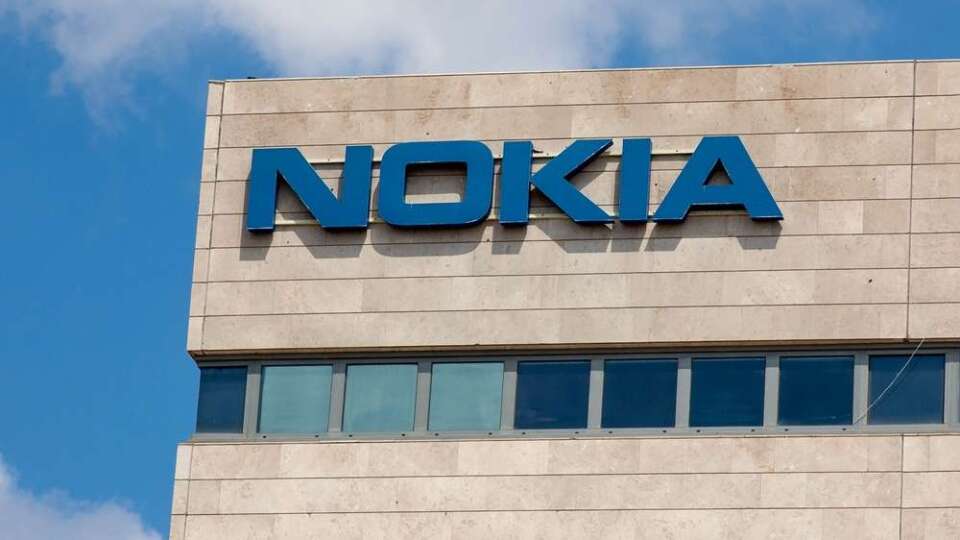
Nokia is accelerating its positioning in AI data center infrastructure by announcing the acquisition of NXP’s semiconductor manufacturing facility in Chandler, Arizona, USA. The company plans to transform the site into a production line for indium phosphide (InP) semiconductors, boosting its in-house capabilities for optical communication components. This move signals Nokia’s strategic shift from a traditional telecom equipment provider to a key player capturing high-speed optical communication demands in the AI era.
As internal data center communication architectures rapidly transition from traditional copper (Cu) to fiber optics, InP semiconductors—capable of efficiently converting electrical and optical signals—have become critical core components in optical communication systems.
However, due to limited production capacity among only a few wafer fabs such as U.S.-based Coherent and Lumentum, and the absence of a mature foundry ecosystem, the market has long faced severe supply shortages.
According to market research firm Futurum, current demand for optical transceivers already exceeds supply by more than two times due to insufficient InP capacity. Lumentum CEO Michael Hulston further warned that the shortage of InP semiconductors could eventually surpass even those of DRAM and NAND flash memory.
Facing supply chain bottlenecks and surging customer orders for optical equipment, Nokia has chosen to go beyond simple component procurement by directly acquiring and operating its own semiconductor fab.
Nokia CEO Justin Hotard stated the acquisition aims to secure additional production capacity to meet internal demand while preserving greater choice for customers amid tight market supply constraints.
Under the plan, Nokia will begin mass-producing InP chips by leasing part of the facility starting early next year, with the full acquisition expected to finalize in Q1 2029.
This is not Nokia’s first move to deepen its optical and AI infrastructure footprint via M&A. Last year, Nokia acquired optical equipment manufacturer Infinera, gaining access to an InP wafer fab in California and a backend packaging plant in Pennsylvania. It is now actively investing to expand the packaging plant’s capacity tenfold.
This series of vertical integration strategies has already shown strong results: Nokia reported net sales of €4.815 billion in Q2, up 9% year-on-year, with optical communications revenue rising 20%. Sales to AI and cloud customers surged an astonishing 105%, driving Nokia’s NYSE-listed stock price up 52.4% year-to-date.
The Wall Street Journal cited analysts noting that under Hotard—a former head of Intel’s Data Center and Artificial Intelligence division—Nokia’s market share in North American optical networking is projected to leap from 6.3% in 2024 to 27.3% in 2025.
While some market observers, such as Amanda Lyons, Head of Capital Research, argue that Nokia’s current valuation is approaching that of pure-play AI firms and must continue proving profitability aligned with AI industry standards, the addition of the Chandler facility and expanded InP capacity has firmly positioned Nokia at the core of AI data center infrastructure.
FACT BOX
- Source: PR Times
- Category: Partnership
- Organizations: NXP / Coherent / Lumentum