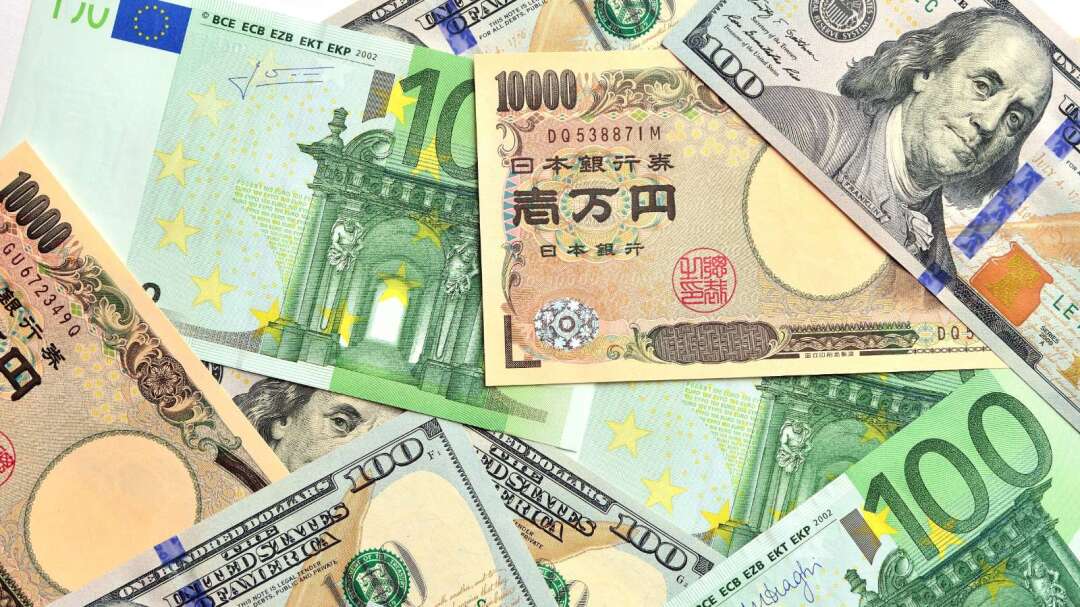
According to recent foreign media reports, the United States' decision last Friday (July 31) to sell euros in an effort to strengthen the yen caught the European Central Bank (ECB) off guard, as Washington notified Frankfurt only after the historic foreign exchange intervention had already been carried out.
The Financial Times (FT), reporting today (August 7) based on multiple sources, stated that the ECB learned of the U.S. sale of euros and purchase of yen only after trading concluded on Friday. ECB President Christine Lagarde and U.S. Treasury Secretary Scott Bessent held a phone call the following day to discuss the intervention.
This 'strike first, report later' approach highlights the unusual nature of the first joint U.S.-Japan currency intervention in nearly three decades. Post-World War II Western monetary authorities have traditionally used their own currency—dollars—for such interventions, not euros.
Some senior ECB officials view Washington's use of euros for the transaction as an 'unprecedented breach' of longstanding cooperation norms among Western central banks.
A source familiar with European decision-making circles described the New York Federal Reserve’s euro-selling operation, conducted on behalf of the U.S. Treasury, as 'highly conspicuous' and 'regrettable,' adding, 'this has never happened before.' The postwar tradition of market coordination among Western nations, built on mutual trust and prior consultation, may now be under threat.
A U.S. Treasury spokesperson said decisions regarding reserve asset allocations through the Exchange Stabilization Fund (ESF) are made unilaterally by Washington without coordination with foreign authorities. 'ESF asset allocations are determined by the Treasury based on market liquidity, valuations, and other assessments. The internal reallocation of reserve assets via ESF last week was within our authorized scope,' they stated.
A White House official further remarked, 'We respect the confidentiality of private discussions with international counterparts, unlike the ECB.'
Washington chose to sell euros instead of dollars primarily to avoid signaling a weak-dollar policy, which would contradict Treasury Secretary Bessent’s declared 'strong dollar' stance.
Analysts speculate that the U.S. supported Japan’s intervention to prevent Tokyo from selling U.S. Treasuries to obtain dollars amid rising yields nearing 19-year highs.
Japan spent an estimated ¥13.8 trillion ($87 billion) over the final two days of July, surpassing the previous record of ¥11.73 trillion set in April–May.
On Friday, the U.S. and Japan jointly pushed the dollar-yen rate back from near 164 (a low not seen since 1986) to 157, where it has since slightly weakened to around 158.
Markets remain concerned about the Bank of Japan’s (BOJ) slow pace of rate hikes. BOJ Governor Kazuo Ueda held rates steady at last month’s meeting but acknowledged that 'upside risks to inflation require greater attention.' Market expectations for a rate hike at the next meeting stand at approximately 44%.
While this unconventional U.S. move—using euros to rescue the yen—temporarily deterred speculative short positions, it has also exposed a crack in the foundational trust underlying Western monetary coordination.
FACT BOX
- Source: PR Times
- Category: News
- Organizations: European Central Bank / Bank of Japan / U.S. Treasury
- Dates in source: July 31 / August 7