According to CNBC, AMD (AMD-US) announced on Thursday (June 6) that it has reached an agreement to acquire Canadian AI chip startup Taalas. The company focuses on AI inference chips, and its accelerators are not designed for general-purpose use but are instead custom-built for individual AI models.
AMD is currently relying on its GPUs to drive growth in its data center business. As cloud service providers continue to purchase advanced AI chips, GPUs remain the primary growth engine. However, as the generative AI boom approaches its fourth year, the market is increasingly recognizing that GPUs are not suitable for all AI workloads.
While Taalas’s design sacrifices chip versatility, the company claims its technology enables lower-cost chips and can perform inference thousands of times faster than traditional GPUs on specific models.
AMD declined to disclose the financial terms of the deal. Since its founding in 2023, Taalas has raised a total of $219 million in venture capital funding.
This acquisition comes just over seven months after Nvidia (NVDA-US) spent $20 billion acquiring key assets from high-performance AI chip design company Groq, marking Nvidia’s largest acquisition to date.
Taalas’s currently available chips can run the smaller version of Meta’s (META-US) Llama 3.1, and the company is developing chips capable of supporting larger, more advanced models. The chips are manufactured using TSMC’s (TSM-US) older process nodes and feature high-speed SRAM memory integrated directly on the chip.
Ljubisa Bajic, CEO of Taalas, stated on the company’s website: “We’ve built a platform that can convert any AI model into a dedicated silicon chip. Starting from receiving a completely new model we’ve never seen before, it takes only two months to implement it in hardware.”
Alternative AI chips like those from Taalas and Groq are particularly important for “low-latency” applications, where the speed of the AI model’s first response is critical.
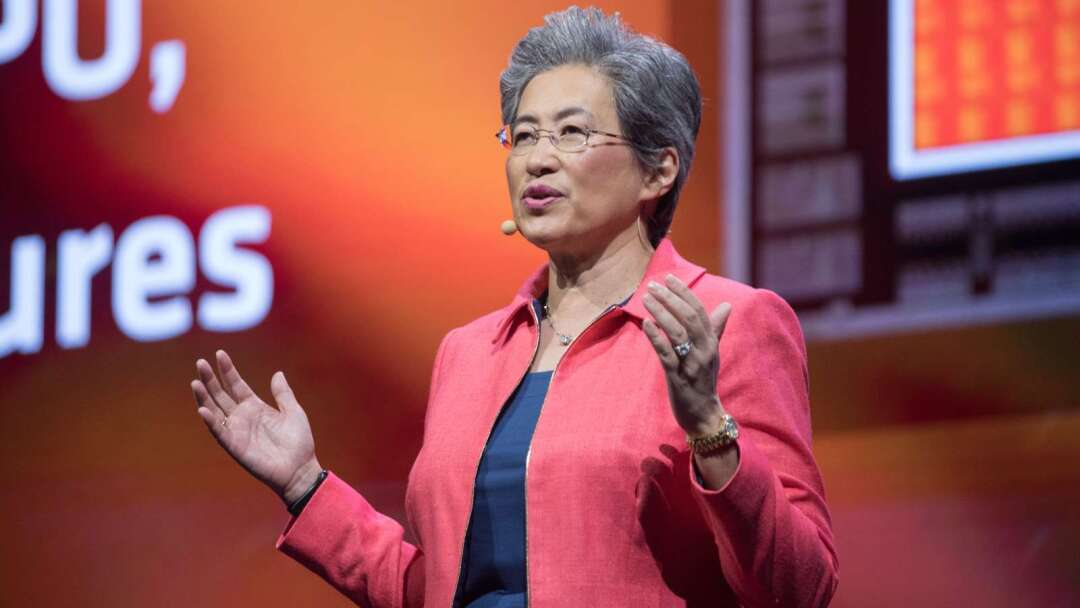
AMD CEO Lisa Su said at a July product launch event, “I’ve always believed there’s no one-size-fits-all solution in chips.” She also noted that AMD still expects GPUs to dominate the AI chip market due to their flexibility in supporting the continuous rollout of new AI models.
Demand for GPUs has propelled Nvidia to become the world’s most valuable company, with a market capitalization exceeding $5 trillion.
This acquisition reflects how leading GPU manufacturers are increasingly focused on delivering integrated AI systems rather than just selling individual processors. AMD has recently begun shipping Helios, its first rack-level product designed to compete with Nvidia’s integrated AI server racks, to customers including Meta and Microsoft (MSFT-US).
AMD stated it will incorporate Taalas’s chips and technology into its product roadmap, integrating them into systems that include CPUs and Instinct GPUs.
Additionally, AMD continues to invest in other AI accelerators. In July, the company announced a partnership with Cerebras, planning to integrate its AI chips into systems later this year.
In recent years, AMD has actively acquired companies to fill in the technologies and components needed to build its Helios rack. In 2024, AMD acquired AI model developer Silo AI for $665 million and ZT Systems for $4.9 billion, the latter providing the technical foundation for rack-level products. Last year, AMD also acquired several small AI companies, including MK1, which specializes in inference software.
FACT BOX
- Source: PR Times
- Category: News
- Organizations: AMD / Taalas / Nvidia
- Products / services: AMD Instinct GPU