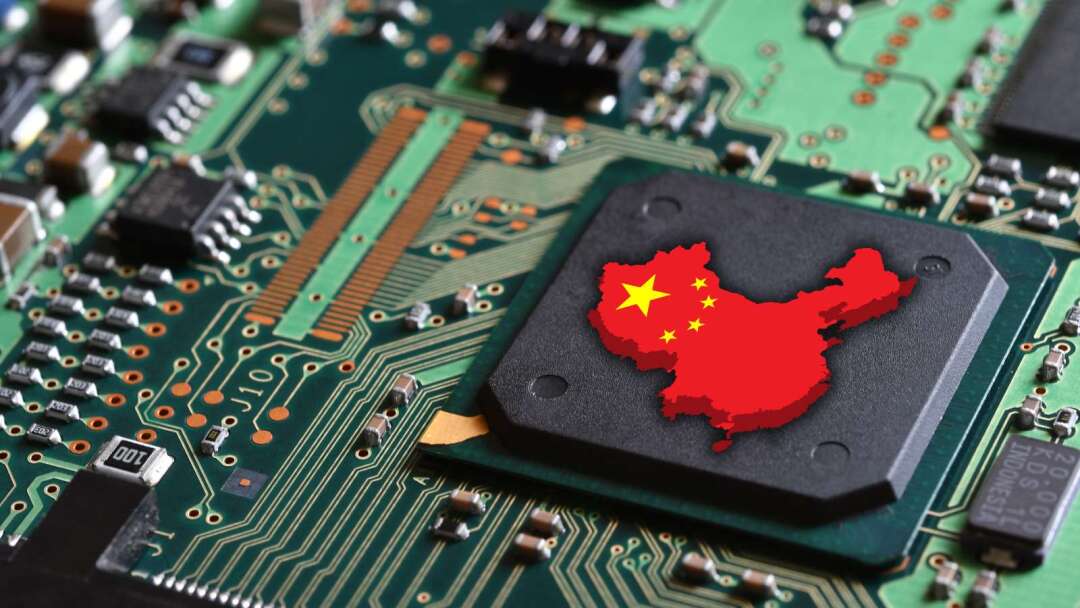
The artificial intelligence (AI) boom has driven TSMC (2330-TW) and Samsung Electronics (KR005930) to aggressively pursue advanced manufacturing processes, but this has opened up vast opportunities in the mature process market—opportunities that Chinese foundries have seized. Three Chinese firms—SMIC (00981-HK), HHGrace (01347-HK), and Nexchip (688249-CN)—have simultaneously entered the global top 10 in wafer foundry revenue.
As generative AI fuels explosive demand for high-end computing chips, the global foundry landscape is undergoing a clear split: leading manufacturers are dedicating all resources to advanced processes, while gradually releasing capacity in mature processes. This industrial gap has unexpectedly become a catalyst for rapid growth among Chinese foundries.
According to TrendForce’s latest ranking of global foundry revenue for Q1 2026, TSMC’s quarterly revenue surpassed $35.8 billion, capturing a market share of 72.3%—a 6.3 percentage point increase from the previous quarter. Its dominance in advanced processes is now nearly unchallenged.
However, Chinese firms are also making strong appearances in the top 10. SMIC ranks third globally, just behind Samsung, and is one of the few Chinese companies with both advanced and large-scale mature process capabilities.
HHGrace, leveraging years of accumulated expertise in mature processes, ranks sixth. Nexchip, founded just over a decade ago and focused exclusively on mature processes, has surged to eighth place.
Analysts note that the simultaneous entry of three Chinese firms into the top 10 symbolizes that China’s mature process foundry industry has achieved a certain scale and systemic maturity.
As major players exit the 8-inch arena, the gap is being filled entirely by Chinese firms
The root of this industry reshuffle lies in TSMC and Samsung’s assessment that the return on investment for 8-inch mature process wafers is far lower than that of 12-inch advanced process products.
A 12-inch wafer offers 2.25 times the effective area of an 8-inch wafer, with higher automation and production efficiency, resulting in significantly lower unit costs. Consequently, both industry leaders have announced plans to reduce or even shut down 8-inch production lines, redirecting all resources toward high-value advanced processes.
However, a wide range of applications—including power management chips, display driver ICs, sensors, and power components—still rely on mature process manufacturing. As international giants retreat, nearly all the resulting order gaps are being redirected to Chinese foundries, opening up rare growth opportunities for Chinese firms.
According to SEMI (Semiconductor Equipment and Materials International), global monthly 8-inch wafer capacity is expected to reach 7.7 million wafers by 2026, with Chinese firms accounting for over 1.7 million—around 22% of the global market. China has become the world’s primary supply base for mature process semiconductors.
Notably, China’s semiconductor industry has faced development constraints in advanced processes such as 7nm and 5nm due to U.S. export controls in recent years.
Industry insiders suggest that these technological barriers have paradoxically driven Chinese firms to focus more deeply on mature processes, concentrating resources on expanding capacity and optimizing processes in the 90nm to 55nm range. They have solidified their positions in applications such as power management, display drivers, automotive electronics, and industrial sensing, gradually filling global supply gaps.
For example, Nexchip’s main products target 90nm, 110nm, and 150nm processes, with 90nm contributing over 40% of revenue. The share of refined processes below 55nm is also gradually rising to around 10%, and its shipment volume has already placed it among the leading mature process foundries globally.
Cost advantage is key: equipment already fully depreciated
Beyond production scale, cost control is another major strength of China’s mature process industry.
Compared to overseas players who have recently entered the mature process market, most leading Chinese foundries have already completed equipment depreciation, freeing them from heavy amortization costs.
Coupled with a complete local supply chain, abundant engineering talent, and high levels of production scaling, their overall production costs are significantly lower than overseas competitors, making their price competitiveness difficult to replicate.
The industry also points out that foundry construction has extremely high barriers: core capital expenditures for equipment such as photolithography, etching, and thin-film deposition are massive, and million-level cleanrooms and specialized process teams are indispensable.
A Japanese media outlet, citing data from the U.S. Semiconductor Industry Association, noted that from 2015 to 2023, Chinese semiconductor foundry firms’ equipment investment as a percentage of revenue far exceeded that of overseas peers. Domestic firms invested 12% more in equipment than their revenue, while overseas firms invested only 33% of revenue.
China’s semiconductor industry has now established a dual-track model of “8-inch fully loaded, 12-inch capacity expansion.” SMIC and HHGrace maintain high utilization rates on their long-established 8-inch lines, while emerging players like Nexchip are actively building 12-inch mature process lines, advancing toward high-end mature chip mass production.
Looking at the global foundry market, advanced processes are dominated by TSMC and Samsung in an oligopoly, with little change expected in the short term. However, competition in mature processes has only just begun.
As Chinese firms continue to expand capacity and reduce costs, the dominance of the global mature process semiconductor supply chain is quietly shifting toward China, further compressing the market space for international peers.
FACT BOX
- Source: PR Times
- Category: News
- Organizations: TrendForce / SEMI