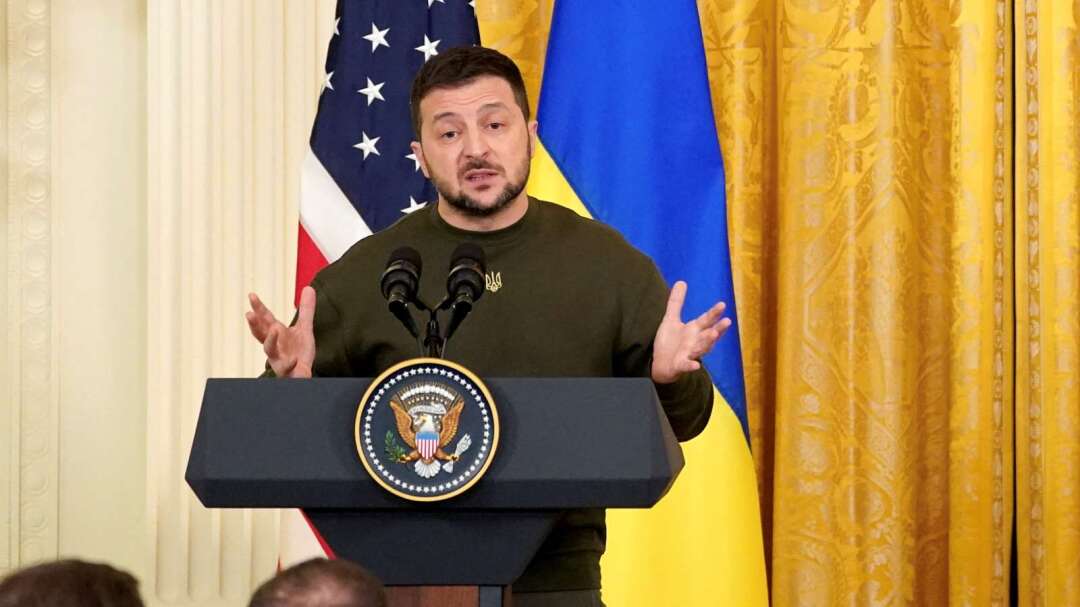
Ukrainian President Volodymyr Zelenskyy said on Monday (April 10) that he discussed deepening defense cooperation, drone agreements, and food security with Saudi Crown Prince Mohammed bin Salman during a phone call. As security tensions rise across the Middle East, Ukraine is seeking to transform its years of experience in countering Russian drone attacks into opportunities for deeper security and technological collaboration with Gulf nations.
Following the call, Zelenskyy stated on social media that Ukraine and Saudi Arabia can strengthen their ability to protect people and lives in certain areas, and that they discussed upcoming measures under a 'drone agreement.' Speaking later that evening, he added that a team of Ukrainian officials is currently active in the Middle East, progress has been made in multiple areas, and he looks forward to mutual support.
The call continues a defense cooperation framework established between the two countries in March. During his visit to Jeddah, Saudi Arabia, on March 27, Zelenskyy met with Crown Prince Mohammed, and the two nations' defense ministries previously signed a defense cooperation arrangement, laying the groundwork for future military contracts, technological collaboration, and investment. At the time, Ukraine expressed its willingness to share its air defense and anti-drone expertise to help Saudi Arabia enhance its ability to counter aerial threats.
This cooperation comes against the backdrop of Saudi Arabia and other Gulf states facing increasing drone and missile threats from Iran, while Ukraine has accumulated extensive real-world combat experience in countering large-scale drone attacks during its more than four-and-a-half-year war with Russia. Zelenskyy has previously stated that Ukraine's prolonged exposure to Russian drone attacks has given it unmatched practical experience, which it is willing to use to help Middle Eastern countries build more effective defense systems.
In March, Ukraine already dispatched expert teams to the Middle East, visiting Saudi Arabia, Qatar, and the United Arab Emirates to conduct assessments, offer recommendations, and demonstrate drone defense capabilities. Zelenskyy emphasized at the time that these teams were not involved in local military operations but were providing technical and professional support. Kyiv also hopes to secure funding and technology through such cooperation and sign additional drone-related agreements with Gulf nations.
For Saudi Arabia, the defense cooperation agreement signed in March is seen as a crucial step toward Ukraine establishing a broader security cooperation network in the Gulf region. The Ukrainian presidential office stated at the time that the agreement not only covers defense but also creates conditions for future contracts, technological collaboration, and investment, enhancing Ukraine's international role as a provider of security technology.
This cooperation also holds strategic significance for Saudi Arabia. With Gulf nations increasingly concerned about intercepting low-cost drones, cruise missiles, and ballistic missiles, Ukraine's experience is highly attractive. Having faced massive Russian air raids for years, Ukraine has developed a multi-layered defense system combining inexpensive intercept drones, electronic jamming, and traditional air defense systems—experience that appeals to Gulf states seeking to strengthen their air defenses.
The announcement of defense cooperation in March came amid a rapidly deteriorating security environment in the Middle East. Saudi Arabia was facing drone and missile attacks from Iran and has been continuously enhancing its air and missile defense capabilities. Ukraine, meanwhile, hopes to leverage its battlefield experience from the Russia-Ukraine war to build mutually beneficial cooperation with Gulf nations.
Another key topic in the latest call was food security. As a major global agricultural exporter, Ukraine's Black Sea shipping routes and port security have repeatedly been disrupted during the war, making agricultural exports a critical issue for global food security. Recent Russian attacks on Ukrainian ports and energy infrastructure have reignited concerns.
The day before the call, Russia and Ukraine accused each other of launching attacks. The Ukrainian presidential office reported that Russian drones and missiles struck the port of Odesa, damaging port facilities. Odesa is a key hub for Ukraine's agricultural exports, and Kyiv warned that attacks on ports are not only a national security issue but could also impact global food supplies.
Against this backdrop, Zelenskyy's inclusion of food security in discussions with Saudi Arabia signals an expansion of bilateral cooperation beyond defense. Saudi Arabia heavily relies on food imports, meaning global agricultural supply chains, Black Sea export security, and shipping stability are directly tied to Riyadh's food security.
For Ukraine, deepening ties with Saudi Arabia carries broader diplomatic significance. Kyiv has actively sought closer cooperation with Middle Eastern and Gulf nations in recent years, aiming to expand its partnership network in military, energy, agriculture, investment, and diplomacy.
In March, Zelenskyy visited not only Saudi Arabia but also the United Arab Emirates, Qatar, and Jordan, discussing security and bilateral cooperation with regional leaders. The Ukrainian presidential office said that security and mutual support were central themes of this diplomatic outreach, with the goal of building long-term, mutually beneficial relationships through technological and defense cooperation.
The drone cooperation between Ukraine and Saudi Arabia could also serve as a starting point for broader defense industrial collaboration. Ukraine aims not only to export battlefield experience but also to advance cooperation in drone technology, anti-drone systems, and other air defense capabilities. For Saudi Arabia, this offers a way to accelerate the development of defenses against low-cost, large-scale drone attacks.
On Monday, Zelenskyy did not disclose specific figures on the new 'drone agreement,' such as financial amounts, procurement quantities, or delivery timelines, so it remains unclear whether the two sides have entered formal arms sales contracts. However, he stated that they discussed concrete steps to be taken in the near future, indicating that the March defense cooperation framework is gradually being translated into actual projects.
With the Russia-Ukraine war ongoing, Middle East conflicts intensifying, and global energy and food supply risks rising, Ukraine-Saudi cooperation extends beyond traditional diplomacy. For Kyiv, drone and air defense technologies could become key tools for expanding influence in the Middle East, securing investment, and building diplomatic support. For Riyadh, Ukraine's real-world combat experience offers a valuable opportunity to strengthen its own air defense systems.
Therefore, this latest call between Zelenskyy and Crown Prince Mohammed not only advances existing defense cooperation but also reflects Ukraine's broader strategy of converting battlefield-acquired military technological advantages into international security and economic cooperation assets. As aerial threats in the Middle East and global food supply risks continue to rise, drone defense, agricultural supply, and security cooperation may become the three main pillars for deepening bilateral relations in the future.
FACT BOX
- Source: PR Times
- Category: Partnership