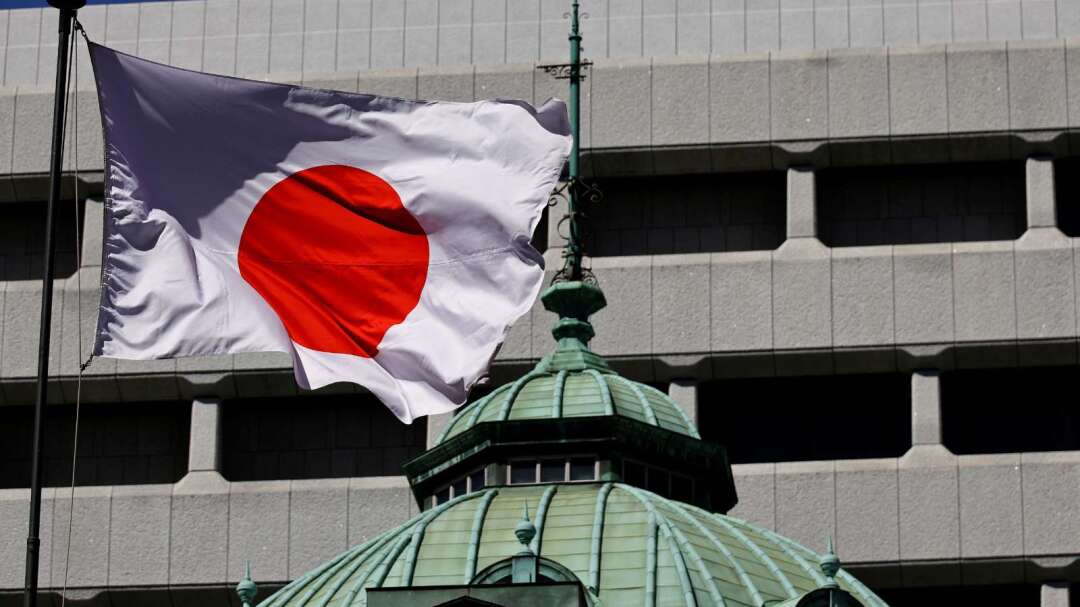
The Bank of Japan (BOJ) appears to be gradually moving toward an earlier interest rate hike, but Prime Minister Takayasu Sanae's expansionary fiscal policy is pushing up Japanese government bond yields, placing the central bank under growing political pressure. Markets fear that even if the BOJ raises its policy rate, the effect of monetary tightening could be offset if the government demands expanded bond purchases to suppress long-term interest rates.
As government spending plans push yields higher, the BOJ finds itself in a tricky balancing act: on one hand, it wants to advance monetary policy normalization; on the other, it must resist calls to resume large-scale bond purchases—a policy it has been trying to phase out for years.
Market skepticism toward Prime Minister Takayasu's expansionary fiscal agenda has driven up Japanese government bond yields, increasing financing costs for Japan—the most heavily indebted advanced economy. The spillover effect of rising Japanese yields on the U.S. Treasury market has also drawn criticism from Washington.
The Takayasu administration is closely monitoring yield movements and pressuring the BOJ to stabilize the bond market.
Prime Minister Takayasu pledged last month to enhance communication with markets to maintain investor confidence in Japan's fiscal health. Japanese media reported that during a May meeting with BOJ Governor Kazuo Ueda, she requested that the central bank increase bond purchases if necessary to curb rising long-term interest rates.
Subsequently, Takayasu's allies have repeatedly expressed concern over rising yields and the BOJ's balance sheet reduction. Yoshihara Toshihiro, an economist handpicked by Takayasu to join a government advisory panel, stated that her administration places greater emphasis on the 'quantitative aspect' of monetary policy compared to traditional tools like rate hikes.
Noriaki Kiuchi, Minister of Economy, Trade and Industry and a fellow pro-reflation advocate, warned that the BOJ's balance sheet reduction could harm the economy and urged policymakers to prioritize market stability. Some analysts believe political pressure may already be influencing policy, as the BOJ raised rates in June while simultaneously deciding to pause its bond purchase reduction plan starting next fiscal year.
Former BOJ official Atoh Nobuyasu warned that demanding the central bank buy government bonds when long-term yields rise could trigger concerns of 'fiscal dominance,' making markets question whether the BOJ still has the ability to fight inflation. Takayasu has long supported the late former Prime Minister Shinzo Abe's 'Abenomics,' one of whose core pillars was stimulating prices and economic growth through massive asset purchases.
Yields Nearing 3%: Will the BOJ Be Forced to Intervene Again?
For the BOJ, resuming large-scale bond purchases would contradict years of efforts to exit ultra-loose policy. The central bank ended its Yield Curve Control (YCC) in 2024 and launched a balance sheet reduction program, aiming to revive the bond market, which had lost vitality due to prolonged large-scale interventions.
The BOJ emphasizes it will only increase bond purchases through emergency operations if yields rise in a disorderly manner disconnected from economic fundamentals, threatening financial stability. U.S. Treasury Secretary Bessent's concerns about Japanese policy may make the Takayasu administration hesitant to openly oppose an early rate hike, but the BOJ is reinforcing its narrative of resisting political pressure.
Last week, the BOJ released a research report stating that rising inflation, not reduced bond purchases, is the primary driver of higher government bond yields. June meeting minutes also show that policymakers have begun discussing the ultimate size of the BOJ's balance sheet, signaling its desire to continue normalization despite mounting pressure.
However, markets may ultimately force the BOJ's hand. Japan's 10-year government bond yield rose to 2.805% on Monday, gradually approaching 3%—a level some analysts view as a trigger for a new wave of selling pressure.
Nomura Securities interest rate strategist Iwakami Mari said that if yields spike due to insufficient domestic investor demand, the BOJ may have no choice but to intervene. This is precisely the price the central bank must now pay for having dominated the bond market for years through loose monetary policy.
FACT BOX
- Source: PR Times
- Category: News