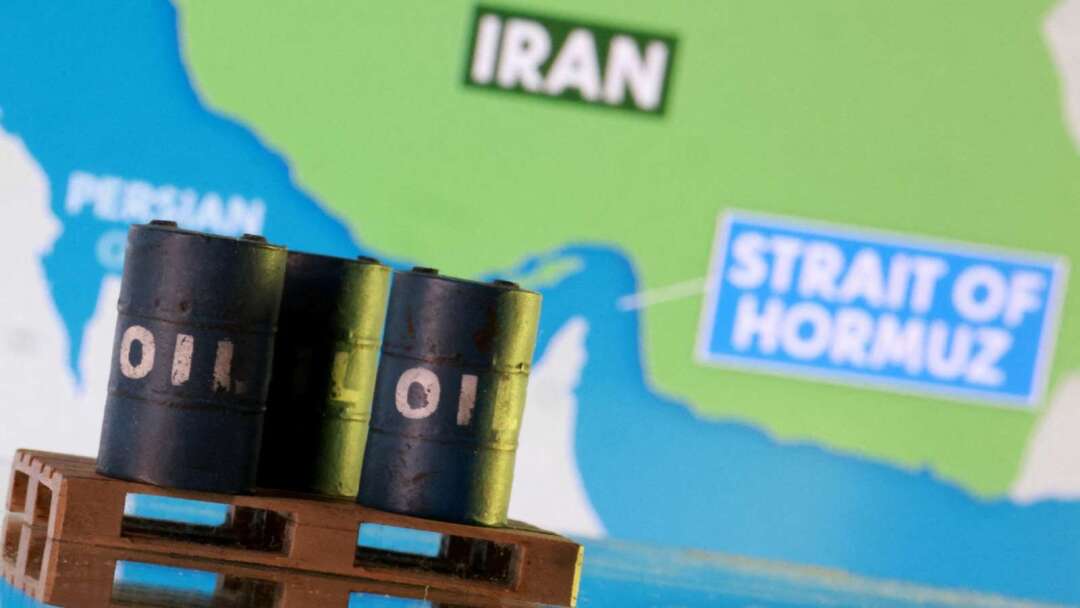
International oil prices rose sharply on Monday (10th), as market skepticism mounted over whether the United States and Iran could reach an agreement to increase vessel passage through the Strait of Hormuz. At 10:25 a.m. Eastern Time, U.S. West Texas Intermediate (WTI) crude futures gained 2.9%, trading at $80.42 per barrel; benchmark Brent crude futures rose 2.8% to $85.87 per barrel.
At press time, October-delivery Brent crude futures were up 3.76% at $86.67 per barrel; September-delivery WTI crude futures rose 3.79% to $81.14 per barrel.
President Trump said in a Sunday interview with Axios that the U.S. and Iran are currently "only having partial talks." While he had previously insisted that Washington and Tehran were indeed negotiating, his latest remarks suggest limited progress. Trump also indicated that the U.S. would continue pressuring Iran through naval blockades rather than launching new airstrikes immediately.
Trump stated that the U.S. is monitoring Iran's high inflation and financial shortages. He had previously canceled a planned attack on Iran set for August 1, leaving room for diplomatic negotiations.
Oil prices had dropped over 7% last week. At that time, U.S. Treasury Secretary Mnuchin suggested that an agreement allowing free vessel passage through the Strait of Hormuz could be announced soon, raising market hopes for a return to normal energy transportation. However, with both Washington and Tehran adopting firmer stances, no agreement has yet been announced.
Iranian Foreign Ministry spokesperson Esmaeil Baqaei said on Monday that the U.S. must first lift its maritime blockade before Iran would agree to fully reopen the Strait of Hormuz. Speaking through Iran's state-run Tasnim News Agency, he emphasized that the necessary conditions for reopening the strait would not be met as long as the U.S. naval blockade persists. Iran and Oman are currently holding bilateral talks on shipping routes within the strait.
The U.S. and Iran signed a memorandum of understanding on June 17, agreeing to open the Strait of Hormuz to commercial vessels. However, the agreement quickly collapsed due to disputes over which routes ships could use.
Iran has since launched multiple attacks on oil tankers traveling along the Omani coast under U.S. military protection, demanding that vessels reroute through Iranian territorial waters. In response to these tanker attacks, the U.S. conducted multiple airstrikes and reinstated its naval blockade, leaving this critical global energy transit route shrouded in uncertainty.
FACT BOX
- Source: PR Times
- Category: News