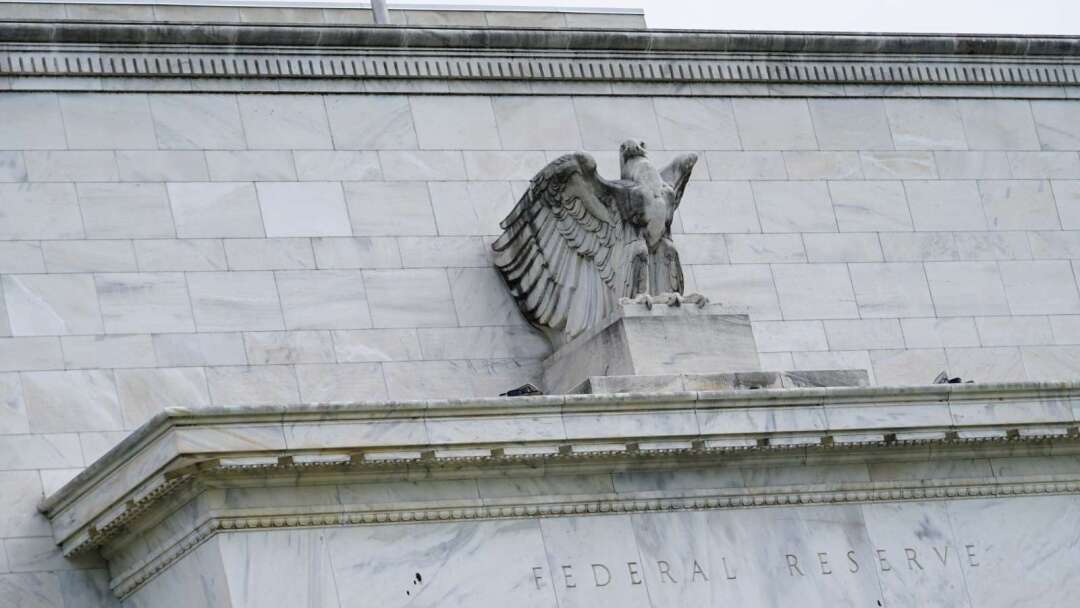
Beth Hammack, President of the Federal Reserve Bank of Cleveland, said on Monday (10th) that inflation pressures in the United States are gradually broadening, and a single 25-basis-point rate hike would have limited impact on the economy. The Federal Reserve may need to raise rates more than once to bring inflation back toward its 2% target.
As a voting member of the Federal Open Market Committee (FOMC) this year, Hammack said in an interview with foreign media that a 25-basis-point rate hike 'may not have a significant impact on the economy,' suggesting that policy rates may need to be raised multiple times. However, she emphasized that it is still too early to determine the exact number of hikes or where rates will ultimately settle.
Hammack cast a dissenting vote at the Fed's July policy meeting. At that time, the FOMC decided to keep interest rates unchanged at 3.5% to 3.75%, but she advocated for a 25-basis-point hike.
She believes current interest rate levels have not yet imposed 'substantial restraint' on the U.S. economy. Based on her interactions with businesses, companies are not scaling back investment or growth plans due to rising financing costs, indicating that monetary policy remains insufficiently restrictive. Therefore, she believes now is the right time to act.
Hammack warned that the longer the Fed delays rate hikes, the longer inflation will remain above the 2% target, making it harder to bring prices down in the future. She likened rate hikes to gently applying the brakes early as a car approaches a stop sign, allowing for a smooth stop rather than slamming on the brakes at the last moment.
'I believe now is the time to begin acting and further tighten policy,' Hammack said.
Inflation slowdown not enough to change stance
The Fed's preferred inflation gauge—Core Personal Consumption Expenditures (Core PCE)—rose 3.3% year-over-year in June, still significantly above the 2% target. Core Consumer Price Index (Core CPI) rose 2.6% over the same period.
Market expectations suggest Core CPI in July may slow further to 2.5% year-over-year, with a 0.2% monthly increase. If data meets expectations, it would mark the second consecutive month of slowing Core CPI.
However, Hammack stated that there is still no sign that inflation will return to target on its own. She admitted that if it turns out later that no policy adjustment was needed to cool inflation, she would be happy to acknowledge her judgment was wrong. But current evidence is not sufficient to support that scenario.
Labor market shows no major issues
Despite the unexpected drop of 23,000 in U.S. non-farm payrolls in July, Hammack has not reduced her focus on inflation.
She noted that over the past 12 months, U.S. non-farm payrolls have increased by an average of about 20,000 to 25,000 per month, with the unemployment rate remaining at 4.1%, roughly in line with her estimate of full employment. Therefore, she sees no major issues in the labor market at this time.
This means, in Hammack’s view, the Fed still has room to prioritize inflation control without delaying rate hikes due to a single weak employment report.
Markets cannot replace Fed action
Following the July meeting, Fed Chair Kevin Warsh mentioned multiple times that U.S. Treasury yields have risen since the previous meeting, calling it a favorable development. However, these comments have confused some investors, raising questions about whether the Fed has a clear anti-inflation strategy or hopes to rely on rising bond yields to tighten financial conditions instead of direct central bank action.
In response, Hammack stated that financial markets can supplement Fed policy but cannot replace the central bank’s own actions. While the Fed does monitor market performance and how investors interpret policy signals, it must still make concrete decisions to support its policy stance when necessary.
Hammack emphasized that the Fed continues to rely primarily on Core PCE to assess progress toward its 2% inflation target, and the central bank’s credibility rests on policy transparency.
She noted that transparency does not mean the Fed must provide clear forward guidance, but rather explain its policy decision framework and how newly released economic data will influence overall assessments and decisions. When businesses and the public understand the Fed’s decision logic, they can make more appropriate arrangements.
Regarding recent market confusion over the Fed’s policy reaction mechanism, Hammack believes market uncertainty may stem from multiple factors and should not be entirely attributed to the Fed. But regardless of market volatility, the Fed must continue fulfilling its dual mandate of price stability and maximum employment.
FACT BOX
- Source: PR Times
- Category: News