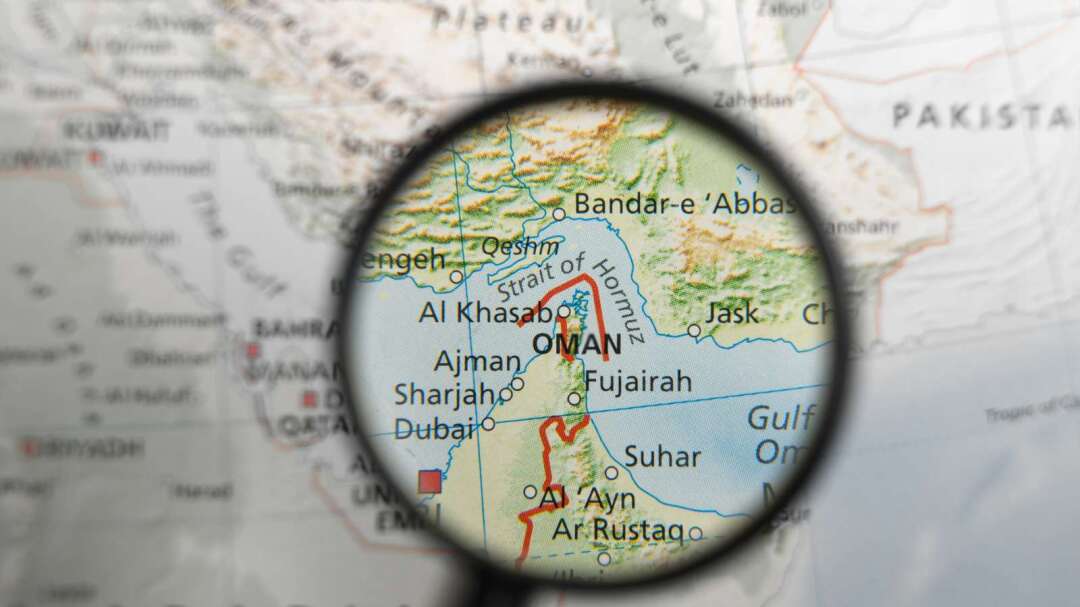
U.S. President Trump announced on Monday (10th) that the U.S. military has completed mine-clearing operations in the Strait of Hormuz, with the vital global energy shipping route now fully controlled by the U.S. Navy.
Speaking to reporters in the Oval Office at the White House, Trump stated that the Strait of Hormuz is now open and that U.S. forces have established an 'iron wall' in the region, allowing only vessels approved by the United States to enter. He emphasized that the U.S. holds '100 percent control' over maritime traffic in the strait.
Trump noted that the U.S. has completed mine-sweeping across the entire Strait of Hormuz, ensuring safe passage for shipping. While Iran may still attempt to lay mines intermittently, complicating the situation, Trump asserted that U.S. forces have the capability to detect and neutralize such threats.
Trump acknowledged that Iran could still create disruptions but claimed that Iran's economy is in severe distress and financially constrained, limiting its ability to take further action.
His remarks come amid ongoing U.S.-Iran tensions over navigation conditions in the Strait of Hormuz. Iran previously stated that even though it has reached management arrangements with Oman, full restoration of maritime traffic would not occur unless the U.S. meets a series of conditions set by Tehran.
Iran demands compensation from the U.S. and Israel for damages incurred during months of conflict. In response, Trump has made reciprocal demands, stating that the U.S. will seek damages from Tehran for deaths caused by Iran in multiple conflicts, further widening the gap between the two sides on resuming shipping and negotiation terms.
Meanwhile, Iran's Supreme Leader Mujtaba carried out a major reshuffle of military leadership on Monday, appointing six senior commanders across the Armed Forces General Staff, the Islamic Revolutionary Guard Corps, and the Basij militia, including the new commander and deputy commander of the Revolutionary Guard.
Iranian Foreign Ministry spokesperson Esmail Baghaei stated that negotiations between Iran and Oman are progressing smoothly, though some forces are still attempting to obstruct an agreement.
Tensions continue to escalate across other parts of the Middle East. Israeli forces detonated explosives and fired artillery shells in multiple areas of southern Lebanon; U.S. State Department officials revealed that Lebanon and Israel are expected to resume negotiations in Rome next month.
Additionally, the President of Yemen condemned recent attacks by Houthi militants and emphasized that 'the era of aggression without consequences is over'.
With the U.S. and Iran failing to reach a breakthrough on reopening shipping through the Strait of Hormuz, international oil prices surged approximately 5% on Monday (10th), reigniting market concerns over inflation and potential Federal Reserve rate hikes. The Dow and S&P 500 indices closed slightly lower, while the Nasdaq fell 0.32%, dragged down by weakness in chip stocks such as Intel and NVIDIA.
FACT BOX
- Source: PR Times
- Category: News