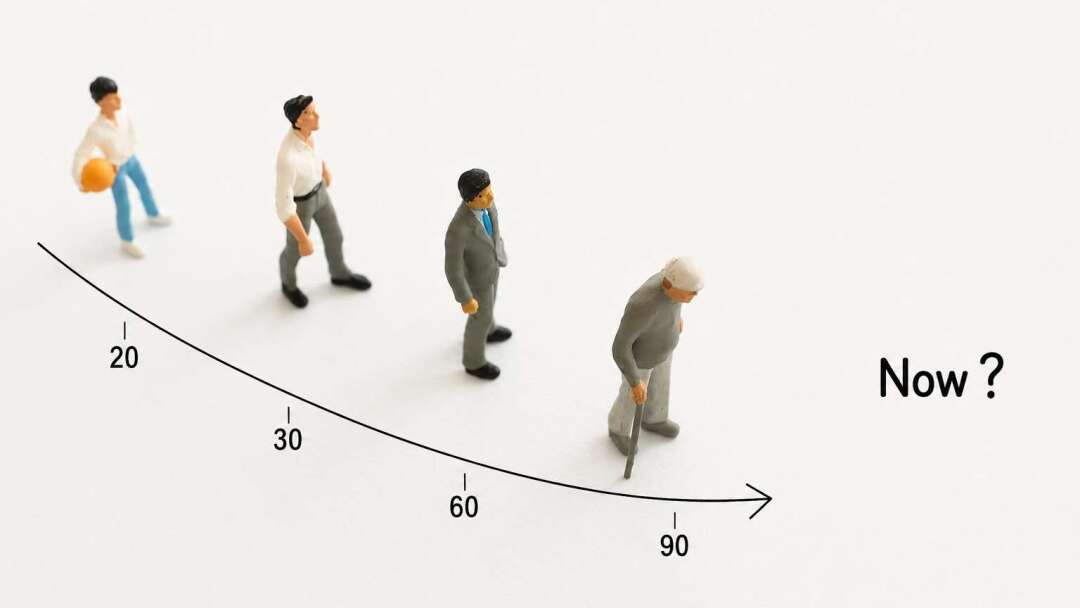
When preparing for financial planning, the first question people ask is, 'What should I buy?' Real estate, stocks, ETFs, bonds—everyone hopes to find a tool with higher returns and lower risk. However, it's easy to overlook one crucial factor: your age.
The same investment strategy that works for a 30-year-old may not be suitable for a 50-year-old, and continuing the growth-focused approach of your youth after retirement at 65 could expose your retirement life to unnecessary risks. The reason is simple: the most valuable resource at different ages is different.
For those in their 20s to 40s, the biggest asset is not the savings in the bank but the future decades of income. By switching jobs, improving professional skills, obtaining certifications, or entering more growth-oriented industries, you can increase your monthly salary from 50,000 to 150,000 yen. This 100,000 yen increase, if consistently invested in the market, often has a more significant impact on future asset accumulation than short-term gains of a few percentage points. This is the most important but often overlooked aspect for young people: when the principal is still small, the speed of wealth accumulation is often determined not by how well you pick stocks but by how much new principal you can create each year. However, this does not mean young people should not invest. On the contrary, the younger you are, the more important it is to start investing early. Investment is not just about seeking returns but also about building long-term habits, understanding market fluctuations, learning asset allocation, and cultivating the psychological resilience to face market ups and downs. The earlier these abilities are established, the more significant the future advantages will be.
For those in their 40s to 60s, as assets accumulate, the logic of financial planning must change. For example, if you have accumulated 100 million yen at 40, a 10% market increase adds 10 million yen. If at 50, your assets grow to 300 million yen, the same 10% fluctuation results in a 30 million yen change. At this stage, assets themselves become another source of income and potentially the largest source of risk. If investments are overly concentrated in a single market, industry, or tool, a single wrong judgment could result in losses larger than a year's bonus. This is the most important change in mid-life financial planning: it's no longer just about working or focusing on returns to accumulate assets but also about learning to manage the money you've already accumulated.
This stage is often when family financial responsibilities are at their heaviest. The mortgage may not be paid off, children's education costs are increasing, parents are aging, and you may have only 10 to 20 years left until retirement. At this stage, assets cannot be solely focused on creating 'returns.' Some money may be needed within three years, such as for renovations, education, car replacement, or parents' medical care. Some money is needed for retirement funds in 10 or 20 years, and some assets may be intended for long-term holding and inheritance to the next generation.
Since the usage time differs, the risk taken should not be the same. If all funds are placed in high-volatility assets, a market crash could force the sale of investments intended for long-term holding at a low point. Therefore, the real need for those in their 40s to 60s is to establish a complete allocation. Short-term funds should focus on liquidity; medium-term funds should balance stability and growth; long-term funds have more room to withstand market volatility.
At this stage, the question of investment should not be just about how much you earned this year but should start to ask: If the market is bad, can I avoid selling? If I suddenly lose my job for a year, is my family's cash flow sufficient? If the stock market falls by 30%, will my retirement plan be delayed? If the answer is that any market downturn will affect all your plans, what really needs adjustment may not be a particular stock or ETF but your overall financial allocation.
Retirement is the biggest turning point in life's finances. While working, income supports assets; after retirement, assets support life. When you have a job, even if the stock market falls by 20%, as long as the cash flow is stable, you can continue to invest and even increase your position during market corrections. However, the situation is completely different after retirement. If the market falls by 20% and you still need to withdraw living expenses from your investment account each month, the real risk is not just a paper loss but the possibility of being forced to sell assets at a low point.
When the principal is forced to shrink, even if the market rebounds, the funds available to participate in the rebound will also decrease. This is the biggest difference between retirement financial planning and the working period. After retirement, what is really important is not just the long-term average return but whether you can withstand market downturns. Therefore, the focus of retirement financial planning should shift from how much assets you have to how to use them.
The first question is cash flow. Where does the fixed monthly living expenses come from? Pension, retirement benefits, rental income, dividends, or other income, how much can they cover your monthly expenses?
The second question is reserve funds. If the market performs poorly for one or two years, do you have enough cash or low-volatility assets to cover living expenses and avoid being forced to sell your investment tools?
The third question is longevity risk. Many people planning for retirement only worry about whether their retirement funds are sufficient but overlook another problem: they may live longer than expected. If you retire at 65 and live to 90, that's 25 years of retirement life. During these 25 years, you will face inflation, medical expenses, long-term care costs, and different stages of market fluctuations.
Therefore, retirement financial planning is not about converting all assets into conservative tools but about rebalancing growth and stability. Overemphasizing safety may erode the purchasing power of your assets due to inflation. Overemphasizing returns may result in volatility that your retirement life cannot bear. This is why, after retirement, the really important question is no longer how much a tool can earn in a year but whether this asset allocation will be enough for your money.
FACT BOX
- Source: PR Times
- Category: Survey