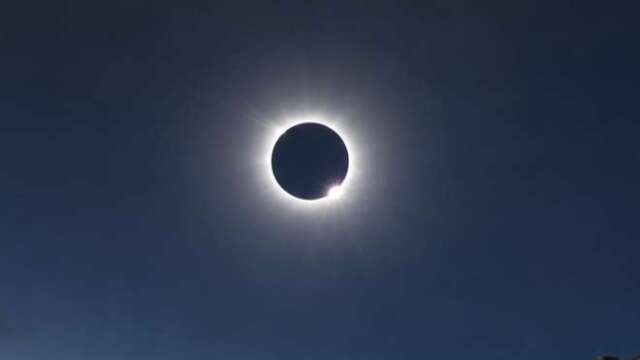
A rare total solar eclipse occurred in Europe on Wednesday, August 12, 2026, with the path of totality spanning Iceland, Greenland, the UK, Portugal, and northern Spain, triggering a short-term surge in tourism demand. In popular viewing cities such as Reykjavik, Iceland, and Bilbao, Spain, hotel and short-term rental prices temporarily exceeded $1,000 per night (approximately NT$32,300).
According to a mid-July survey by lodging data firm Lighthouse Intelligence—conducted about one month before the eclipse—the average hotel rate in Reykjavik during the eclipse week reached $1,012 per night (approximately NT$32,600), doubling year-on-year. The average price for short-term rentals soared even higher, reaching $1,172 per night (approximately NT$37,800), a 178% year-on-year increase.
Northern Spain also saw significant price hikes. Bilbao's short-term rental average climbed to $1,088 per night (approximately NT$35,100), a 206% year-on-year surge. Hotel rates rose 35% to $315 per night (approximately NT$10,200). Santiago de Compostela, located on the outer edge of the eclipse path, remained relatively affordable, with an average hotel rate of $193 per night (approximately NT$6,224), up 13% year-on-year.
Jonathan Gough, Content Marketing Manager at Lighthouse, noted that lodging providers typically test the market's price tolerance during rare, once-in-a-lifetime events such as the World Cup or a Taylor Swift concert—this eclipse was no exception.
However, Iceland's initial high-price strategy did not fully succeed. Latest data shows that by August 10, the lowest bookable rates in Reykjavik and surrounding areas for August 12 had dropped by 46% and 51%, respectively, from mid-May levels, falling to $805 (approximately NT$26,000) and $793 (approximately NT$25,600), reflecting efforts by operators to offer deeper discounts to fill vacant rooms ahead of the event.
Gough explained that Icelandic operators began pricing at three to four times normal rates over a year ago, but have steadily lowered prices over the past three months. In contrast, operators in northern Spain maintained regular pricing in spring, gradually increasing rates as bookings picked up.
Despite price declines in some areas, accommodation demand on eclipse day remained strong. In La Coruña, Spain, demand reached over five times normal levels, and with limited room availability, price became the primary barrier to entry for travelers.
The short-term rental market also benefited significantly. Data from AirDNA shows that of Iceland’s approximately 9,000 available rental units, nearly 64% are located within the eclipse path. In Spain, of approximately 365,400 rental units, about 21% fall within the viewing corridor.
Short-term rental demand within Iceland’s eclipse path increased 40% year-on-year, outpacing the 13.2% rise in other regions. Spain experienced summer temperatures exceeding 104°F (approximately 40°C), yet from the evening of August 11 to 12, short-term rental demand within the eclipse path declined only 1.6% year-on-year—less than the 9.1% drop in other areas—indicating the eclipse partially offset the negative impact of extreme heat on tourism.
Gough believes this celestial phenomenon delivered strong but highly concentrated tourism benefits to parts of Europe. However, the accommodation boom may last only one or two nights and is unlikely to alter the entire tourism season. In contrast, heatwaves and extreme weather are reshaping Europeans’ summer travel choices, with longer-lasting impacts on the tourism industry than the eclipse.
FACT BOX
- Source: PR Times
- Category: Event
- Organizations: Lighthouse Intelligence / AirDNA