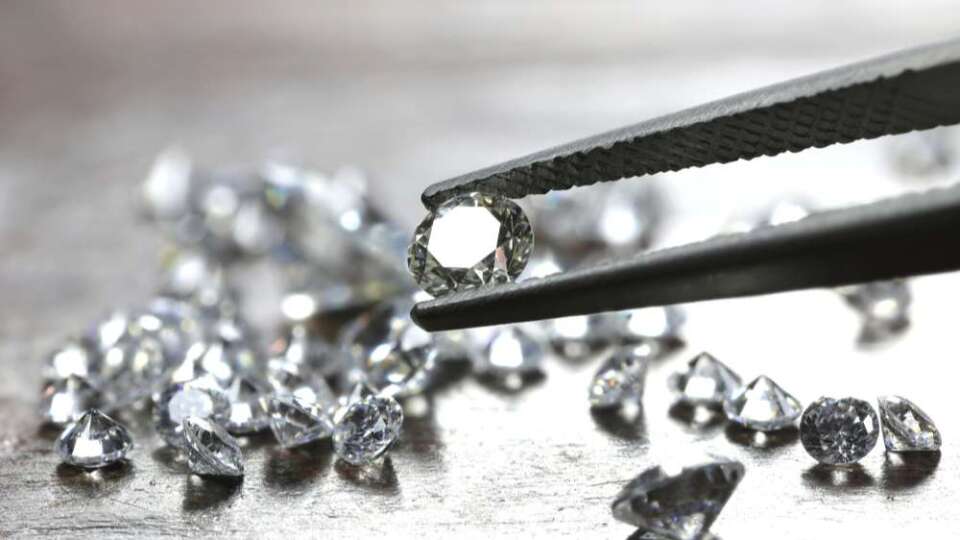
The high-value myth of natural diamonds, built over decades, is rapidly unraveling. As laboratory-grown diamond technology advances swiftly, lower-priced yet equally high-quality synthetic diamonds are steadily eroding the market, causing the 'scarcity premium' that has long supported natural diamond prices to vanish.
In the first half of August, the Bloomberg Terminal-tracked diamond benchmark index fell to a historic low. Market observers warn that the turning point for natural diamond price declines may have already arrived, with the downward trend likely accelerating in the coming years.
### Lab-Grown Diamonds Rise, Scarcity Premium Crumbles
The core pressure facing the natural diamond market stems from breakthroughs in laboratory-grown diamond technology. X user Crémieux noted that technological progress in lab-grown diamonds has been astonishing, making it unsurprising that most engagement rings now use lab-created stones.
Lab-grown diamonds share identical physical and chemical properties with natural diamonds. In practical terms, even professional detection equipment struggles to distinguish between them under normal usage conditions. Market commentator Saul Sadka pointed out that even deploying $20,000 worth of specialized detection instruments offers little practical value to average consumers.
More importantly, consumer motivations for actively choosing lab-grown diamonds are increasing. Sadka argues that most buyers do not care whether a diamond originates from a mine or a lab, rendering the 'natural' attribute—the last remaining moat for natural diamonds—increasingly irrelevant.
He emphasizes that regardless of how much premium consumers are willing to pay for natural origin, as long as lab-grown diamond production costs continue to fall—potentially approaching zero—the absolute value of the natural diamond premium will inevitably shrink. Consumers might pay slightly more for the story behind an identical product, but they cannot justify paying indefinitely high prices.
### Output Cut by 20%, Yet Prices Fall Nearly 50%
Faced with fierce competition from lab-grown alternatives, natural diamond producers have slashed output significantly in recent years to restrict supply and support prices.
According to data cited by Sadka, natural diamond production has decreased by approximately 20% over the past four years, falling from 120 million carats annually to 98 million carats. However, despite this clear contraction in supply, natural diamond prices have cumulatively dropped by about 50% over the same period.
Sadka believes that production cuts can only delay price collapse, not reverse structural market changes. If natural diamond output returns to previous levels, the pace of price decline could accelerate further.
The very trait once celebrated as natural diamonds’ enduring quality—'eternity'—may now become another source of supply pressure.
As baby boomers pass away en masse, large quantities of inherited natural diamonds could flood the secondhand market, creating new supply sources. In such a scenario, even part of the demand in premium segments might be satisfied through existing diamond inventories, eliminating reliance on mines and cutters. Sadka describes it: 'Diamonds are indeed eternal, but this very characteristic has now become a curse for the industry.'
### Risk of Repeating the Century-Old Pearl Market Collapse
Sadka draws a parallel between today’s natural diamond situation and the collapse of the natural pearl market a century ago. Back then, technological advancement similarly shattered the myth of natural pearl scarcity, transforming pearls from symbols of elite society into mundane clichés within 50 years.
He predicts diamonds may undergo a similar—or even more dramatic—image reversal, potentially shifting from symbols of class and exclusivity to markers of 'tackiness'.
Such a cultural shift could inflict greater damage on the diamond industry than mere price declines. Once the long-established association between diamonds, wealth, and taste is completely severed, the entire commercial logic supporting the industry will face deeper challenges.
These impacts are already emerging in certain markets. Sadka cites Israel as an example: the diamond industry once accounted for 3% of the country’s GDP, but its share has now fallen below 0.2%.
For the natural diamond supply chain, this transformation is no longer just a cyclical price correction—it represents simultaneous challenges to scarcity, supply-demand structure, and cultural value.
For consumers, the traditional logic of viewing natural diamonds, especially wedding rings, as assets with store-of-value properties is also weakening. As Sadka puts it, 'If you still expect your engagement ring to retain value in the future, you’re likely to be disappointed.'
FACT BOX
- Source: PR Times
- Category: News