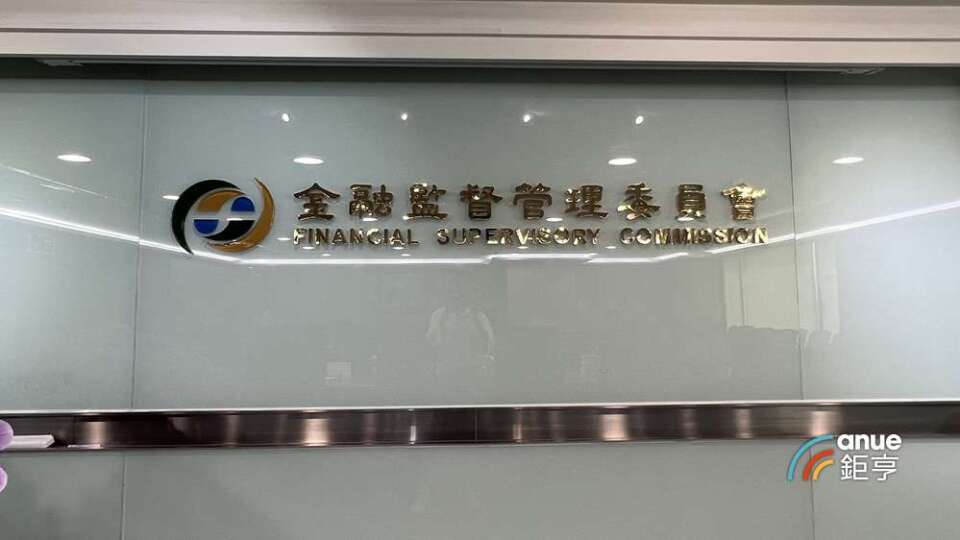
In response to the government's proactive policy to attract foreign professionals and promote the development of Taiwan's domestic financial industry, the Financial Supervisory Commission (FSC) has achieved another milestone with its 'Financial Sector Employment Gold Card' initiative. Since its launch in 2018, the cumulative number of Financial Employment Gold Cards issued has officially surpassed the 1,000 mark, reaching 1,005 cards—approximately 6% of the total Employment Gold Cards issued nationwide. Among these, Hong Kong and the United States are the two largest sources of foreign talent.
To align with the policy goal of establishing Taiwan as an 'Asia Wealth Management Center,' the FSC revised its eligibility criteria at the end of last year (2025), formally adding 'Asset Management (including Joint Family Offices)' as a key industry category. The policy impact has already become evident: as of June 2025, 92 Financial Gold Cards have been issued, representing nearly a 30% increase compared to 71 cards issued during the same period last year.
The FSC has participated in the review of a cumulative total of 1,005 Financial Employment Gold Cards, accounting for about 6% of the overall 17,365 Employment Gold Cards issued. By country or region of origin, Hong Kong leads with 278 cards, followed by the United States (229), Singapore (129), Canada (72), and the United Kingdom (69)—the top five sources of financial cardholders.
Lai Ming-hsien, Director of the FSC's International Affairs Division, added that recent issuance trends show 110 cards issued in 2023, 151 in 2024, and 145 in 2025. As of the end of July 2025, 113 cards have already been issued. Based on the current annualized growth rate, this year's total issuance is highly promising and stands a strong chance of breaking previous records.
The historical peak occurred in 2021, with 198 cards issued. Lai explained that the surge was primarily due to pandemic-era border restrictions in Taiwan. Holders of the Employment Gold Card were exempt from entry limitations, and this advantage gained strong word-of-mouth recognition among international professionals, leading to a sharp rise in applications—not driven solely by financial policy incentives.
Lai noted that applicants for Financial Gold Cards possess expertise across banking, securities, insurance, and asset management. However, the purpose of the Employment Gold Card is to provide the convenience of 'Four-in-One' integration (work permit, residence visa, Alien Resident Certificate, and re-entry permit), allowing cardholders to freely seek employment and change jobs within the 1- to 3-year validity period.
Lai emphasized, 'Even if someone enters under a financial sector application, the government does not restrict them to working only in the financial industry afterward.' For example, if a cardholder later transitions to a technology company like TSMC to work in internal finance or financial management roles, it fully complies with regulations. The overall system is designed to attract diverse high-quality talent to settle in Taiwan.
Data compiled by the FSC shows that cardholders are concentrated in five major regions: Hong Kong, the United States, Singapore, Canada, and the UK. Many hold ethnic Chinese backgrounds and commonly cite Taiwan's convenient lifestyle and abundant development opportunities. For daily life adaptation and residential support, the government provides comprehensive assistance through the National Development Council's 'Employment Gold Card Office.'
FACT BOX
- Source: PR Times
- Category: News