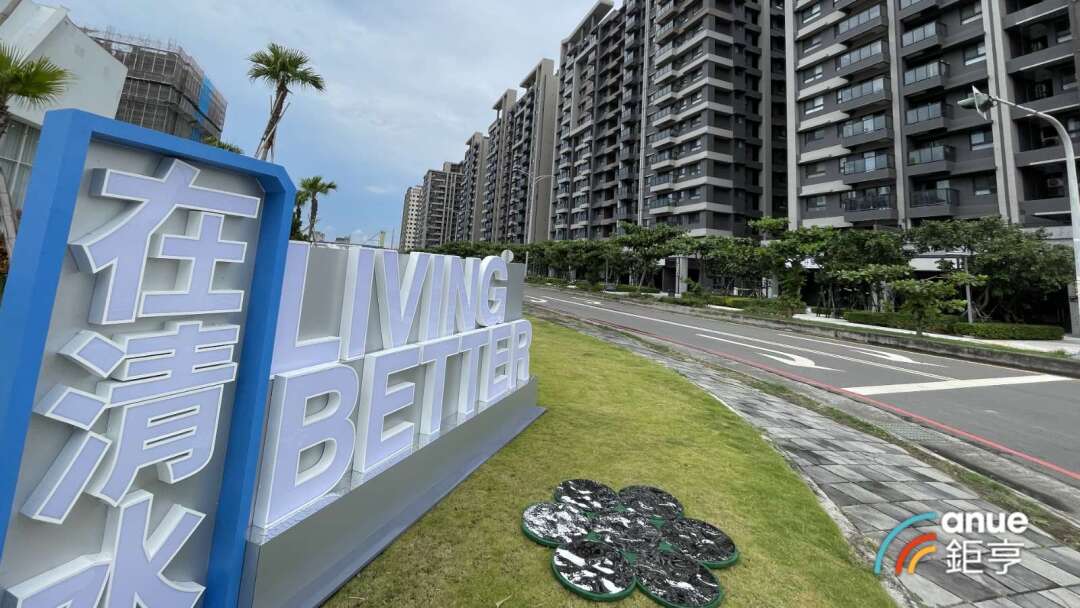
"Household count" reflects rigid housing demand in a region and serves as the core driving force behind steady local real estate market growth. Real estate agencies, using data from the Ministry of the Interior's Household Registration Office and the Property Price Registration System, have analyzed household increases across Taiwan's administrative districts from 2017 to 2026, along with corresponding housing price changes. Data shows that Wuci District in Taichung City achieved a household growth rate exceeding 50%, ranking first nationwide.
Meanwhile, Zhubei City in Hsinchu County has experienced rapid household growth due to support from its science park, with average unit prices soaring more than 1.3 times.
Over the past decade, Wuci District in Taichung City recorded a remarkable 57.1% increase in households—the highest among all administrative districts in Taiwan. Chen Jinping, Deputy Director of Yungching Realty's Research & Development Center, explained that the thriving "Taichung Port Science and Technology Industrial Park" and "offshore wind power industry chain" have attracted a large influx of high-income workers. Additionally, the maturing Mitsui Outlet shopping district has encouraged developers to actively launch large-scale township development projects in the "Taichung Port New Town Special Zone," attracting buyers priced out of urban centers and first-time homebuyers with lower total prices, thereby supporting the surrounding existing housing market.
Linkou District recorded a 49.7% household growth over the past ten years, ranking second with strong momentum. Chen Jinping noted that Linkou benefits from the opening of the airport MRT line and the arrival of large commercial complexes, along with the formation of high-tech industrial chains such as the "New Taipei International AI Smart Park," which has created abundant employment opportunities and brought stable owner-occupier demand.
Chen pointed out that among the top ten “household growth hotspots,” Taichung City accounts for three districts, New Taipei City for three, and Taoyuan City for two, indicating that household growth is concentrated in suburban areas, newly developed zones, and regions receiving continuous investment in industry and transportation infrastructure. Compared to mature city centers, these districts typically offer ample land and housing supply, relatively affordable home prices, and connect via MRT, HSR, expressways, or industrial parks to absorb population overflow from city centers and incoming employed populations, gradually forming new living circles.
In terms of housing prices, all ten of Taiwan’s “household growth hotspots” saw price increases, ranging from 38.6% to 1.32 times. This demonstrates that sustained household growth, population inflow, and regional development indeed provide solid demand support for local housing markets. Among them, Zhubei City recorded the most dramatic price surge, with average unit prices increasing 1.32 times over the past decade. Chen explained that Zhubei City, home to the Hsinchu Science Park and Biomedical Park, continues to attract affluent tech professionals as the HSR Special Zone's living amenities become increasingly complete. With both demand and purchasing power growing simultaneously, but prime land in central areas being scarce and supply relatively limited, Zhubei’s housing prices have risen the most prominently.
Additionally, Wuri District in Taichung City saw housing prices rise 93.9%, ranking second. Chen stated that this was driven by the development of the HSR Special Zone, the completion of transportation infrastructure and large commercial facilities, and the transition of population and functionality from conceptual to actual, fueling local real estate development. As for Wuci District, which ranked first in household growth, average unit prices rose from NT$113,000 per ping to NT$211,000—a 86.7% increase—reflecting how large-scale developments in the Taichung Port Special Zone, relatively low total prices, and regional development themes have attracted both first-time buyers and investment demand.
FACT BOX
- Source: PR Times
- Category: Survey