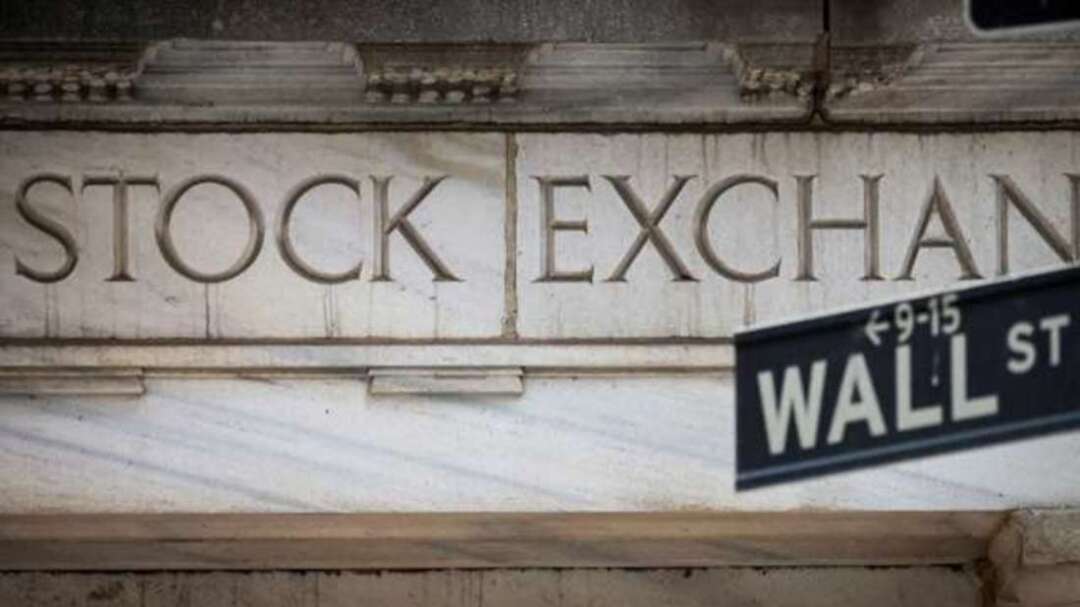
After brief pauses in June and July, US stocks have resumed their climb from one record high to another. As investors chase the 'fear of missing out' (FOMO) rally, Wall Street's 'fear index'—the CBOE Volatility Index (VIX)—has dropped to its lowest level since January, and demand for put options to hedge portfolio downside has cooled. This has raised concerns among some market observers that investors may have become overly optimistic or even complacent.
The S&P 500 closed at a new all-time high on Thursday (13th). However, the Chicago Board Options Exchange Volatility Index (VIX), known as the 'fear index,' actually rose. MarketWatch previously noted that this rare market dynamic suggests the recent rapid stock rally may have become overextended.
Before the VIX resumed its upward move on Thursday, it had just hit its lowest level since early January, dipping to 14.39 on Wednesday.
This unusual calm has even spread to South Korea. The Korean stock market had just experienced its most volatile period in history, with investors rushing into leveraged products to chase strong gains in popular memory stocks like Samsung Electronics and SK Hynix.
However, FactSet data shows that the KOSPI 200 Volatility Index—the South Korean equivalent of the VIX—has fallen over 34% so far this month, reaching its lowest level since April 30.
The CBOE SKEW Index, known as the 'black swan index' for measuring investor demand for crash protection, has also recently hit a notable low. According to Bloomberg data, the index dropped to its lowest level of the year on August 4. A declining index indicates that, due to weak demand, the cost of protecting against a 30-day market crash has fallen to relatively attractive levels.
Investors do have reasons to be optimistic.
Investors indeed have good reasons for optimism: Wall Street has just wrapped up another strong earnings season, and analysts continue to improve their profit forecasts for the remainder of the year and beyond. FactSet data shows that the upward revisions to corporate earnings estimates have even outpaced the gains in major market indices.
Yet, some on Wall Street cite several reasons for caution: ongoing tensions in Iran continue to cloud the global economic outlook. Additionally, concerns about the Federal Reserve's (Fed) independence and questions about the ultimate returns from massive artificial intelligence (AI) investments remain unresolved.
Michael Kramer, portfolio manager at Mott Capital Management, pointed out that rising global bond yields in recent weeks have further increased the risks facing equity markets.
Kramer said certain technical indicators also suggest market volatility could rise again soon. Over the past two weeks, as stocks surged, the gap between realized volatility and implied volatility has narrowed to the lower end of its recent range. 'The gap between realized and implied volatility is already very small, and there may not be much room for further narrowing,' he said.
Moreover, according to Dow Jones Market Data analysis, September is historically the weakest month for S&P 500 returns.
Markets may be accumulating risks.
In fact, when commonly used market volatility indicators are at low levels, it may indicate that risks are building beneath the surface calm.
SentimenTrader analysis suggests that the recent rebound in the CBOE SKEW Index may signal that investors are beginning to shift their views.
The analysis examined past periods when the VIX was similarly low but option skew showed significant changes. It found that in such past cases, the stock market typically saw relatively limited declines over the following month.
SentimenTrader analysts said on Thursday: 'When the VIX is below 15 and at the bottom of its 126-day range, significant market volatility typically does not appear immediately. Even warning signs like a spike in the CBOE SKEW Index or a breakdown in correlations may not drastically alter the market's trajectory in the initial weeks.'
However, they also issued a warning: 'This is not a risk-free state, but rather one where risks may be delayed. The worst-case scenario could come later, after a buffer period, in the form of a sharper decline. Risk warnings may flash first, while price instability often follows later.'
Since entering August, all three major US indices have strongly rebounded from the intense selling pressure seen in the previous two months, led by large-cap tech stocks. Cyclical sectors such as materials and industrials in the S&P 500 have also provided support.
FactSet data shows the S&P 500 is up 4.1% so far this month, the Dow Jones Industrial Average is up 2.6%, and the Nasdaq Composite has surged 5.6%. The S&P 500 had declined for two consecutive months in June and July.
Stephen Innes, managing partner at SPI Asset Management, said that in August, the stock market is repositioning to repair the reduced risk exposure caused by last month's sell-off, but 'this does not eliminate market instability.'
He noted that investors still hold downside hedges while also trying to make up for underexposure to the current rally. 'As a result, if this short-covering rally continues, the market may not have enough upside exposure. But if the next catalyst moves in the opposite direction, the market may also lack sufficient downside protection.'
Innes added: 'That's why the current calm feels deceptive. The market doesn't need a huge new fundamental shock to pivot sharply from here. The next catalyst, if it hits the wrong positioning, could trigger dramatic changes.'
Innes' observation echoes a post by veteran technical analyst Walter Deemer on X: 'The only thing the market should fear is the market no longer fearing anything.'
FACT BOX
- Source: PR Times
- Category: News
- Organizations: CBOE / FactSet / Mott Capital Management