After experiencing intense market volatility in July, South Korea’s regulatory authorities have significantly tightened trading rules for individual stock leveraged ETFs. The minimum cash deposit threshold has been abruptly raised from 10 million won to 30 million won (approximately $21,000). New investors must also undergo 3 hours of mandatory education and complete at least one hour of simulated trading per day for five consecutive days; failure to do so disqualifies them from entering the market.
In response to extreme market fluctuations, South Korea’s Ministry of Finance convened an emergency meeting on July 29 and officially announced restrictions on access to leveraged ETFs. Subsequently, in early August, regulators further tightened the rules, increasing the minimum cash deposit requirement for these products from 10 million won to 30 million won—tripling the previous investment threshold.
However, having 30 million won ready is not enough. New investors wishing to trade individual stock leveraged ETFs must also complete a mandatory 3-hour educational course and a one-week program that includes at least one hour of simulated trading each day for five consecutive days.
In other words, investors must not only possess sufficient capital but also undergo education and practical simulated operations before they can obtain trading eligibility.
Albert Yong, Executive Partner at Seoul-based hedge fund Petra Capital Management, pointed out that many retail investors do not understand how leveraged ETFs actually work and fail to realize how market volatility can erode potential returns. As large numbers of investors suffered significant losses during the recent surge in individual stock leveraged ETFs, market perception of these high-risk products is beginning to shift.
Chip market fuels leverage craze: Retail investors rush in
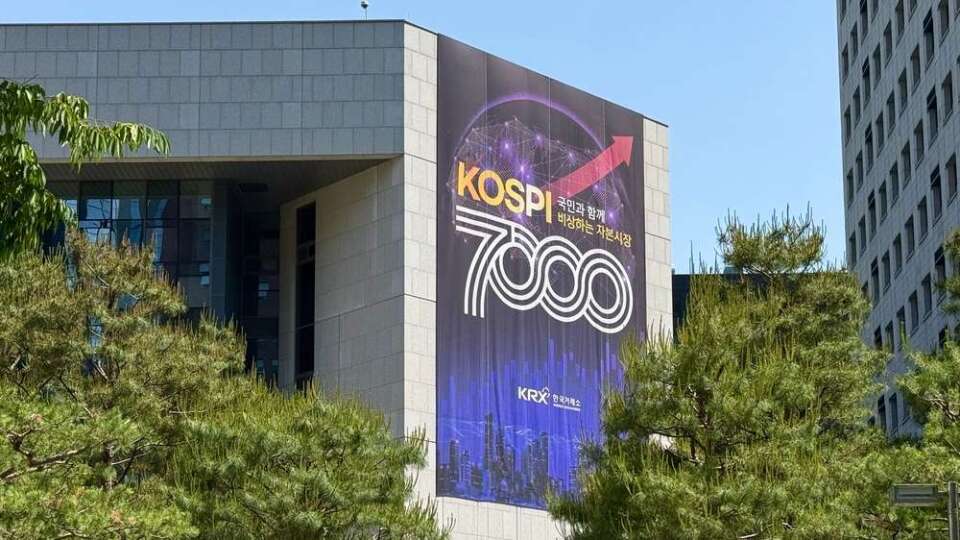
Earlier, the South Korean stock market surged dramatically. The Korea Composite Stock Price Index (KOSPI) rose 76% in 2025 and briefly surpassed the 9,300-point mark in June this year. Fueled by the AI-driven rally led by SK Hynix and Samsung Electronics, South Korean retail investors poured a net 100 trillion won (approximately $70 billion) into the stock market earlier this year.
This frenzy quickly spread to leveraged products. In late May, individual stock leveraged ETFs tracking SK Hynix and Samsung Electronics were officially launched, allowing investors to multiply their bets on the two chip giants.
As the South Korean government pushed to boost its capital markets, President Lee Jae-myung publicly stated on June 8 that despite KOSPI already reaching around 8,000 points, Korean equities were still "somewhat undervalued."
However, the leverage-fueled euphoria soon reversed. KOSPI plunged 22% in July, marking the largest single-month drop since the global financial crisis.
According to data from Mirae Asset Securities, an investor who bought these leveraged ETFs when they launched in late May and held through mid-July would have lost about half their principal.
Regulators step in to cool the market: Trading volume drops over 90%
As investors incurred heavy losses, South Korean regulators raised the entry barriers for individual stock leveraged ETFs. The new rules rapidly cooled the market.
Daily trading volume for these products plummeted from 12.4 trillion won on July 30 to just 700 billion won on August 11. Between August 4 and 10, investors even redeemed a net 1.4 trillion won from these products.
Kim Hyung-kyoon, Executive Director at Tcha Partners, said that leveraged-driven retail investments appear to have largely unwound, and the market is undergoing a normalization process. KOSPI has since rebounded more than 20% from its July 30 low, and some investors have begun to regain confidence in AI-related trading.
Nonetheless, market sentiment remains relatively cautious. Yong believes that AI fundamentals remain solid, but whether this signals the start of a new bull market or how long this rebound will last remains to be seen.
For South Korean retail investors severely hit during the July crash, the recent rebound has failed to fully restore confidence in policymakers. Some investors even say they no longer know how to invest in Korean stocks after the intense market swings, and trust in the government has been seriously damaged.
FACT BOX
- Source: PR Times
- Category: News
- Organizations: Petra Capital Management / Mirae Asset Securities / Tcha Partners