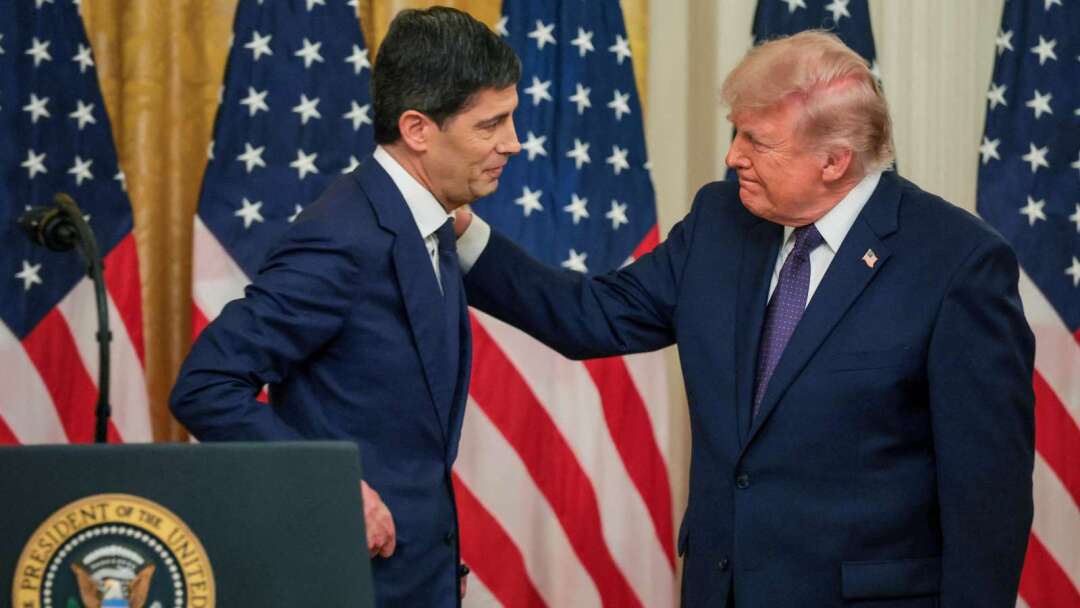
U.S. consumer and producer prices in July rose less than expected, and with the labor market cooling, the case for the Federal Reserve (Fed) to raise interest rates in the near term has weakened. Although inflation remains clearly above the 2% target and policymakers are divided on price risks, recent data may encourage Kevin Warsh, who took office in May, to maintain current interest rates and prolong the period of inaction.
When Warsh took the helm at the Fed, monetary policy stood at a crossroads. Some officials advocated raising rates to control inflation, while President Trump repeatedly demanded rate cuts to stimulate the economy. However, the economy is neither clearly heading toward rising unemployment nor experiencing renewed inflation acceleration, leaving the Fed without an urgent reason to act immediately.
Cooling inflation gives the Fed more reason to wait
The U.S. labor market is not booming. Real wages adjusted for inflation have declined over the past six months, and job growth has been weak. Yet the unemployment rate remains historically low at 4.1%. On the other hand, earlier this year, the war between the U.S. and Israel against Iran pushed up energy prices, causing inflation to spike sharply. However, price pressures have gradually eased over the past two months.
The Fed's preferred Personal Consumption Expenditure (PCE) price index rose to 4.1% in May after three consecutive months of being pushed higher by war-related energy price increases, but fell back to 3.7% in June. Although still far above the Fed's 2% target, this downward trend has weakened the argument that 'without rate hikes, inflation cannot be brought down.'
Recent data further supports a wait-and-see stance. The U.S. July Producer Price Index (PPI) unexpectedly remained flat month-on-month, while the Consumer Price Index (CPI) rose only slightly and had even declined in June. Recent unexpected job losses, combined with CPI and PPI both below expectations, have led traders to significantly scale back bets on a rate hike at the Fed's September 15–16 meeting.
Richmond Fed President Thomas Barkin said many officials believe current interest rate levels remain sufficiently restrictive to continue driving inflation lower. Recent price accelerations were largely driven by shocks such as tariff hikes, rising oil prices, and the artificial intelligence (AI) investment boom—all of which may eventually subside.
Barkin also noted that media, financial markets, and the public focusing on recent disinflation helps stabilize price expectations. As long as the market continues receiving the message that 'inflation is coming down,' even though inflation has exceeded the Fed's target for over five years, it may reduce the need for immediate rate hikes.
Hawks worry high inflation may become entrenched
However, some officials fear that prolonged inflation above 2% could push up consumer and business price expectations, ultimately creating a self-fulfilling cycle. When businesses expect future costs to rise, they may preemptively raise prices; if consumers believe high inflation will persist, they may alter wage demands and spending behavior, making price pressures harder to eliminate.
Fed Governors Christopher Waller and Lisa Cook recently stated they would support rate hikes if inflation fails to cool rapidly. Cleveland Fed President Beth Hammack questioned whether it would be acceptable if it takes the Fed three to four more years to bring inflation down to 2%.
Hammack was one of three dissenting policymakers last month who opposed keeping rates at 3.50% to 3.75%. She advocates for an immediate rate hike. Two other regional Fed presidents without voting rights this year subsequently expressed support for rate hikes.
Citing a retailer in Cincinnati, Hammack said businesses are already raising prices because, even if they don't know where the next cost pressure will come from, they believe price pressure will eventually arrive. She believes the Fed should act immediately to bring inflation back to 2% faster than the current slow-decline path.
Tim Duy, Chief U.S. Economist at SGH Macro Advisors, warned that the longer inflation remains at current levels, the more likely it is to become embedded in public expectations. Once the market no longer believes in the 2% target, the Fed will have to pay a much higher price later, taking stronger measures to reestablish credibility.
Rate hikes and inaction both carry costs
Warsh has not revealed his next policy move and avoids giving any clear forward guidance. Trump continues to demand significant rate cuts and blames 'hostile' colleagues within the Fed for blocking them. However, there is almost no data indicating the economy is weak enough to require the kind of rate cuts Trump desires.
The dilemma facing the Fed is that rate hikes could suppress economic activity through higher borrowing costs and even push up unemployment—while inflation itself may already be gradually declining. But continuing to hold steady could also cause people to gradually lose confidence in the 2% target.
Officials will release updated economic and rate projections after the September meeting. As of mid-June, most officials projected PCE inflation would fall to 2.2%–2.5% by the end of 2027. Among Warsh’s colleagues, only half believed at least one rate hike would be needed before year-end, while all others except one believed rates should remain unchanged—highlighting deep divisions within the policymaking camp.
Christopher Hodge, Chief U.S. Economist at Natixis, said surprise rate hikes remain possible in the next few Fed meetings. But with inflation slowly moving toward target, consumer spending cooling, and the employment outlook turning fragile, the Fed may narrowly avoid hiking rates. This suggests the Fed under Warsh may neither raise rates nor cut them in response to Trump’s demands, instead maintaining a longer观望period between these two risks.
FACT BOX
- Source: PR Times
- Category: News
- Organizations: Federal Reserve (Fed) / SGH Macro Advisors / Natixis