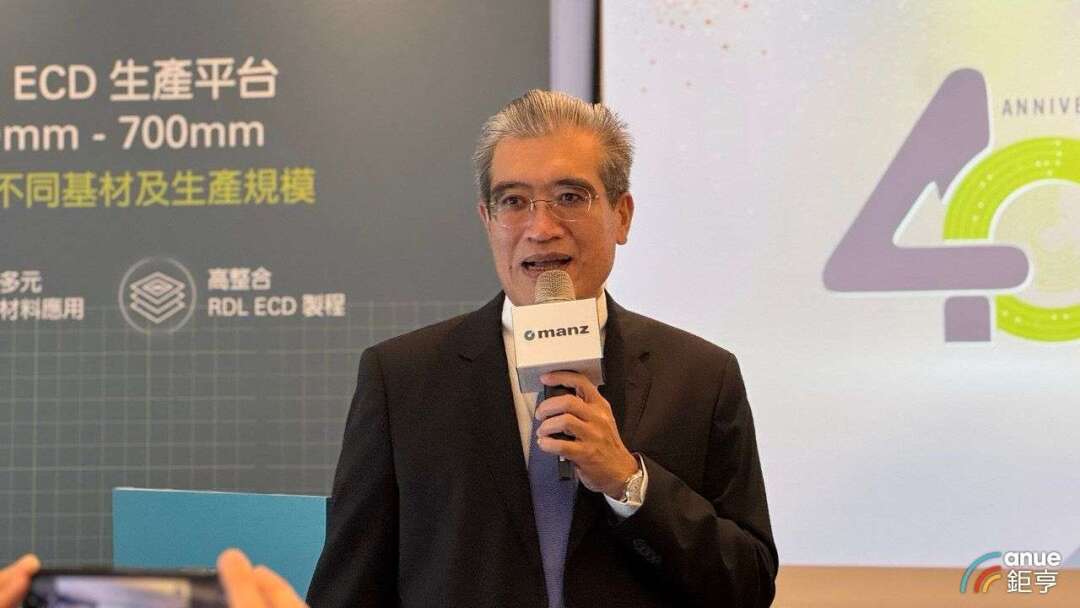
AI advanced packaging is continuously advancing toward larger dimensions and higher density, bringing Glass Core (glass substrate) back into the market spotlight. Lin Chun-Sheng, CEO of semiconductor equipment manufacturer Yazhi Technology, stated today (18th) that market interest in Glass Core has clearly rebounded this year. However, the industry has not yet entered mass production at scale, with current efforts primarily focused on research and development and pilot lines.
Looking ahead to future mass production specifications, the company believes that 510x515mm has the highest potential to become the mainstream Glass Core size.
Lin noted that about two and a half years ago, a wave of investment enthusiasm emerged when major international semiconductor companies actively promoted glass substrates. However, actual development revealed that the associated manufacturing processes were far more difficult than anticipated, causing the market to cool down temporarily. This year, interest has rapidly heated up again.
According to Lin, the biggest challenge with Glass Core is not any single process, but rather the interdependence of the entire manufacturing flow—including glass materials, laser modification, etching, metallization, electroplating, RDL, stress control, and dicing. Any issue in one step could affect final yield.
A typical challenge occurs during the final dicing stage, where glass substrates may crack due to internal stress differences after undergoing multiple processes. Therefore, resolving process integration issues across the entire supply chain is essential. With increasing numbers of companies now participating in Glass Core development, and continued investment from equipment, materials, and process suppliers, the time to technological maturity is expected to shorten.
Within the Glass Core manufacturing process, Yazhi Technology is currently focusing on two key areas: the etching process for TGV (Through Glass Via) via holes, and subsequent ECD (Electrochemical Deposition) electroplating and copper filling.
Regarding size, Yazhi observes that approximately 80–90% of current Glass Core projects are targeting 510x515mm. The company therefore judges that if mass production begins, this dimension is most likely to become the industry’s mainstream specification.
The primary reason lies in the fact that traditional IC substrate production equipment already widely uses sizes around 510mm. For substrate manufacturers transitioning from organic core materials to glass, being able to adapt existing equipment with minor modifications allows reuse of current production lines, significantly reducing capital expenditure pressure. Yazhi Technology has already begun shipping its Glass Core-related equipment, though these are currently used mainly for R&D or pilot lines.
FACT BOX
- Source: PR Times
- Category: News