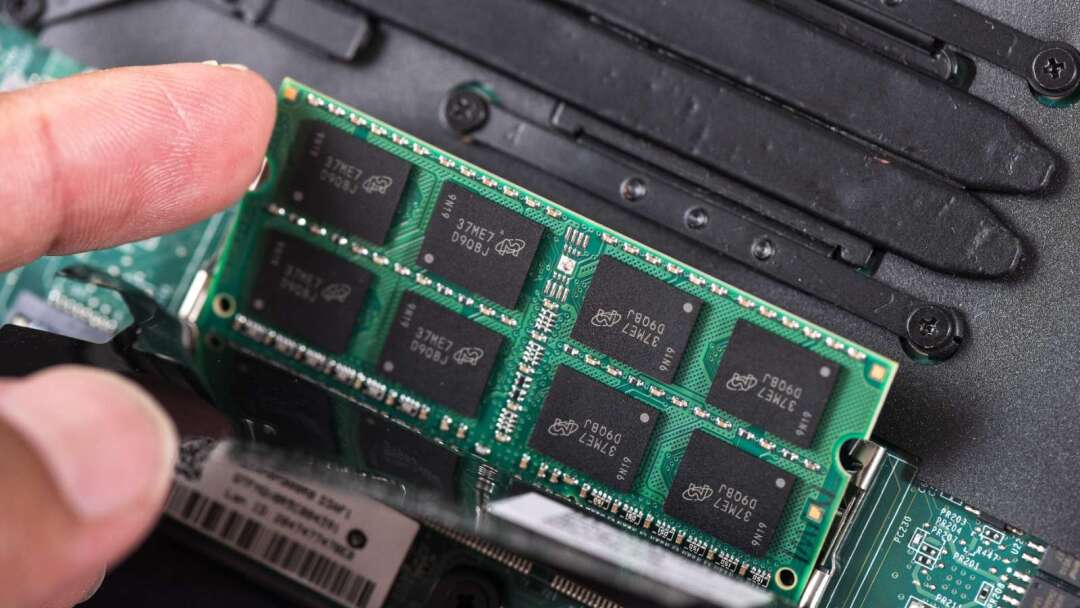
The expansion of artificial intelligence (AI) infrastructure is pushing the memory industry into a new cycle of supply-demand tension. Data released at FMS 2026 shows that prices for multiple memory products—including DRAM, enterprise SSDs, and HDDs—are rising in tandem, while supply-side limitations due to production ramp-up cycles and past experiences of overcapacity make it difficult to quickly meet surging demand.
Current industry signals suggest this round of memory price increases may not be just a short-term rebound within a traditional economic cycle. The rapid growth in AI-driven data processing, memory, and transmission demands is gradually transforming the underlying supply-demand structure of the memory market.
Information disclosed at FMS 2026 indicates that between 2025 and 2026, overall DRAM prices rose by up to approximately 170%, with retail prices for consumer-grade DRAM increasing as much as 400%. Contract prices for High Bandwidth Memory (HBM) rose by about 20%.
Enterprise SSDs are also under significant upward pricing pressure, with contract prices in Q1 2026 rising by up to 90%. In some niche SSD markets, prices nearly reached a 500% increase within nine months. At the same time, HDD prices rose by about 50%, and tape hardware prices increased by approximately 15%.
Price disparities across different memory products are also notable. Enterprise SSDs cost at least ten times more per TB than HDDs, and during certain periods, spot market price differences have widened to over 20 times—forcing data center operators to place greater emphasis on cost-effectiveness when designing memory architectures.
AI as the Primary Driver of Memory Demand: Rapid Growth in Data Volume
The core driver behind this round of memory demand growth differs from previous cycles driven by consumer electronics or traditional enterprise IT. AI training and inference are now becoming major catalysts.
AI models require repeated reading and writing of vast amounts of data—from the datasets used in model training to contextual information during inference—generating enormous memory demands. As model sizes grow, context lengths extend, and collaboration among AI agents intensifies, the importance of data processing and memory capacity continues to rise.
In particular, the rapid increase in token counts has drawn significant industry attention. For example, in AI accelerator systems, NVIDIA’s (NVDA-US) next-generation Rubin architecture is expected to deliver a tenfold increase in token generation compared to its predecessor Blackwell system. As AI compute workloads grow, the required data access bandwidth and memory capacity to support system operations must expand accordingly.
This means that demand for AI infrastructure is no longer solely about pursuing stronger computational power. The ability to continuously supply and store large volumes of data is increasingly becoming a critical factor in overall system performance.
Production Expansion Cannot Keep Pace: Memory Makers Remain Cautious About Overexpansion
While demand is rising rapidly, supply cannot immediately scale up—a situation closely tied to the memory industry’s recent history.
Between 2022 and 2023, the DRAM, SSD, and HDD markets experienced declining demand and inventory overhang, leading to sharp price drops and severe profit pressures for related companies. This experience has made memory manufacturers relatively cautious about large-scale capacity expansion even as demand recovers.
Although NAND Flash and DRAM makers have begun investing in new production capacity, the timeline—from capital expenditure and factory construction to achieving scalable output—remains lengthy. The industry expects meaningful new capacity to only begin coming online by late 2027 or even 2028.
Until then, if demand from AI data centers continues to grow, the supply-demand gap may remain difficult to close quickly, keeping memory prices under sustained upward pressure.
Beyond price hikes, another noteworthy market signal is that large data center operators are securing memory supply well in advance.
Some major customers have extended their HDD and SSD procurement contracts to 2027 or even 2028, using long-term agreements to lock in future supply volumes and pricing.
In an environment where tight supply is expected to persist, early capacity locking reduces procurement uncertainty—but it may also further constrict spot market availability, helping maintain high market prices.
When businesses anticipate continued memory cost increases, their willingness to purchase early naturally rises. However, increased procurement can tighten short-term supply, further fueling price hikes in a self-reinforcing cycle.
Rising KV Cache Demand: AI May Be Creating a New Memory Tier
Beyond increased demand for traditional DRAM, SSDs, and HDDs, AI computing may also be reshaping existing memory architectures in data centers.
One change drawing attention is the rapid growth of KV caching.
KV caching is a mechanism used in large language models to store intermediate state data during inference, preventing the system from repeating partial computations. Historically, such data was considered temporary and relatively small in scale, so it was typically handled by main memory or local caches.
However, as models grow larger, contexts lengthen, and AI agents collaborate more frequently, the volume of data requiring KV caching continues to increase.
When this data becomes too large for conventional memory to fully accommodate, yet requires faster access speeds than standard SSDs, a need may arise for a new memory tier positioned between main memory and traditional storage.
This suggests that competition in the future memory industry may extend beyond traditional products like DRAM, NAND Flash, and HBM, moving toward memory architectures redesigned specifically for AI workloads.
As prices for high-speed memory products continue to rise, lower-cost memory media are regaining market attention.
HDD prices have risen by about 50% between 2025 and 2026, and tape hardware prices have increased by approximately 15%. Although tape is a mature memory technology, its low cost per TB and suitability for long-term data retention mean it remains viable for cold data and long-term archiving in hyperscale data centers.
With both SSD and HDD costs rising, data center operators have stronger incentives to reevaluate their data tiering strategies, migrating infrequently accessed but long-term-retained data to lower-cost media to reduce overall infrastructure costs.
The Memory Market May Be Entering a Structural Shift
Signals from FMS 2026 indicate that this round of memory price hikes differs from past price fluctuations driven purely by economic cycles.
The traditional memory industry has often been subject to cyclical supply-demand patterns: rising demand drives up prices, prompting manufacturers to expand capacity, which eventually leads to oversupply and price declines.
However, AI is emerging as a new source of demand, and with model sizes, context lengths, and AI agent applications continuing to expand, memory demand is exhibiting characteristics distinct from past consumer electronics cycles.
Moreover, large cloud providers possess strong purchasing power, enabling them to reduce costs through long-term contracts and economies of scale. In contrast, smaller and mid-sized AI firms and developers may face higher procurement costs when memory supply is tight.
Another notable change is KV caching. While the market currently focuses heavily on HBM and advanced memory technologies, the emergence of new memory tiers driven by AI workloads could become the next direction for technological development.
Overall, AI data centers are redefining the role of memory in computing architectures. From DRAM, SSDs, and HDDs to tape—and potentially to new memory tiers created by KV caching demand—the data volume growth brought by AI is gradually permeating the entire memory industry.
If new production capacity cannot be deployed in time, market supply-demand tensions and price pressures may persist through late 2027 or even into 2028.
FACT BOX
- Source: PR Times
- Category: Survey
- Organizations: NVIDIA (NVDA-US)
- Dates in source: FMS 2026
- Products / services: DRAM / HBM