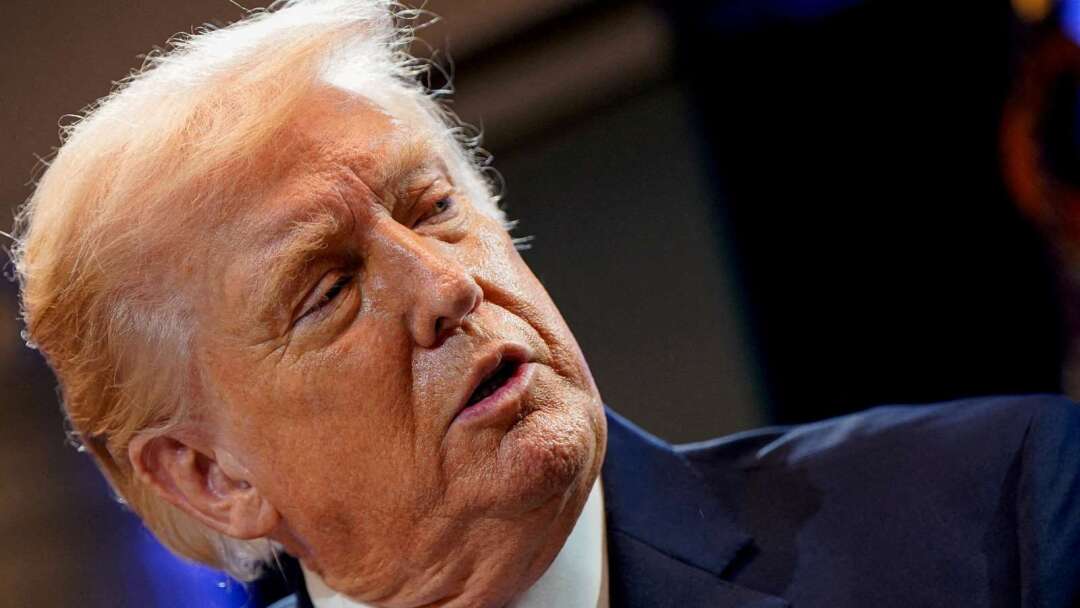
U.S.-Iran military and diplomatic tensions continue to escalate, as Trump sends another strong signal, further darkening the already bleak outlook for stalled negotiations. Meanwhile, security in the Strait of Hormuz is rapidly deteriorating, increasing shipping risks. Despite this, mediators like Qatar continue diplomatic efforts to bring the U.S. and Iran back to the negotiating table.
On Tuesday (18th), Trump posted on Truth Social, stating that the United States is not and will not engage in any talks or dialogue with Iran, either now or in the future.
He also claimed that the U.S. naval blockade against Iran remains fully effective, that the Strait of Hormuz is currently open and operating normally, and that all naval mines have been cleared or detonated.
(Image: Trump's Truth Social)
Earlier that day, Trump posted a map labeling the Strait of Hormuz as 'New U.S. Territory.' Iran's semi-official Fars News Agency quickly shared screenshots and rebutted, criticizing Trump for still claiming the strait as U.S. territory within what they called his 'delusion.'
(Image: Trump's Truth Social)
Iranian Deputy Foreign Minister Kazem Gharibabadi stated on the 18th that Trump's remarks on the Strait of Hormuz must either be corrected by himself or corrected by Iran.
On the question of whether the Strait of Hormuz has resumed normal passage, the U.S. and Iran offer completely different accounts.
According to CCTV, Iranian Parliament Speaker Mohammad Bagher Ghalibaf stated on the 18th that the Strait of Hormuz will remain closed until the United States meets the conditions listed in the memorandum of understanding reached with Iran, including lifting the maritime blockade and sanctions on Iran, and unfreezing Iran's frozen assets.
Amid rising tensions, a ship attack was again reported in the Strait of Hormuz on the same day.
The UK Maritime Trade Organisation (UKMTO) reported that a foreign oil tanker was attacked by unknown ordnance while departing port, causing engine room damage and injuring one crew member. The remaining crew were rescued by the Omani Coast Guard. This incident further deepens market concerns over shipping safety in the Strait of Hormuz.
Despite Trump's reaffirmation of no dialogue with Iran, mediators like Qatar continue seeking diplomatic solutions.
Qatar's Foreign Ministry spokesperson Anasiri stated that mediators are currently awaiting Iran and Oman's formal announcement of consensus on a Strait of Hormuz transit agreement, after which efforts to restart U.S.-Iran negotiations will advance.
Anasiri noted that Qatar and Pakistan previously mediated to help the U.S. and Iran reach a memorandum of understanding, but due to the ceasefire being broken, the agreement has not been fully implemented. Qatar continues to try to push both sides back into dialogue and implement previously agreed terms.
He emphasized that Qatar's current diplomatic priority is de-escalating the crisis and preventing further escalation. Crisis resolution pathways include achieving a U.S.-Iran ceasefire, reopening the Strait of Hormuz, ensuring freedom of navigation, and bringing both sides back to the negotiating table.
Anasiri stressed that the current priority is reaching an agreement that simultaneously ensures the opening of the Strait of Hormuz and a ceasefire, and Qatar will continue pushing for the resumption of negotiations among all relevant parties.
Core U.S.-Iran demands remain far apart.
Trump reiterated that the U.S.'s primary goal regarding Iran is to ensure that Iran 'does not possess nuclear weapons in any way or form.'
Meanwhile, the 60-day diplomatic window set by the memorandum of understanding signed in June has expired. Tehran previously described the agreement as 'effectively dead' and accused Washington of repeatedly violating its terms.
With diplomatic channels blocked, Iran's military warned on Monday that if diplomatic means fail to resolve the issue, Iran will shift to an 'offensive' posture and adjust its command structure accordingly.
This statement implies that if the U.S. and Iran fall back into military confrontation, Tehran may respond more aggressively.
Red Sea tensions rise as Houthi forces advance toward Bab el-Mandeb Strait
In addition to the Strait of Hormuz, shipping conditions in the Red Sea continue to deteriorate.
Houthi forces have recently closed a strategic port in Yemen and are advancing toward the Bab el-Mandeb Strait. According to Yemeni authorities, missile and drone attacks launched by the Houthis have forced the closure of the port of Mocha.
Mocha Port is a vital logistics hub for civilian shipping and anti-Houthi coastal forces.
Adam Baron, a Yemen expert at the think tank New America, described this as one of the most significant escalations in recent years, possibly the most severe since 2020.
Iran accuses U.S. of considering 'Venezuela model' for Iran
Amid ongoing military and diplomatic tensions, Iran has also accused the U.S. of strategic intentions.
According to Xinhua News Agency, Iranian Revolutionary Guard Deputy Commander Mostafa Izadi stated that the U.S. had formulated plans to overthrow Iran's regime and 'dismantle' Iran, even considering applying the 'Venezuela model' to Iran, but ultimately failed to achieve its goals.
Izadi also claimed that U.S. air power has suffered significant losses, with over 200 U.S. aircraft, including drones and manned planes, having crashed.
Additionally, related data shows that most young Americans do not support going to war with Iran.
Meanwhile, The Washington Post, citing sources, reported that the U.S. Department of Defense is considering reducing its military presence in the Gulf region after the end of a potential war with Iran.
The report noted that attacks by Iran have exposed defensive vulnerabilities at major U.S. military bases, prompting the Pentagon to evaluate different deployment options. One possible option is relocating some forces westward to Jordan, Israel, or Saudi Arabia, rather than rebuilding damaged military facilities.
The U.S. has not yet made a formal decision.
FACT BOX
- Source: PR Times
- Category: News