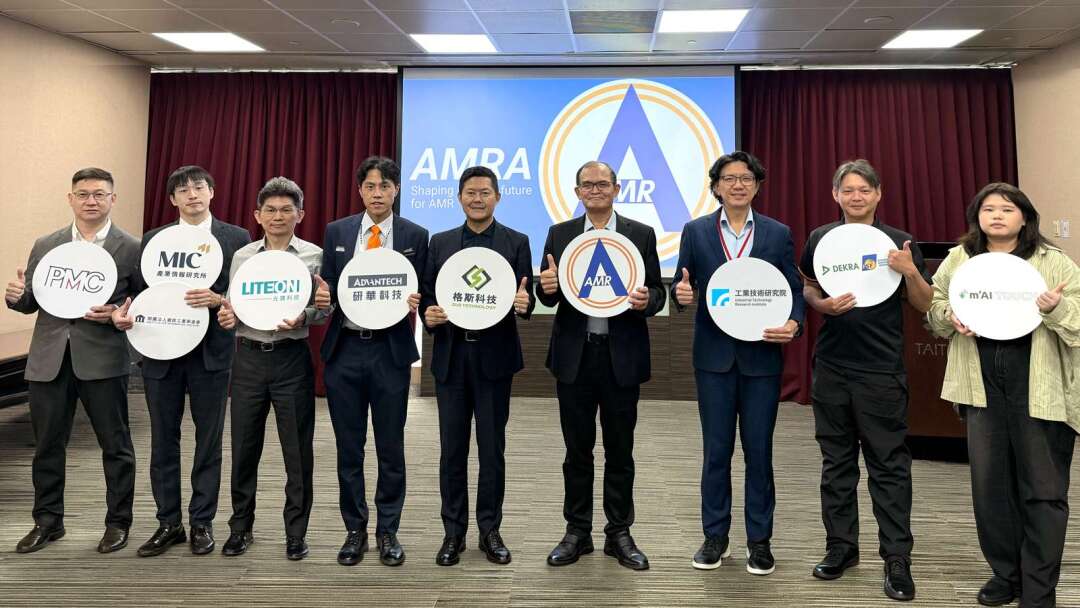
The biggest challenge in robot application deployment has shifted from product development to field implementation. On April 20, the Industrial Technology Research Institute (ITRI), together with the Autonomous Mobile Robot Alliance (AMRA)—a collaboration among industry, academia, and research institutions—announced the new edition of 'AMRA-201:2026 General Requirements and Test Methods for Mobile Robots.' This update marks the first inclusion of legged robots in performance testing specifications, covering wheeled, tracked, and legged types, and establishing a consistent and objective testing methodology.
ITRI emphasized that the core focus of this standard is to establish a uniform performance testing benchmark for Autonomous Mobile Robots (AMRs). For the first time, legged robots are included in the performance evaluation framework. Simultaneously, AMRA released the 'TARS/AMRA-300:2026 Guidelines for Robot-Friendly Environments in Mobile Robot Applications' to support enterprise site planning. These guidelines provide clear references for businesses—from product assessment to site setup—accelerating the commercialization and real-world deployment of autonomous mobile robots.
Dr. Hu Chu-Sheng, Deputy Director General of ITRI and Convener of AMRA, stated that since the alliance published Taiwan’s first safety standard for mobile robots, AMRA has continuously collaborated with industry, academia, and research bodies to achieve key milestones such as product testing and verification, certification labeling, cross-brand communication protocols, and multi-floor logistics solutions. These efforts have gradually established common industrial norms for autonomous mobile robots in Taiwan, helping companies shorten product development and validation timelines while accelerating the practical application of innovative technologies.
With rapid advancements in AI, demand for humanoid robots and diverse intelligent applications continues to grow. Industry attention has evolved beyond 'how to build a good robot' to 'how to enable robots to operate safely, smoothly, and efficiently across different environments.' Therefore, this year, AMRA not only continues refining product standards but also introduces guidelines for robot-friendly environments. The goal is to establish a comprehensive foundation for autonomous mobile robots—from product development and testing to field deployment—helping Taiwan seize new global opportunities in the robotics industry.
The highlight of the newly released 'AMRA-201:2026' is the first-time inclusion of legged robots in performance testing specifications. It encompasses various types of mobile robots—including wheeled, tracked, and legged models—and establishes a consistent, objective evaluation method.
In the future, whether it's logistics transport robots, quadruped inspection robots, or emerging humanoid robots, all can undergo performance evaluation under the same standard. This not only helps manufacturers improve product quality but also enables buyers and users to compare different products using a consistent benchmark, lowering adoption barriers and promoting faster application of autonomous mobile robots in smart manufacturing, logistics, healthcare, and commercial services.
In addition to product performance standards, AMRA has partnered with the Taiwan Association of Intelligent Robotics and Automation (TAIROA) to release the 'TARS/AMRA-300:2026 Guidelines for Robot-Friendly Environments in Mobile Robot Applications,' available for free download by industry stakeholders. The guidelines cover aspects such as site planning, digital infrastructure, operational workflows, and management mechanisms, helping enterprises understand the prerequisites for adopting autonomous mobile robots. For example, they offer guidance on designing robot-accessible workspaces, building cross-system collaboration environments, and establishing robust management processes—ensuring robots operate more safely, stably, and efficiently. This supports factories, logistics centers, medical facilities, and commercial venues in accelerating their smart transformation.
Beyond launching these two major initiatives, the 'AMRA Seminar 2026' focused on globally trending topics in intelligent robotics. Experts from Gethics, DEKRA, Tron United, Lite-On Technology, Advantech, Maiqi Technology, Precision Machinery Research & Development Center, and the Institute for Information Industry shared insights on market trends, industry standards, product technologies, testing and verification, system integration, and real-world application cases. Through practical knowledge exchange, the seminar helped enterprises grasp the latest developments and business opportunities in mobile robotics, accelerating the transition from technological innovation to commercial application.
Looking ahead, as autonomous mobile robots rapidly enter fields such as smart manufacturing, logistics, healthcare, and commercial services, ITRI and AMRA will continue integrating resources from industry, academia, and research institutions. They aim to deepen standardization, testing, verification, and application promotion for autonomous mobile robots, while collaborating with industries to refine smart environment deployment frameworks. By building a more complete autonomous mobile robot ecosystem, they seek to help Taiwanese enterprises capture global trends and new business opportunities in the smart robotics sector, enhancing international competitiveness.
FACT BOX
- Source: PR Times
- Category: Partnership
- Products / services: AMRA-201:2026 / TARS/AMRA-300:2026