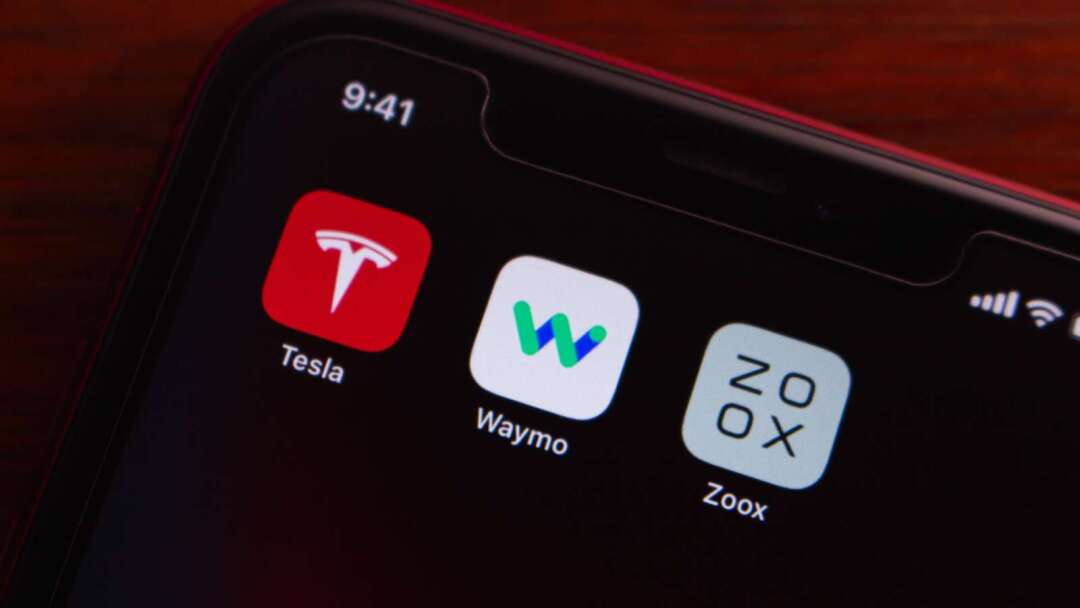
As Tesla (TSLA-US) and Alphabet (GOOGL-US)-backed autonomous driving company Waymo continue advancing self-driving technology and robotics, the market widely views them as key competitors vying for dominance in future autonomous technologies. However, NVIDIA (NVDA-US) partner Ouster (OUST-US) believes these two companies are not threats but are instead jointly expanding the Physical AI market.
Ouster co-founder and CEO Angus Pacala recently stated in an email interview with Benzinga that the company does not see Tesla or Waymo as competitors, but rather positions them as pioneers in Physical AI applications. He believes that continued investment in capital and technical resources by major tech and autonomous driving firms will help drive the entire autonomous systems industry forward.
Pacala stated that autonomous technology should not be viewed as a zero-sum game. Ouster's strategy is not to directly compete with companies manufacturing self-driving cars or robots, but to focus on providing sensing and environmental perception technologies, enabling more businesses to develop various types of autonomous systems.
He noted that as markets for autonomous driving, robotics, and smart infrastructure continue to grow, an increasing number of companies are seeking partners that can offer complete platforms and development tools, rather than purchasing and integrating sensors from disparate sources on their own.
Pacala said: "We are increasingly seeing companies planning autonomous system roadmaps want partners who can provide platforms and tools to build Physical AI solutions, without having to rebuild entire sensing technology stacks from scratch."
This strategy is also reflected in Ouster's partnership with NVIDIA. Pacala described NVIDIA as an "excellent partner" and noted that Ouster's sensing platform has been certified on NVIDIA's DRIVE autonomous driving platform and Jetson robotics platform.
However, Ouster has not tied its technology to a single ecosystem. Pacala stated the company maintains technological neutrality, aiming for its sensing and perception technologies to serve a broader autonomous systems market rather than relying on specific chips, automakers, or robotics platforms.
Ouster is also gradually repositioning itself in the market. Unlike its earlier focus primarily as a digital LiDAR supplier, the company now increasingly positions its products as unified sensing and perception platforms, integrating digital LiDAR, cameras, AI computing power, and perception software to provide a more complete framework for autonomous system development.
Pacala believes the future competitive focus in the Physical AI industry will not be on which company can showcase the most impressive technology or advanced prototypes, but on which can truly deploy autonomous systems safely, reliably, and at scale in the real world.
He stated that the opportunity Ouster sees is enabling a wider range of Physical AI companies to more easily access sensing and environmental perception capabilities. Ultimately, the market will determine industry winners based on whether technologies operate effectively in the real world, are reliable and safe, and can be deployed at scale.
From an investment perspective, this also offers a different lens on the autonomous driving and robotics race. As more companies invest in self-driving vehicles, robots, and smart infrastructure, investment opportunities may extend beyond companies building end products to include suppliers of key technologies such as sensors, AI computing, and perception software.
Ouster's strategy is precisely a bet on this industrial division of labor. If Tesla and Waymo continue advancing autonomous driving technology, more companies may accelerate their moves into autonomous mobility, robotics, and other Physical AI applications. For Ouster, an increase in market participants does not necessarily mean intensified competition, but could instead indicate growing demand for underlying sensing and perception technologies.
Therefore, Pacala believes Tesla and Waymo's continued growth may not simply mean market share battles, but rather an expansion of the entire Physical AI industry's application scope. For Ouster, the key is not to become the next self-driving car or robot manufacturer, but to become a key technology partner behind these autonomous systems and capture the long-term opportunities as Physical AI moves from concept validation to real-world deployment.
FACT BOX
- Source: PR Times
- Category: Partnership
- Organizations: Waymo / Alphabet / NVIDIA