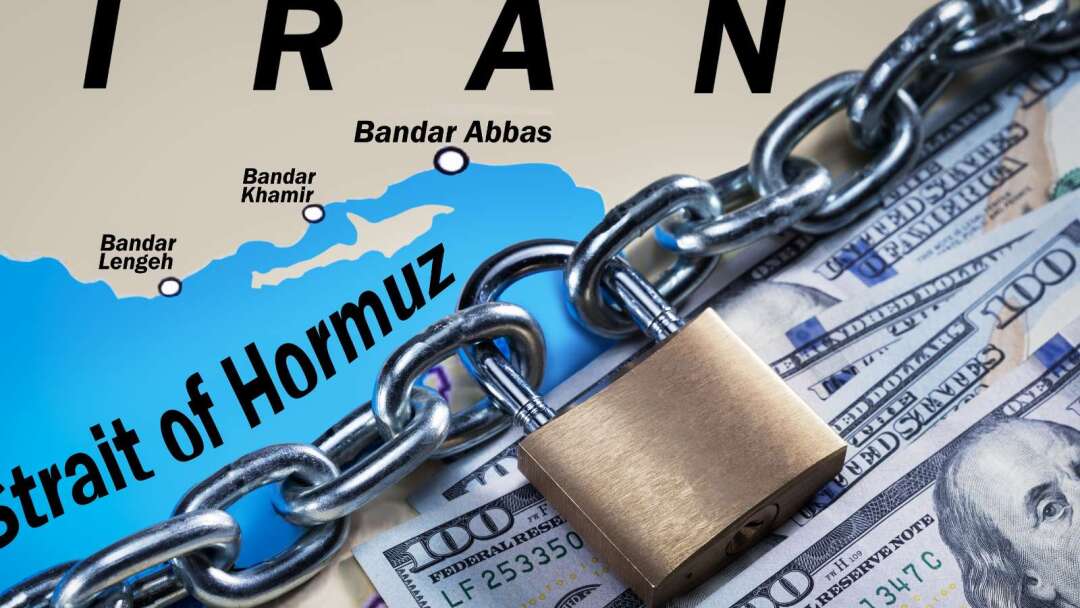
Iran's Persian Gulf Strait Authority (PGSA) announced new transit regulations on Sunday (23) via the X platform: effective immediately, any vessel violating Iran's Hormuz navigation agreement will face fines, detention, or seizure for future passage. Shipowners traveling to and from the Persian Gulf must now check the official website for a 'list of non-compliant vessels' before chartering ships.
On the same day, Iran's parliamentary National Security Committee approved the 'Strategic Action Plan for Ensuring the Security and Development of the Strait of Hormuz,' authorizing Iran to charge fees for navigation, environmental protection, special fuel supply, insurance, and security services, payable in rials or currencies designated by Tehran.
Meanwhile, US Central Command reported on Sunday that the guided-missile destroyer USS John Finn was conducting maritime blockade operations against Iran in the Arabian Sea. As of that day, it had directed 70 commercial vessels to alter course, disabled three, boarded and inspected two, and intercepted a total of 75 vessels.
Last Wednesday (19), US President Trump announced the launch of the 'toughest economic action any country has ever faced' against Iran, calling it an unprecedented 'economic war and economic isolation' and an 'economic D-Day,' aiming to sever all 'lifelines' including oil smuggling, currency swaps, cash transfers, ship registries, and shell companies.
US Treasury Secretary Bessent confirmed that specific measures would be unveiled on Monday (24) Eastern Time, deploying all enforcement tools for secondary sanctions, focusing on three activities: purchasing Iranian oil, transferring funds to Iran, and ship-to-ship transfers at sea. He explicitly stated, 'We likely won’t need large-scale military operations anymore.'
In response, Iran's Supreme National Security Council Secretary Mohsen Rezaei lashed out on Sunday: 'If the US continues its economic war, not a single drop of oil will flow from Hormuz and the Persian Gulf. Any country participating in or supporting the economic war against Iran will be considered as engaging in war.'
The Iranian Revolutionary Guard also stated it has prepared countermeasures, including attacks on alternative routes such as Saudi Arabia’s Yanbu pipeline and the UAE’s Fujairah terminal. Simultaneously cutting these would severely damage the Persian Gulf’s backup export capacity.
Countries caught between the US and Iran are now seeking survival strategies. Oman is discussing the resumption of transit negotiations with Iran. Iraq has sent a ministerial committee to Saudi Arabia to negotiate OPEC quotas and applied to Iran for special permits.
Before the crisis, the Strait of Hormuz transported approximately 20 million barrels of crude and refined oil daily, carrying about one-fifth of the world’s seaborne oil and liquefied natural gas (LNG). Now, on one side are PGSA’s non-compliance lists and transit invoices, on the other, the US military has forced 70 commercial vessels to change course, and Treasury Secretary Bessent’s 'financial offensive' looms. The pricing power over this critical energy chokepoint—the Strait of Hormuz—is being rewritten simultaneously by the US and Iran.
FACT BOX
- Source: PR Times
- Category: News