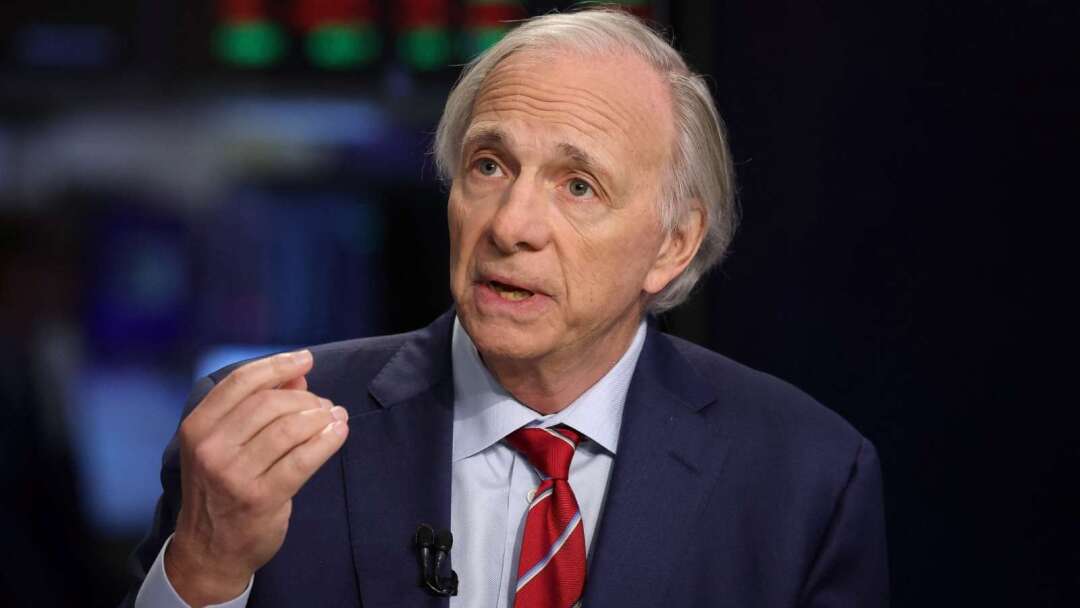
Ray Dalio, founder of Bridgewater Associates, has once again sounded the alarm: the United States' debt problem is moving toward a crisis, and if the current situation does not change, a debt crisis could erupt within the next three years—give or take about two years. He recommends that investors reduce their allocation to bonds and other debt-related assets, increase their holdings of gold, and hold a small amount of Bitcoin.
Global long-term government bonds have recently faced heavy selling pressure, with U.S. long-term yields continuing to rise. In a recent column, Dalio pointed out that Japan’s recent sale of U.S. Treasuries to support the yen, the rising yields on U.S. long-term bonds, and recent statements by U.S. Treasury Secretary Bessent align with the classic pattern he described in his book 'Why Nations Fail: Principles for Navigating Big Debt Cycles.'
He believes that persistently rising debt servicing costs will eventually clash with insufficient investor demand, forcing the government to accept higher interest rates—or compelling central banks to print money to buy government debt. The latter would further erode currency value and fuel inflation.
In the case of the United States, Dalio estimates that the government’s total income this year is approximately $5.5 trillion, while total spending is around $7.5 trillion, resulting in a budget shortfall of about $2 trillion. The current debt balance stands at roughly $32 trillion—excluding intergovernmental debt—equivalent to nearly six times the government’s annual revenue. Annual interest payments already exceed $1 trillion.
If we treat the U.S. government as a single corporation, interest payments alone consume about 20% of annual revenue, while approximately $10 trillion in principal repayments are also due.
In other words, the U.S. government must raise about $11 trillion from financial markets to avoid sovereign default—a financing scale equivalent to twice its annual income.
Given this, Dalio predicts that unless the U.S. takes steps to reverse its current trajectory, a debt crisis 'could happen within three years, give or take two years.' Moreover, the U.S. is not alone in facing debt pressures. As economies undergo debt and currency devaluation adjustments, assets such as gold and Bitcoin may perform relatively well.
On asset allocation, Dalio advocates full diversification, recommending investments in countries and asset classes with sound income profiles and balance sheets, low domestic political conflict, and minimal external geopolitical tensions. He suggests underweighting bonds and other debt assets, overweighting gold, and allocating a small portion to Bitcoin.
Specifically, he proposes that individuals allocate a modest portion—such as 10% to 15%—of their personal funds to gold, which could help lower overall portfolio risk while potentially enhancing returns.
Coincidentally, both gold and Bitcoin strengthened simultaneously last Friday (the 21st). Spot gold surged over 2%, reclaiming above $4,600 per ounce for the first time in three months; Bitcoin briefly approached $80,000.
In fact, Dalio has been warning about U.S. debt issues for many years, increasingly emphasizing in recent years that the U.S. is in the late stage of a major debt cycle. To delay or even avert the crisis, he believes the U.S. must adopt a 'three-pronged approach'—cutting spending, raising taxes, and lowering interest rates—to reduce the current budget deficit of about 6% of GDP down to 3%.
FACT BOX
- Source: PR Times
- Category: News