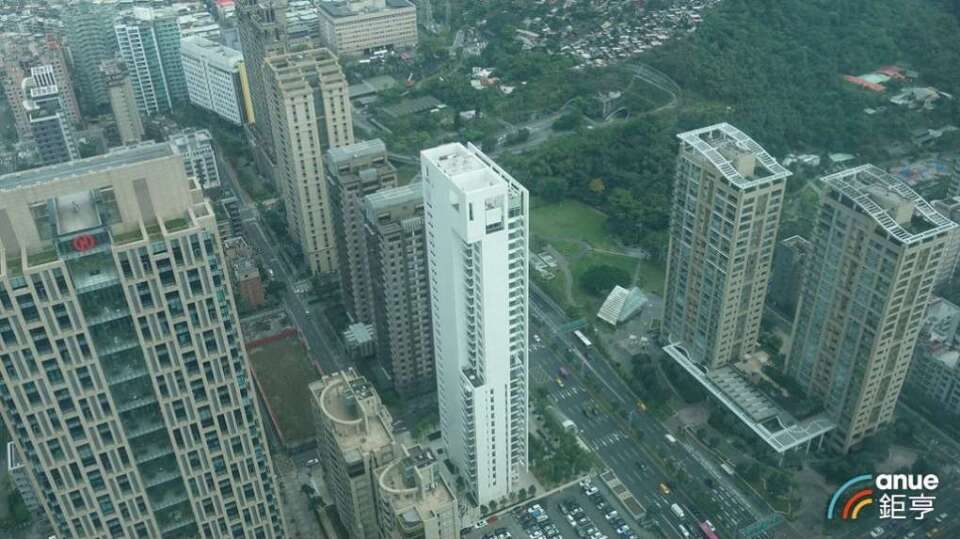
In recent years, Taiwan's real estate market has seen a significant decline in transaction volume due to central bank credit controls, tighter mortgage lending, and an overall market slowdown. However, the luxury property segment has shown divergent trends. Based on actual transaction registration data, a real estate brokerage analyzed changes in luxury property transaction shares across Taiwan and its seven major cities from 2022 to the first half of 2026, revealing that Taipei City reached 5.6% in the first half of 2026, ranking first among the seven cities.
Moreover, among all metropolitan areas in Taiwan, Taipei is the only city where the luxury property transaction share has increased for three consecutive years. In the first half of 2026, luxury transactions accounted for 5.6% of total residential transactions in Taipei—topping the seven cities and the only metropolitan area to surpass the 5% threshold.
Chen Jinping, Deputy Director of the Evergreen Real Estate Research and Development Center, analyzed that Taipei boasts Taiwan’s most comprehensive cluster of financial, commercial, and corporate headquarters, with a highly concentrated population of high-net-worth individuals. Limited land supply in core areas and the scarcity of luxury housing products endow top-tier residences with strong value preservation characteristics. Additionally, the wealth effect from the stock market has prompted some high-net-worth individuals to redirect part of their profits into real estate investments. As a result, while overall housing transactions have declined, the luxury market has demonstrated greater resilience.
Looking further at other metropolitan areas, Hsinchu County and City recorded a 3.0% luxury transaction share in the first half of 2026, ranking second; Taichung City followed at 2.9%; Kaohsiung City and Taoyuan City both at 1.3%; New Taipei City at 0.6%; Tainan City at 0.7%; and the national average stood at 1.5%. Chen noted that Hsinchu benefits from its tech industry cluster, high-income workforce, and corporate executive housing demand, providing support for large-unit and high-priced properties in areas like Zhubei and Hsinchu City. Taichung, with premium residential clusters in the 7th District and Shuinan Economic and Trade Park, combined with abundant capital from central Taiwan’s business owners and traditional industries, maintains relatively stable demand for luxury homes, both for self-use and asset allocation.
Examining long-term trends, Chen pointed out that Taiwan’s overall luxury transaction share peaked relatively in 2024 and has since stabilized around 1.5% over the past two years, showing no significant expansion. In contrast, Taipei’s share has risen steadily from 2.8% in 2023 to 5.6% in the first half of 2026—an increase of 2.8 percentage points—marking three consecutive years of growth. Amid cooling demand in the general housing market, Taipei’s luxury segment has exhibited a unique phenomenon of increasing market share.
In comparison, other cities’ luxury shares have fluctuated slightly with market conditions. For instance, Hsinchu County and City reached a high of 3.8% in 2024, driven by the tech sector and high-income population, but later retreated. Taichung declined from 3.5% in 2024 to 2.9% in the first half of 2026; Kaohsiung also dropped from 2.0% to 1.3%. This indicates that while luxury demand in central and southern Taiwan, fueled by tech themes, experienced rapid growth, buying momentum has gradually returned to normal levels as the market cools.
Chen emphasized that while the wealth effect from this year’s rise in Taiwan’s stock market has indeed supported high-net-worth individuals’ home purchases, this effect has not universally boosted luxury markets across regions. Therefore, the luxury market is expected to continue showing “project-specific performance,” with only landmark properties offering scarcity, value preservation, and long-term asset allocation functions likely to attract high-net-worth buyers.
FACT BOX
- Source: PR Times
- Category: Survey