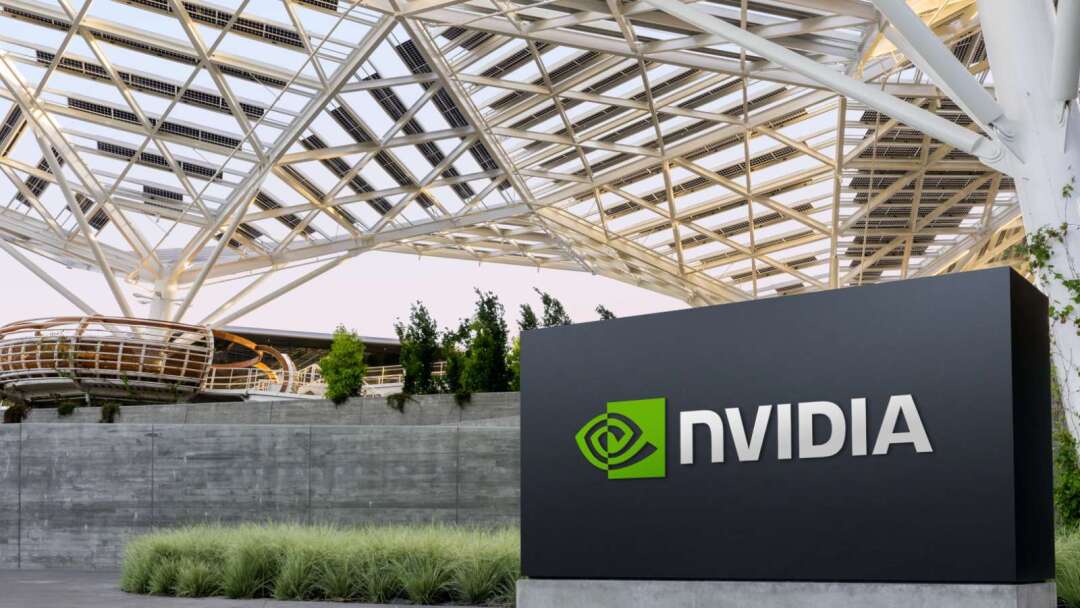
U.S. tech stocks surged on Thursday (27th) as CNBC financial commentator Jim Cramer stated that NVIDIA (NVDA-US) and Salesforce (CRM-US) not only exceeded market expectations with their latest earnings, but also decisively refuted two of Wall Street’s most prevalent bearish narratives. NVIDIA’s stock rose approximately 8%, while Salesforce soared around 22%, prompting the market to reassess concerns over cooling AI demand and whether generative AI could disrupt traditional enterprise software business models.
Cramer described on his show how the market had previously been influenced by "lies, damned lies, and fabricated statistics," and that the bearish narratives surrounding NVIDIA and Salesforce were ultimately shattered by reality. He argued that the latest earnings forced investors to reevaluate prior doubts that had suppressed both stocks, calling Thursday a day of massive market correction.
Salesforce’s biggest concern was that as AI models improve, enterprises might use AI to accomplish more tasks, reducing their need for traditional software subscriptions and user licenses—potentially undermining the entire SaaS industry’s pricing model. This so-called "SaaSpocalypse" theory had pressured Salesforce’s stock, which, despite a rebound one month before the earnings release, had still declined about 22% year-to-date.
However, Salesforce’s latest quarterly report showed that AI did not erode its core business as bears predicted, but instead is becoming a new growth driver. For the second quarter of fiscal 2027 ending July 31, the company reported revenue of $11.35 billion, up 11% year-over-year and slightly above the market’s $11.33 billion forecast. Adjusted earnings per share (EPS) reached $5.90, far exceeding the estimated $3.28. The company also raised its full-year revenue guidance to $46.1–46.4 billion, up from the previous $45.9–46.2 billion.
Salesforce CEO Benioff said the company delivered one of its best quarters ever, with all key metrics exceeding expectations, and emphasized that AI is enhancing the value of its entire platform. Company data shows that annual recurring revenue (ARR) from AI and data products is nearing $4 billion, while the combined ARR from AI agent tool Agentforce and Data 360 has grown over 210% year-over-year to approximately $3.9 billion.
Cramer highlighted that Salesforce saw growth in seats for its Sales, Service, and Slack products compared to the prior year, customer churn remained near historic lows, and AI product demand continued to accelerate. The company reported that net new annual order value (NNAOV) growth was the strongest in the past four years, and subscription and support revenue increased 12% year-over-year—indicating that enterprise customers are not abandoning traditional software services en masse due to AI.
Salesforce’s expanded partnership with AI startup Anthropic also became a key factor in shifting market sentiment. Previously, large model developers like Anthropic were seen as potential threats to traditional enterprise software firms. But now, the two companies are deepening collaboration, launching a new service called "Claudeforce" that integrates Anthropic’s Claude model with Salesforce’s enterprise data and workflows, enabling users to leverage AI for tasks like drafting emails, updating customer records, and executing other business operations. This demonstrates that large AI models and enterprise software platforms need not be substitutes—they can be complementary.
Cramer believes the most significant takeaway from Salesforce’s earnings is that enterprise AI development does not necessarily devalue existing software companies. While AI agents may change how users interact with software, critical enterprise assets—data, workflows, business logic, and governance—still require a foundational platform. Salesforce is attempting to transform these existing assets into competitive advantages in the AI era.
In contrast, NVIDIA faced broader bearish arguments, including potential slowdowns in AI capital expenditures by hyperscalers, customers shifting to in-house ASICs, rapid GPU depreciation, possible delays in the next-generation Vera Rubin platform, and concerns that NVIDIA’s investments and financing for AI customers could create artificial demand cycles.
Yet, NVIDIA’s latest earnings also clearly surpassed expectations. For the second quarter of fiscal 2027 ending July 31, NVIDIA reported revenue of $96.22 billion, a 106% year-over-year increase and above the $92.27 billion market estimate. Adjusted EPS was $2.22, exceeding the expected $2.09. Data center revenue reached $89 billion, more than doubling year-over-year, signaling that global AI infrastructure investment has not cooled.
For the next quarter, NVIDIA forecasts revenue of $108 billion, implying about 89% year-over-year growth. More surprisingly, management projected that revenue for the next fiscal year ending January 2028 could grow approximately 70%, far exceeding Wall Street’s prior expectation of around 45%. Reuters noted that this long-term growth outlook has renewed market confidence in a multi-year AI investment cycle, boosting the entire semiconductor sector.
Cramer pointed out that NVIDIA’s customer base is becoming increasingly diversified. Hyperscalers now account for about half of its business, while the rest comes from sovereign AI initiatives, neocloud providers, enterprise customers, and AI labs. This reduces NVIDIA’s reliance on a few large tech firms and mitigates concerns about exposure to any single customer’s capex cycle.
NVIDIA CEO Jensen Huang reiterated that the next-generation Vera Rubin platform remains on schedule, with no major delays as feared by the market. Cramer emphasized that Huang also stressed older-generation NVIDIA AI infrastructure does not rapidly lose value—ongoing software optimization allows existing hardware to improve computational efficiency and productivity for years, directly countering bearish claims about rapid GPU depreciation and potential asset impairments in AI data centers.
Amazon’s (AMZN-US) AWS procurement plans became another key evidence for Cramer to refute the argument that tech giants will fully switch to in-house chips. While Amazon continues developing its own AI chips, AWS still plans to purchase 2 million NVIDIA GPUs and may adopt millions more of the newly launched Vera server CPUs. Cramer argued this shows that even as cloud giants aggressively develop in-house silicon, they are not halting NVIDIA purchases—indicating that the scale of AI compute demand can accommodate multiple chip architectures.
Cramer stressed this procurement commitment is especially important because it signals that AI customers are finding clearer monetization paths. The market’s biggest prior fear was that tech giants investing hundreds of billions in AI data centers might not generate returns, leading to capex cuts. Now, AWS and other cloud providers continuing to expand AI infrastructure procurement suggests enterprises have real demand for GPU compute resources and can monetize AI through selling compute power, cloud services, and enterprise AI products.
Still, some concerns about NVIDIA remain. Market attention continues on its large supply commitments to secure supply and financial support provided for AI customers and data center leasing deals. Some investors worry these supply chain and financing obligations could amplify downside risks if AI demand slows abruptly. However, NVIDIA’s current revenue growth and order visibility at least temporarily weaken the argument that AI demand is peaking.
Fueled by strong earnings from NVIDIA and Salesforce, U.S. tech stocks rallied broadly on Thursday. The S&P 500 rose 0.7%, the Dow Jones Industrial Average gained 0.2%, and the Nasdaq Composite surged 1.6%. The market reaction indicates investors are rebuying tech positions they had previously reduced due to fears of cooling AI demand and SaaS disruption.
Cramer bluntly stated that short-sellers betting on these two companies’ decline suffered "devastating losses" on Thursday. He argued that this price surge again shows how popular market narratives can diverge from actual corporate fundamentals. When investors overly believe that AI will destroy the SaaS model or that NVIDIA’s AI demand has peaked, strong earnings reports are often enough to force rapid market corrections.
Overall, Salesforce and NVIDIA’s latest results challenge two major market narratives: "AI will replace traditional enterprise software" and "AI infrastructure investment is about to cool." The former proves enterprise software platforms can benefit from the AI wave through AI product growth, low churn, and collaboration with Anthropic. The latter reinforces the signal of sustained AI capex through revenue doubling, continued data center demand expansion, and a projected ~70% revenue growth for fiscal 2028.
For investors, this earnings-driven rally highlights how technology
FACT BOX
- Source: PR Times
- Category: 財務報告
- Organizations: Salesforce / Anthropic / AWS
- Products / services: GPU / Salesforce Platform