As artificial intelligence (AI) computing demand continues to grow, competition in the AI chip market is expanding beyond GPUs to customized accelerators (XPU/ASIC). Against this backdrop, NVIDIA (NVDA-US) has announced a $3.5 billion convertible bond investment in MediaTek (2454-TW), establishing a deep 10-year collaboration. NVIDIA will open its core interconnect, networking, and AI infrastructure ecosystem to MediaTek.
Analysts highlight that this partnership extends beyond edge AI and next-generation Windows PCs to data centers. MediaTek will leverage NVIDIA’s NVLink Fusion technology to integrate its custom XPU/ASIC chips into NVIDIA’s AI factory architecture—this aspect has drawn significant market attention.
Under the collaboration, NVIDIA will grant MediaTek access to multiple AI infrastructure technologies, including the sixth-generation NVLink chip-to-chip interconnect, Spectrum-X switches and network rack architecture, and the next-generation NVHBM custom high-bandwidth memory packaging ecosystem.
NVLink Fusion enables MediaTek-designed custom chips to connect to NVIDIA’s data center AI ecosystem. In other words, even if customers adopt MediaTek’s XPU/ASIC, they can still integrate with NVIDIA’s networking, interconnect, and other infrastructure components.
This model signifies that NVIDIA’s business strategy is no longer solely centered on GPUs. By opening up its networking and infrastructure, NVIDIA aims to sustain value creation through data center networking, CPUs, switches, and system architecture—even as some AI workloads shift to custom chips.
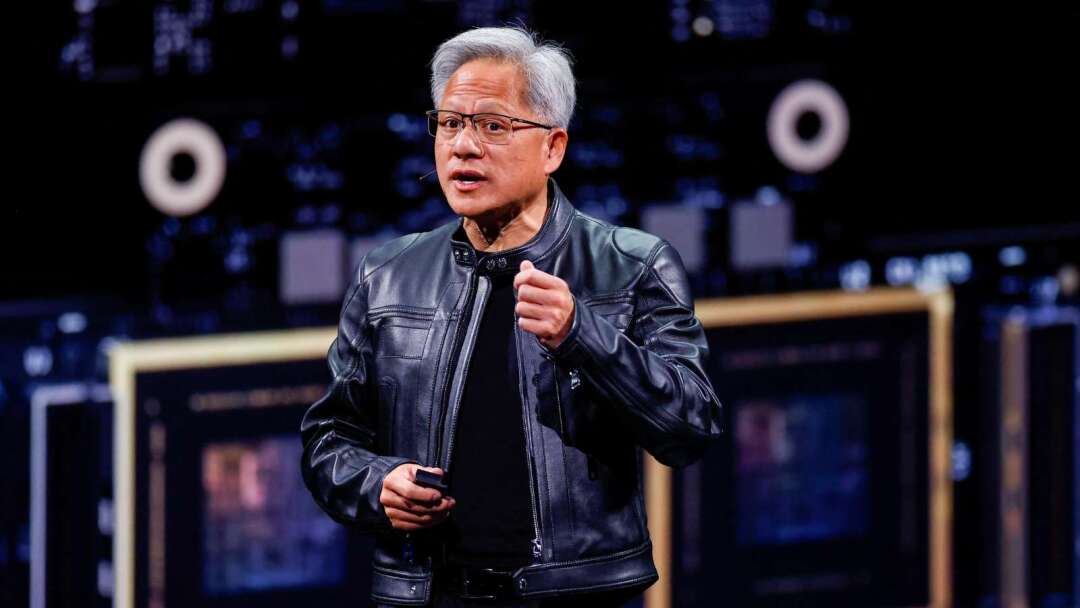
NVIDIA CEO Jensen Huang noted that XPUs and ASICs already exist in the market, and there is customer demand—including from cloud service providers—for customized chips. Therefore, NVIDIA’s chosen path is not direct competition, but rather integrating these chips into its own infrastructure ecosystem.
From a data center value perspective, NVIDIA estimates that the system value per GW of data center capacity has increased from approximately $18 billion during the Hopper era to about $25 billion in the Grace Blackwell era, and is expected to exceed $40 billion in the Vera Rubin era.
The reason lies in the transformation of AI data centers from simple GPU procurement to comprehensive AI factories encompassing multiple chips, network switches, and interconnect architectures. NVIDIA thus aims to expand its value chain from the single GPU product to a complete AI infrastructure suite.
For MediaTek, this partnership provides a crucial entry point into the cloud AI computing market. Currently, MediaTek’s AI chip business is valued at around $2 billion, with a target to capture 15%—approximately $12 billion—of the $80 billion potential market next year.
By leveraging NVIDIA’s interconnect, networking, and HBM packaging ecosystem, MediaTek can significantly reduce the time and resources required for ASIC customers to build full data center infrastructure independently.
MediaTek Chairman Rick Tsai emphasized that the primary value for ASIC customers lies in accelerating time-to-market while retaining the flexibility offered by custom chips. Meanwhile, MediaTek can further expand into the cloud computing market through NVIDIA’s data center ecosystem.
Beyond data centers, the collaboration extends to AI PCs and edge AI. NVIDIA GPUs and MediaTek SoCs can be interconnected via die-to-die packaging, and the companies have already launched DGX Spark, a desktop-class AI computing solution. A PC-market version, RTX Spark, is also planned.
The two companies will also collaborate with Microsoft (MSFT-US) to develop next-generation Windows PCs targeting personal computing needs in the era of AI agents (Agentic AI).
Additionally, the partnership covers smart vehicles and robotics, creating a mutually reinforcing model across various AI application markets.
Supply chain integration is another key aspect. NVIDIA will open its next-generation custom HBM technology ecosystem—including custom substrate and CoWoS advanced packaging standards—to MediaTek and other partners.
Analysts suggest this aims to standardize and integrate the supply chain, leveraging NVIDIA’s massive installed base and supply capacity to alleviate supply constraints amid ongoing AI chip expansion.
However, Tsai acknowledged that the biggest challenge in AI infrastructure expansion remains the supply chain, including HBM supply, substrate capacity, and CoWoS advanced packaging capacity. Nonetheless, he remains optimistic and emphasized Taiwan’s central role in the global AI infrastructure ecosystem.
Regarding concerns about a 'circular financing' scenario—where MediaTek uses NVIDIA’s investment to buy NVIDIA products—Huang stressed that MediaTek is a major global SoC manufacturer with strong profitability. NVIDIA’s investment is a long-term strategic commitment to its Taiwanese tech partner and a 10-year collaboration, not a financial loop.
As for whether enabling easier ASIC integration into NVIDIA data centers contradicts Huang’s previous statements about GPU cost-efficiency over custom chips, he stated the two are not mutually exclusive.
GPUs offer high versatility, covering data processing, pre-training, post-training, and inference. XPUs, on the other hand, serve specific customers and use cases. Even if some GPU workloads are replaced by ASICs, NVIDIA can still generate value through networking, CPUs, switches, and the overall AI system.
Strategic Significance of the NVIDIA-MediaTek Partnership
Analysts note that for NVIDIA, this partnership is more than a capital investment—it symbolizes a shift from a chip supplier to an AI infrastructure platform.
NVIDIA’s value capture will expand from GPUs to networking, switches, CPUs, chip interconnects, and advanced packaging. By opening core technologies like NVLink, NVIDIA integrates potentially competitive ASICs into its ecosystem, turning potential rivals into partners and reducing pricing pressure.
Moreover, through products like DGX Spark and RTX Spark, NVIDIA aims to secure early access to the PC and edge AI markets in the upcoming era of AI agents.
For MediaTek, this collaboration helps break beyond its traditional focus on mobile and IoT edge chips, enabling entry into cloud AI computing and data center markets.
Access to NVIDIA’s sixth-generation NVLink technology reduces R&D investment in high-speed interconnects and accelerates commercialization of custom ASICs using NVIDIA’s existing AI infrastructure.
Combined with joint market expansion, this could help MediaTek reach cloud service providers and other potential customers more quickly.
From an industry perspective, the partnership may further standardize custom AI chips in data centers. If NVLink Fusion gains wider adoption, it could become a key technical standard for ASIC integration into AI infrastructure.
Simultaneously, deeper collaboration between NVIDIA and MediaTek in chips, interconnects, networking, and packaging may drive global AI supply chain realignment, further highlighting Taiwan’s role in the AI chip and infrastructure supply chain.
As AI factory architectures grow more complex, competition may shift from pure chip performance to holistic ecosystem and system integration capabilities.
For smaller ASIC vendors lacking the ability to build full infrastructure—including networking, interconnects, and advanced packaging—the market entry barrier may rise. Industry competition is gradually shifting from single-chip rivalry to ecosystem and platform-level competition.
Bloomberg Interview with NVIDIA CEO Jensen Huang and MediaTek CEO Rick Tsai
Host: The core idea is enabling customers to plug their own custom chips (XPU/ASIC) directly into any GPU-based architecture, sharing memory and networking. Jensen Huang, could you first explain what this technical agreement entails?
Jensen Huang: We’re announcing a major collaboration today. NVIDIA and MediaTek have worked together for a long time, but now we’re scaling it up. Initially, we recognized that MediaTek produces world-class mobile and edge system-on-chips (SoCs), so we integrated NVIDIA’s NVLink chip-to-chip interconnect interface. This allows MediaTek’s SoCs to directly connect to NVIDIA GPUs.
The first outcome is the DGX Spark computer—a compact machine delivering 1 petaflop of computing power, extremely powerful. You don’t need to send data to the cloud; you can run advanced AI agents (Agentic AI) right on your desktop.
FACT BOX
- Source: PR Times
- Category: Partnership
- Products / services: NVLink Fusion / Spectrum-X