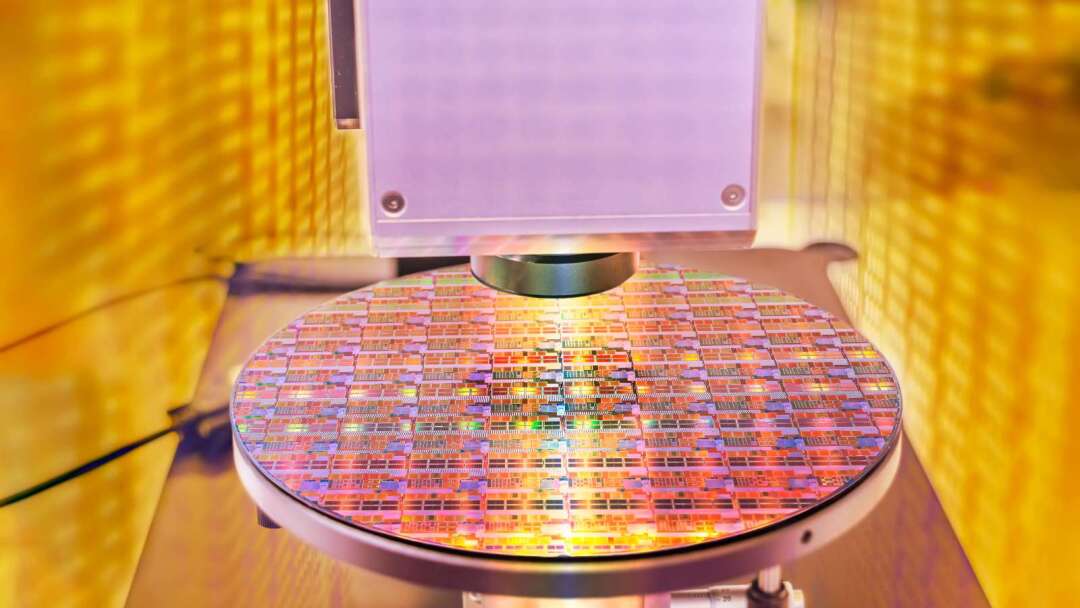
Artificial intelligence (AI) computing demand continues to surge, pushing price increases in the semiconductor industry upstream. Silicon wafers, a critical material for chip manufacturing, have seen their first full-size price hike in over three years, covering 6-inch, 8-inch, and 12-inch products, with increases of at least 10%.
In May 2026, leading overseas silicon wafer manufacturers initiated their second round of price adjustments for the year, primarily targeting 12-inch and high-end specialty wafers. General 12-inch products saw price increases of 5% to 8%, while high-end specialty wafers used in AI and high-performance computing (HPC) applications rose by 18% to 22%.
Following price hikes in advanced process products, mature process-related silicon wafers are now following suit, with some Chinese and Taiwanese manufacturers gradually adjusting quotations starting in June.
Recent financial results and earnings call content from multiple companies for the first half of 2026 indicate that silicon wafer market prices are gradually stabilizing, signaling the industry's re-entry into a price-increase cycle.
Full-Size Price Hikes Across 6, 8, and 12 Inches—AI Demand as Main Driver
This silicon wafer price increase is characterized by "advanced processes leading, mature processes following." According to recent media reports, the global silicon wafer market has seen a rare across-the-board price adjustment, with 6-inch, 8-inch, and 12-inch products all seeing price increases starting from 10%.
Taiwan-based silicon wafer giant GlobalWafers (6488-TW) confirmed that demand in certain end markets has improved recently, and supply chain inventory adjustments are healthier than in the past. Taiwan Semiconductor (3532-TW) stated that, under cost pressure and supported by demand, it has begun discussing price adjustment mechanisms with customers and expects better performance in the second half of the year compared to the first half. Hejun (6182-TW) also confirmed it is actively negotiating price adjustments with customers.
In fact, signals of silicon wafer price increases emerged as early as May 2026. Shin-Etsu Chemical, SUMCO, and GlobalWafers simultaneously issued price hike notices, launching their second round of adjustments for the year. General 12-inch silicon wafers rose by approximately 5% to 8%, while high-end specialty wafers for AI and HPC applications increased by 18% to 22%, indicating that this round of adjustments remains centered on 12-inch and high-end specialty products.
Ginji Yada, Managing Director of CIC灼識, analyzed that 12-inch silicon wafers primarily serve AI computing, smartphones, and PCs—advanced process demands—and thus led the price increases. In contrast, 8-inch and 6-inch products are mainly used in automotive and industrial power chips. As downstream inventory digestion completes, these sizes are now entering a catch-up price increase phase.
Meanwhile, overseas manufacturers have recently focused on expanding 12-inch capacity, with limited new supply for 8-inch wafers. Combined with recovering power chip demand, this provides support for subsequent price increases in 8-inch and 6-inch products.
Ginji Yada, Chairman of SEMI SMG and General Manager of Sales & Marketing at SUMCO, noted that global silicon wafer shipments maintained steady growth in Q2 2026. AI-related demand, beyond advanced logic and memory, is now extending to power components, optoelectronics, and other markets, with industrial and automotive demand also recovering.
SMG data shows that global silicon wafer shipments in Q2 2026 increased 7.4% year-on-year to 3.573 billion square inches (MSI), up 9.1% quarter-on-quarter.
In addition to rapidly growing AI demand, supply constraints and rising costs are also key drivers of this price increase.
After the previous cycle of overcapacity, major overseas silicon wafer manufacturers have adopted a more cautious approach to capacity expansion. Guosheng Securities analyst Hua Xiaowei pointed out that silicon wafer expansion cycles are long, and given the market’s high concentration, supply cannot quickly catch up with demand growth.
At the same time, rising energy and labor costs, along with disruptions in petrochemical raw material supplies from the Middle East, have further pushed up silicon wafer prices.
Therefore, this price rise is not solely driven by short-term demand but results from a combination of recovering demand, constrained supply, and rising costs.
Price Transmission Involves Time Lag—Some Firms Expect Benefits in the Second Half
Although spot prices for silicon wafers have already started rising, the actual reflection in companies’ financial figures may lag.
Chinese silicon wafer manufacturers mostly adopt long-term contract models, with contract durations ranging from six months to three years. As a result, there is a gap between spot market prices and long-term contract prices, leading to a time lag in price transmission to earnings.
Xi’an Yicai (688783-CN), in its 2026 mid-year report, noted that market demand growth trends became clearer in Q2, driving spot prices for 12-inch silicon wafers to rise in the second half. However, since most orders delivered in the first half were priced and locked in by the end of 2025, the impact of rising demand and prices on first-half performance was limited.
Another leading Chinese silicon wafer manufacturer stated that the spot market is relatively tight, and industry consensus on spot price increases is strong. Negotiation conditions with customers are now more favorable than last year. If price hikes are fully reflected in financial reports, this is expected to occur in Q4 2026 and the first half of 2027.
Shanghai Silicon Industry (688126-CN), another Chinese silicon wafer player, also confirmed market price recovery in its mid-year report. After continuous price declines from 2023 to 2025, 300mm (12-inch) silicon wafers have gradually stabilized and rebounded in the first half of 2026. The company is conducting price adjustments and business negotiations based on product and customer conditions, expecting the benefits of price increases to be gradually realized in the second half of 2026.
In contrast, Lihon Micro (605358-CN), which focuses on 12-inch heavily doped silicon wafers, has already benefited from recovering downstream demand.
Ginji Yada pointed out that heavily doped silicon wafers are mainly used in power semiconductors and discrete components, with relatively mature domestic production in China. Demand for 12-inch heavily doped wafers is rapidly increasing in areas such as AI server power supplies and new energy vehicles.
Lihon Micro also stated that one of the core factors behind its return to profitability in the first half was a significant improvement in the profitability of its semiconductor silicon wafer business. AI computing demand has rapidly released demand for heavily doped wafers, while increasing 12-inch production capacity, upgrading product structure, and higher shipment volumes have expanded overall production and sales scale, effectively reducing unit production costs.
CITIC Securities previously expected that supply-tight heavily doped silicon wafers could continue to rise in price in the second half, with related firms potentially raising long-term contract prices for the next year in September or October 2026.
Chinese Firms Invest Heavily in 12-Inch Capacity
With prices recovering and downstream demand improving, expanding 12-inch silicon wafer capacity has become a key strategic move for Chinese manufacturers.
On August 26, Lihon Micro announced a plan to invest 3 billion RMB to expand semiconductor silicon wafer capacity, building a facility for 200,000 12-inch lightly doped wafers and 120,000 12-inch epitaxial wafers per month. The total investment is about 3 billion RMB, with a construction period of five years. Upon full production, it is expected to generate over 1.3 billion RMB in annual revenue.
On August 5, Xi’an Yicai announced a joint 6.5 billion RMB capital increase in Wuhan ESW Materials with several strategic investors. Funds will be fully allocated to the Wuhan 12-inch silicon wafer base. The company’s monthly production and sales scale of 12-inch silicon wafers has already exceeded one million units.
However, as manufacturers simultaneously expand capacity, concerns are emerging about whether this new wave of investment could lead to future oversupply.
Lihon Micro noted that silicon wafers are a capital-intensive industry with long capacity ramp-up times, resulting in low supply elasticity. It typically takes 18 to 24 months for a 12-inch wafer line to go from equipment procurement to stable production, meaning supply growth clearly lags behind explosive downstream demand.
Moreover, overseas leaders have not significantly expanded capacity in recent years, and much of their existing capacity is locked in long-term contracts. As production lines gradually shift toward 12-inch lightly doped wafers, supply of heavily doped wafers is further compressed.
However, Ginji Yada warned that while advanced-process silicon wafers remain technologically demanding and relatively scarce, blind expansion in low-end test wafers or dummy wafers could lead to localized price competition.
This is why Shanghai Silicon Industry has chosen to focus on expanding high-end capacity and upgrading product structure. The company is continuously advancing its 300mm high-end silicon wafer expansion and capacity release at its Taiyuan project. As of the end of the first half of 2026, the combined monthly capacity of 300mm semiconductor silicon wafers in Shanghai and Taiyuan has reached one million units.
As Chinese silicon wafer manufacturers continue to expand 12-inch capacity, domestic localization rates in China are also expected to rise further. JIWEI Consulting estimates that China’s 12-inch silicon wafer localization rate was about 15% to 20% in 2025 and could rise to 25% to 30% in 2026. As leading local firms reach full production, the domestic localization process is expected to accelerate.
However, compared to international giants, Chinese firms still face gaps in technology, customer base, and supply chains. Balancing capacity expansion, technological advancement, and profitability remains a key challenge going forward.
FACT BOX
- Source: PR Times
- Category: News
- Organizations: SUMCO