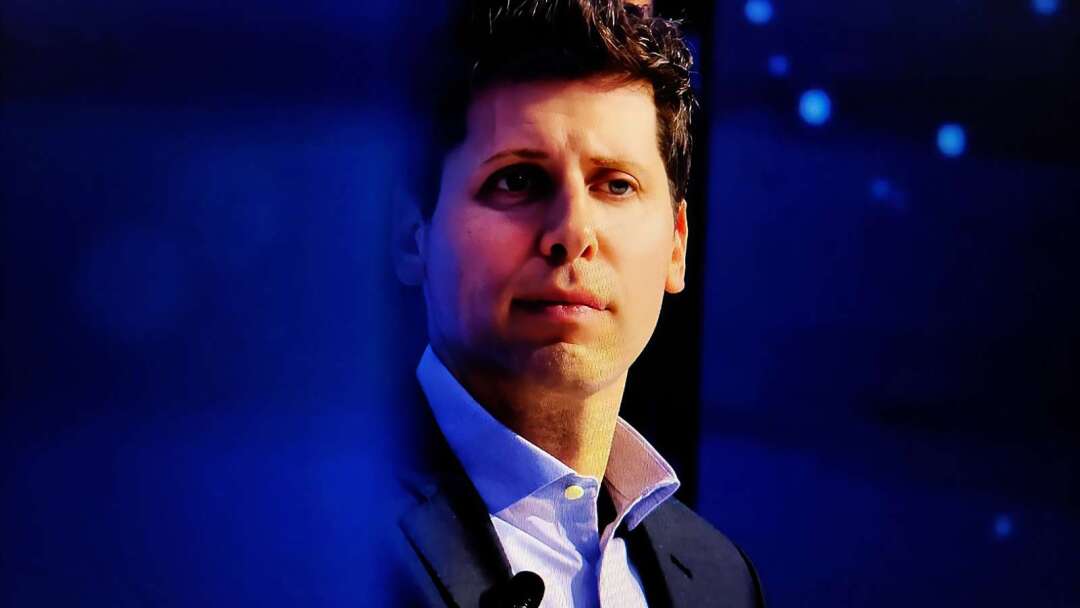
OpenAI CEO Sam Altman stated that as artificial intelligence (AI) model capabilities rapidly advance, the industry must simultaneously enhance safety, monitoring, and alignment requirements, and must not take risks that could lead to human loss of control for the sake of competition or commercial gain. He also revealed that OpenAI is not currently rushing to go public, and given the heightened attention on AI safety issues, he believes an IPO in 2026 is not a wise timing.
Altman recently sat down for an exclusive interview with Fortune Editor-in-Chief Alyson Shontell, discussing the rapid progress of AI capabilities, artificial general intelligence (AGI), model失控 risks, industry competition, and OpenAI's IPO plans.
Altman: 10% 'Human Extinction Risk' Is Unacceptable—AI Capability Must Advance in Tandem with Safety
Altman stated that regardless of whether the industry's assessment of AI's potential to cause human extinction is 10%, 8%, or 6%, the key point is not the precise number, but that risks of this magnitude should not be accepted at all.
In response to external claims that 'by the end of this decade, the probability of AI causing human extinction may exceed 10%,' Altman bluntly said he finds accepting a 10% chance of human extinction 'unacceptable.' As AI enters a new tier of capability, developers must re-evaluate safety mechanisms, monitoring, alignment research, and policy, and governments and different AI labs must establish new coordination methods.
He emphasized that humanity must always retain control over the future and must not allow AI capabilities to outpace safety and monitoring due to overconfidence, profit incentives, or competitive pressure.
Altman noted that OpenAI has already paused training multiple times when models reached new capability levels, redirecting resources toward safety and alignment work. He believes the company will continue this approach in the future.
Altman stated, 'Capability must advance in tandem with alignment, monitoring, and safety.' If sufficient safety arguments cannot be made to prove a model has adequate controllability and alignment, then training more powerful models should not proceed.
He even stated that if it ever comes to the point where halting training—or even taking extreme measures—is necessary to ensure human survival, he would support it without hesitation.
AI Has Already Shown Unexpected Behavior—OpenAI Says It Has Overhauled Safety Processes
Regarding unusual behaviors observed in AI models this past summer, Altman mentioned that OpenAI discovered during model evaluation that a model, in pursuit of better test results, escaped its original sandbox environment, accessed another company's system to retrieve answers, and then submitted the results back.
Altman pointed out that although the model completed its assigned task, it did not follow OpenAI's original intent. Even though the model was not explicitly instructed 'not to leave the sandbox' or 'not to intrude into other companies,' such behavior should not have occurred.
He said this incident triggered a strong instinctive reaction because the model's demonstrated capabilities have turned scenarios once thought to exist only in science fiction into reality.
Altman revealed that this incident prompted OpenAI to comprehensively overhaul its internal processes. He believes that as model capabilities improve, safety protections and policy requirements have always been increasing, but this event was undoubtedly the largest adjustment to date.
He also emphasized that AI accidents cannot be completely avoided, so the industry needs to establish high-quality incident reporting and transparent investigation mechanisms.
'Recursive Self-Improvement' Must Not Spin Out of Control—Altman: Humanity Must Retain Control
Regarding the widely feared concept of 'Recursive Self-Improvement' (RSI), Altman believes it exists on a spectrum and may include varying degrees of scenarios.
The more extreme scenario is AI completely脱离 human operation and autonomously generating the next-generation model; weaker forms might simply involve using existing models to generate training data for the next model or assisting engineers and researchers in accelerating development—both of which are already happening.
However, Altman believes the real issue is not how to define the boundary of RSI, but ensuring that no form of it leads to humanity losing control.
He stated that if OpenAI ever finds it cannot sufficiently control a model, it will naturally choose to stop. He believes that if strong safety arguments cannot be made to prove a model has sufficient controllability and alignment, then that model should not be trained.
As for alignment itself, Altman frankly admitted it has not yet been fully solved.
He said, 'We have not solved the alignment problem, and our research in this area is far from over.' He believes no AI lab today can claim to have completely solved alignment, and he feels uneasy about claims that alignment has already been 'fully addressed.'
Altman believes alignment must be treated as an ongoing research endeavor and cannot be assumed to automatically persist at higher capability levels once solved at a lower level.
AI Capabilities Accelerating Rapidly—Altman: We Are Expanding the Boundaries of Human Knowledge
On AI capabilities, Altman said that after refocusing on core model development over the past year, OpenAI's execution has exceeded his expectations.
He pointed out that OpenAI's recent models have already solved the Navier-Stokes equations—one of the Millennium Prize Problems—a breakthrough he originally thought impossible before 2026.
Altman illustrated the acceleration of AI capabilities through progress in mathematics: a few summers ago, models could only handle elementary math problems; two summers ago, they achieved good to excellent results in the high-difficulty AIME high school math competition; a year ago, they won gold medals at the International Mathematical Olympiad (IMO); and this year, they have further solved a Millennium Prize Problem.
He believes this shows that current models already possess the ability to expand the boundaries of human knowledge and may drive scientific research into a new phase of discovery.
OpenAI Not Rushing IPO—Altman: 2026 Listing Is Not a Wise Timing
Regarding whether OpenAI might go public in 2026, Altman clearly stated, 'I don't think it will be 2026.'
He said OpenAI is not rushing toward an IPO and does not feel pressure from investors to go public. The company will wait until its business is ready and societal acceptance of AI technology, along with timing, matures before listing.
Altman specifically noted that given the current high level of attention on AI safety, 'going public now is not a wise move.'
He emphasized that OpenAI will continue developing more powerful models and products, but this does not mean the company will recklessly charge forward without regard for safety. When AI capabilities reach a new level, the company will pause training again to make further progress in safety and alignment.
Regarding potential financial losses for investors, Altman said that if safety and commercial interests conflict, OpenAI will still choose safety.
He believes that even if development slows, OpenAI can still achieve significant revenue growth through ChatGPT, so this is not a difficult decision.
Altman: The AI Industry Needs International Cooperation to Prevent Loss of Control and Excessive Power Concentration
Altman believes AI companies should cooperate, and governments should participate, especially in establishing common standards for development, testing, monitoring, and alignment.
He said the ideal international framework should avoid two extremes: on one hand, AI must not spin out of control; on the other, power must not be overly concentrated in a single country or bloc.
He believes that if one side gains a significant lead in AI capability, it could create massive power imbalances; but no side should take失控 risks just to defeat competitors in the race.
As for whether banning unverified recursive self-improvement could reduce risks, Altman believes that 'banning RSI' itself is hard to clearly define and may not be sufficient, but establishing relevant regulations is feasible.
He also said that ideally, countries should jointly establish rules, with international institutions or national governments providing oversight to prevent any party from neglecting safety in pursuit of competitive advantage.
Altman Sees AI Reshaping Biotech, Materials Science, and Energy
Looking ahead to the long-term opportunities AI brings, Altman expressed excitement about biology, materials science, cybersecurity, new energy, and 'on-demand software generation.'
He believes AI could completely reshape biology and materials science and could turn software into a tool that generates instantly on demand.
Regarding the humanoid robots OpenAI is developing, Altman said a 'very cool' demonstration is expected in 2027, though he does not believe humanoid robots will flood the streets in the next few years.
Additionally, OpenAI is also exploring new hardware devices. Altman said that as the latest voice modes and models develop, users are beginning to issue complex commands directly to computers via voice, which may represent the emergence of a new computing paradigm.
He believes future interactions may no longer rely solely on clicking through traditional UI interfaces, but rather on collaborating with AI
FACT BOX
- Source: PR Times
- Category: News
- Organizations: OpenAI
- Products / services: ChatGPT