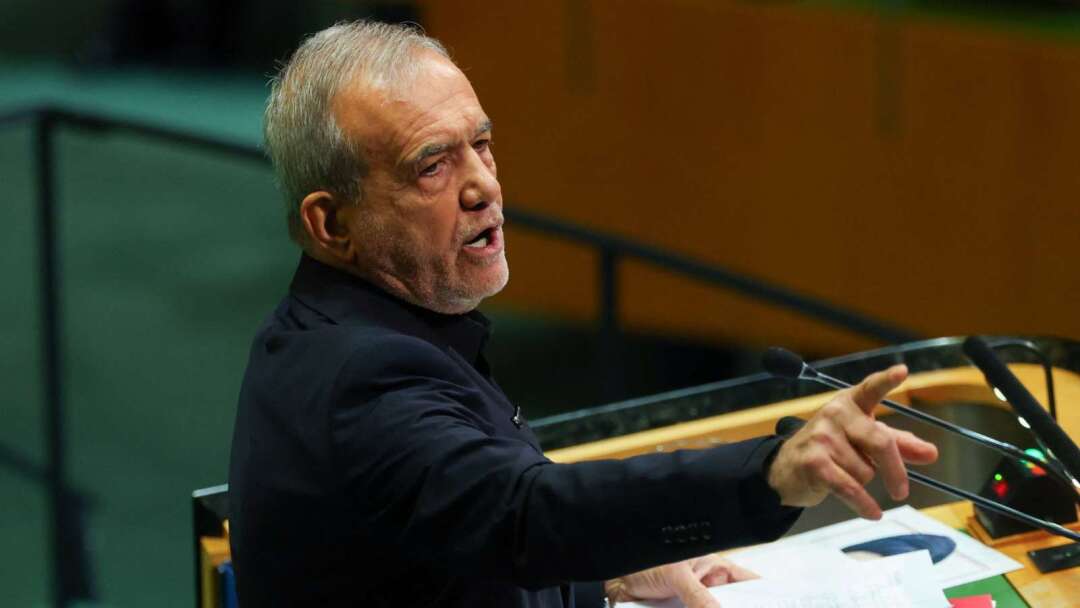
Iranian President Raisi on Wednesday (23rd) accused US President Trump of having a 'bullying attitude' at the UN, stating that Iran would not surrender in a war with the US but was willing to end the conflict through diplomatic channels.
Raisi, in his wartime speech at the UN General Assembly, said that threats would only make Iran more determined. He refuted Trump's earlier warning that if the two sides could not reach an agreement, the US might annihilate Iran.
He said, 'The US president's remarks yesterday showed a bullying attitude. The Iranian people will not bow to pressure. Those who are themselves terrorists and train terrorists call us terrorists.' This refers to Trump's statement calling Iran the world's largest state sponsor of terrorism.
During his speech, Raisi repeatedly stated that Iran is prepared to resolve tensions with the US through negotiations, but warned that Tehran would not accept threats of force. The US delegation left the room as he began his speech. The US mission to the UN did not immediately respond to requests for comment.
At the beginning of his speech, Raisi accused the US of killing civilians during the war and displayed several photos, including an image of female students in a classroom.
According to Iranian officials, on February 28, hours after the US and Israel launched an attack on Iran, a school in Minab was hit by a missile, killing more than 175 children and teachers.
The US Department of Defense has not yet released the results of its investigation into the Minab airstrike. This incident is one of the deadliest involving US troops and civilian casualties in decades. Reuters reported on March 5 that a preliminary internal investigation by the US military concluded that the US military was very likely responsible for this attack.
Raisi stated that Iran has no intention of developing nuclear weapons but will not give up the right to peaceful nuclear development. He said, 'Neither nuclear weapons nor giving up nuclear knowledge.'
This conflict, which has lasted seven months and shocked the market, has brought the Persian Gulf to the brink of a larger-scale war. After military action failed to force Tehran to concede, Washington is launching an unprecedented economic offensive. The Iranian leadership fears that soaring prices, weak trade, and pressure on household incomes could spark nationwide unrest again.
About one-fifth of the world's oil and liquefied natural gas is transported through the Strait of Hormuz, which has become the focal point of US-Iran tensions. Iranian sources told Reuters on Tuesday that Tehran had conveyed conditions for reopening this strategic waterway to the US through a mediator.
Raisi said, 'It is not fair that everyone can benefit from the Strait of Hormuz, except us being deprived of the right to navigate this waterway. The permanent deployment of hostile fleets and the expansion of war will not bring peace.'
FACT BOX
- Source: PR Times
- Category: News