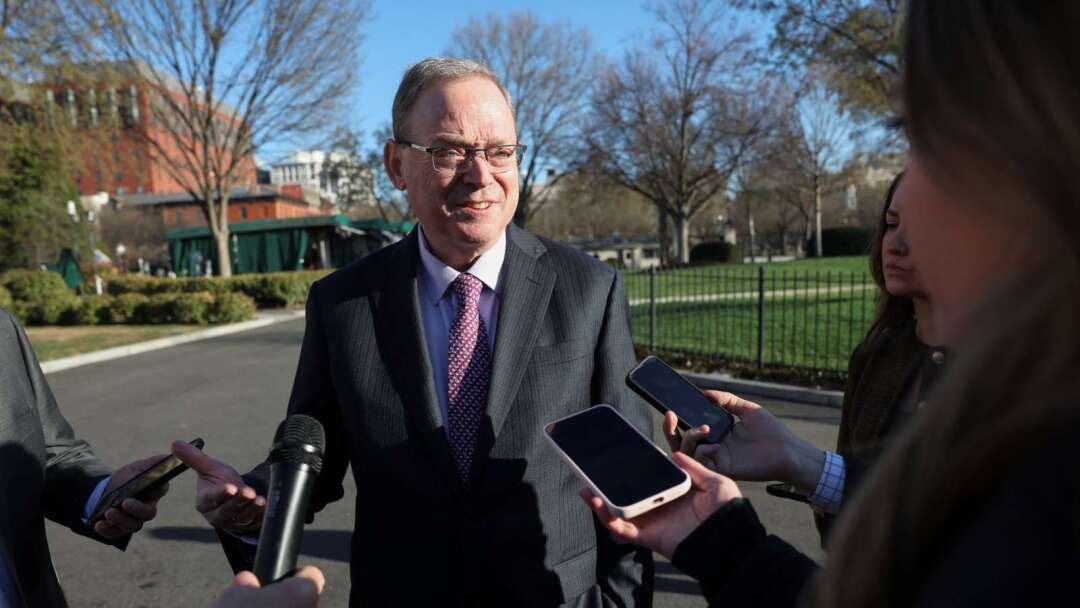
White House Chief Economic Advisor Kevin Hassett criticized the Federal Reserve on Wednesday (23rd) for continuing to pursue monetary tightening despite what he sees as controlled inflation. The National Economic Council (NEC) director said at a George Washington University event, 'Why are they still raising rates when the core inflation rate is 2%?' He also criticized Fed Chairman Kevin Warsh for 'managing an abnormally politicized Fed.'
Hassett noted that historically, Fed chairs and vice chairs typically step down after their terms, but current governors Jerome Powell and Michael Barr remain in their positions. The independence of the Fed has once again become a focal point. Powell, who ended his term as Fed chair earlier this year, has publicly stated that he engaged in a struggle with the Trump administration over central bank monetary policy independence. Barr, after stepping down as Fed vice chair for supervision last year, continues to serve on the board.
Warsh, Powell, Barr, and all other voting members of the Federal Open Market Committee (FOMC) voted in favor of the recent rate hike. Hassett expressed concern, saying the decision was worrying based on economic data. He also noted that the market is concerned, as many non-Trump-appointed officials have recently spoken about the need for significant rate hikes.
Hassett believes this shows that 'there is still much work to be done to restore the Fed's independence,' and it is an important priority for Warsh. Multiple Fed officials still believe further rate hikes are necessary. Barr said on Wednesday that the Fed may need further rate hikes to bring inflation back to the central bank's 2% target. Susan Collins, president of the Federal Reserve Bank of Boston, supported the latest rate hike decision, and Alberto Musalem, president of the Federal Reserve Bank of St. Louis, also indicated that further rate hikes may be needed to curb prices.
In the Fed's latest economic forecast released in September, 16 officials said they expect at least one more rate hike this year. According to the CME FedWatch tool, traders currently expect a 77% chance of a rate hike in October and a 95% chance in December.
However, Trump, who has long pressured the Fed to cut rates, not only did not blame the September rate hike decision but publicly supported it, describing it as a result of his 'green light.' Nick Timiraos of the Wall Street Journal, dubbed the 'Fed's megaphone,' noted that a few days before the FOMC meeting, Trump had been 'pre-briefed.' At the time, Trump had a conversation with Warsh, starting with small talk before turning to the expected rate hike decision. Warsh avoided discussing any conversations with Trump in the press conference and stated that the rate hike was a 'calm, serious, and responsible' decision made by the Fed after careful consideration. Timiraos pointed out that compared to Powell, who was also appointed by Trump, Warsh has a closer relationship with Trump. Hassett revealed last month that the two 'often discuss the economy and have built a close, long-term relationship.' Powell, on the other hand, has tried to avoid building a relationship with Trump. Warsh's approach to handling his relationship with the president is also different from Powell's. Warsh avoids making any statements that could drag the Trump administration into the Fed's predicament and has stated that central bank independence is achieved through practice, not just words. For example, in explaining the reasons for the rate hike at the September press conference, Warsh mentioned that the Fed's judgment on the direction of the Middle East conflict had changed, but he never mentioned the Iran war, using the term 'geopolitical' instead.
FACT BOX
- Source: PR Times
- Category: News
- Organizations: Fed