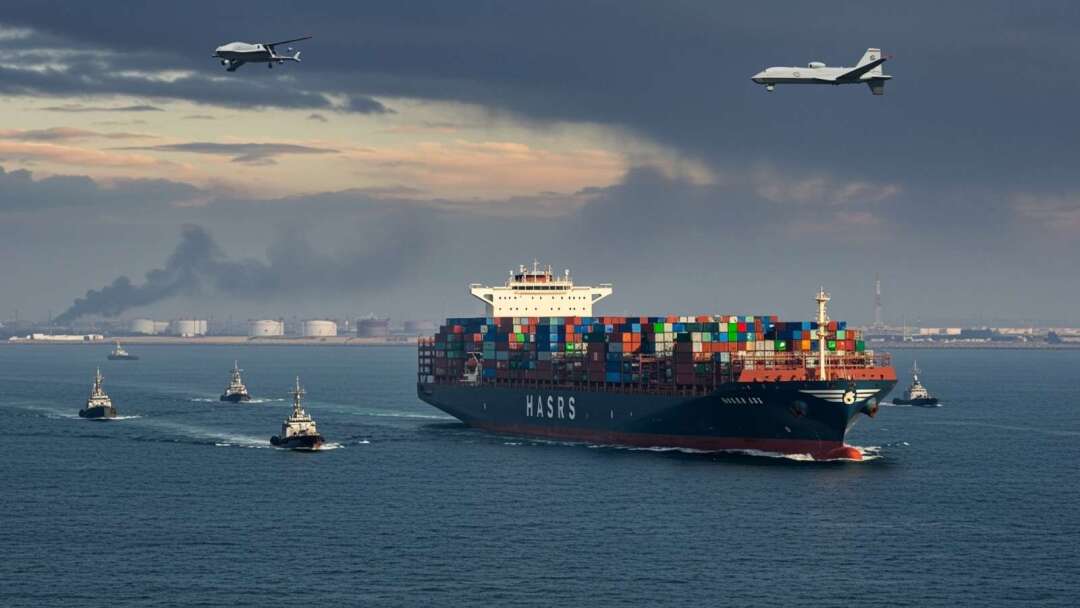
The ongoing US-Iran conflict is disrupting global crude oil shipping routes. Factors such as tanker diversions and transshipments are causing effective capacity losses, and with tanker supply at historically low levels, global oil shipping prices have been rising since the beginning of the year.
According to Wind data, as of September 24, the Baltic Dirty Tanker Index (BDTI) rose to 5,250 points, with a year-to-date increase of over 100%, representing a more than fivefold increase from approximately 850 points at the start of 2025. Notably, the majority of this year's over 100% gain has been concentrated in the last month.
CITIC Securities analysis indicates that current tanker freight rates have not yet fully reflected the supply-demand tightness. Traditional shipping cycle supply-demand analysis models need to adapt to market changes, and valuations and profits of leading tanker companies are expected to reach historic highs in 2026.
At the beginning of 2025, BDTI hovered at a low of 800-850 points, then showed an overall upward trend, reaching approximately 2,500 points by the end of 2025.
Entering 2026, the US-Iran conflict became a key factor influencing global oil shipping prices. In the early stages of the conflict, panic buying of crude occurred, causing a rapid surge in large tanker freight rates. Subsequently, the closure of the Strait of Hormuz caused BDTI to temporarily fall back to around 1,800 points.
However, since July, BDTI has resumed its upward trend, with the rise in September being particularly pronounced. From September 1 to 24, BDTI rose from 2,676 points to 5,250 points, nearly doubling within the month.
The rise in oil shipping prices has also driven the performance growth of related A-share listed companies. COSCO Shipping Energy and China Merchants Energy Shipping, which focus on oil transportation, both saw significant increases in net profit attributable to shareholders in the first half of the year.
COSCO Shipping Energy (01138-HK) reported first-half revenue of RMB 15.15 billion, up 30% year-on-year; net profit attributable to parent company was RMB 4.545 billion, up 143.21% year-on-year. China Merchants Energy Shipping (601872-CN) reported first-half revenue of RMB 19.65 billion, up 56.2% year-on-year; net profit attributable to parent company was RMB 6.96 billion, up 227.57% year-on-year.
Breaking down the oil shipping business, institutions estimate that China Merchants Energy Shipping's Q2 oil shipping segment revenue was approximately RMB 5.52 billion, up 139.2% year-on-year; net profit was approximately RMB 3.7 billion, up 359.5% year-on-year and 49% quarter-on-quarter.
The strong performance is also reflected in stock prices. COSCO Shipping Energy's stock price has risen 88% year-to-date, while China Merchants Energy Shipping's year-to-date gain exceeds 136.75%, with market capitalization continuously hitting new highs.
Effective Capacity Loss and Increased Cargo Volumes Drive Up Tanker Freight Rates
As oil shipping prices continue to rise, institutions including CITIC Securities (600030-CN) and Guotai Junan Securities (02611-HK) maintain a relatively optimistic outlook on future freight rates.
A recent research report from Guotai Junan indicates that dark shipping cargo volumes in the Middle East have continued to increase over the past month, with current daily exports reaching 14-16 million barrels, estimated to have recovered to 80-90% of pre-conflict levels. Exports from the US Gulf and West Africa since August have also increased by 10-20% year-on-year.
At the same time, dark shipping, transshipment, and Red Sea diversions have significantly reduced compliant shipping efficiency. With improving supply-demand dynamics and rising shipowner confidence, tanker freight rates have climbed rapidly, with VLCC Time Charter Equivalent (TCE) rates for the US Gulf and West Africa reaching $400,000 to $530,000.
Additionally, the one-year time charter rate for VLCCs has risen to $180,000, while the five-year rate exceeds $60,000, reflecting market expectations for the medium-term outlook of the oil shipping industry.
Guotai Junan believes that geopolitical factors are strengthening the medium-to-long-term logic of the oil shipping industry, and the high-cycle duration may exceed expectations, with the possibility of unexpected demand increases.
CITIC Securities points out that the market is currently focused on whether oil shipping prices can sustain after hitting record highs and whether there is further upside potential during the peak season. The firm believes the core contradiction lies in the continuous expansion of effective capacity losses, which resonate with increased cargo volumes, further compressing supply on the transportation side, and short-term freight rates still have upward resilience.
According to Clarksons data, for the week ending September 18, the average TCE for VLCCs and Aframaxes increased by 42.3% and 18.5% week-on-week, respectively, reaching $631,000 per day and $177,000 per day, both record highs. Notably, VLCC TCE in the Persian Gulf region exceeded $1 million per day.
CITIC Securities states that the continuous loss of effective capacity has become a marginal variable worth watching. Currently, over 85% of cargo in the Middle East is transported through various forms of transshipment, and port congestion at Fujairah and Egypt's Ain Port is becoming increasingly evident. As vessels subsequently enter shipyards for repairs, the market may face a situation of "one ship hard to find," providing important support for short-term freight rate increases.
CITIC Securities notes that dark shipping, diversions, and ship-to-ship transfers in the Gulf continue to consume effective capacity, and freight rate increases have clearly spread from specific routes to different vessel types. Amid tight tanker supply, TCE rates exceeding $1 million per day have emerged in the market. Crack spreads for some products exceeding $100 per barrel have further strengthened the buying motivation of commodity traders and Gulf oil-producing countries.
CITIC Securities expects cargo volumes in October and November after the holiday to be better than September, and peak season freight rates may exceed expectations. The firm continues to be optimistic about the changes in the supply-demand structure of the oil shipping industry.
FACT BOX
- Source: PR Times
- Category: News