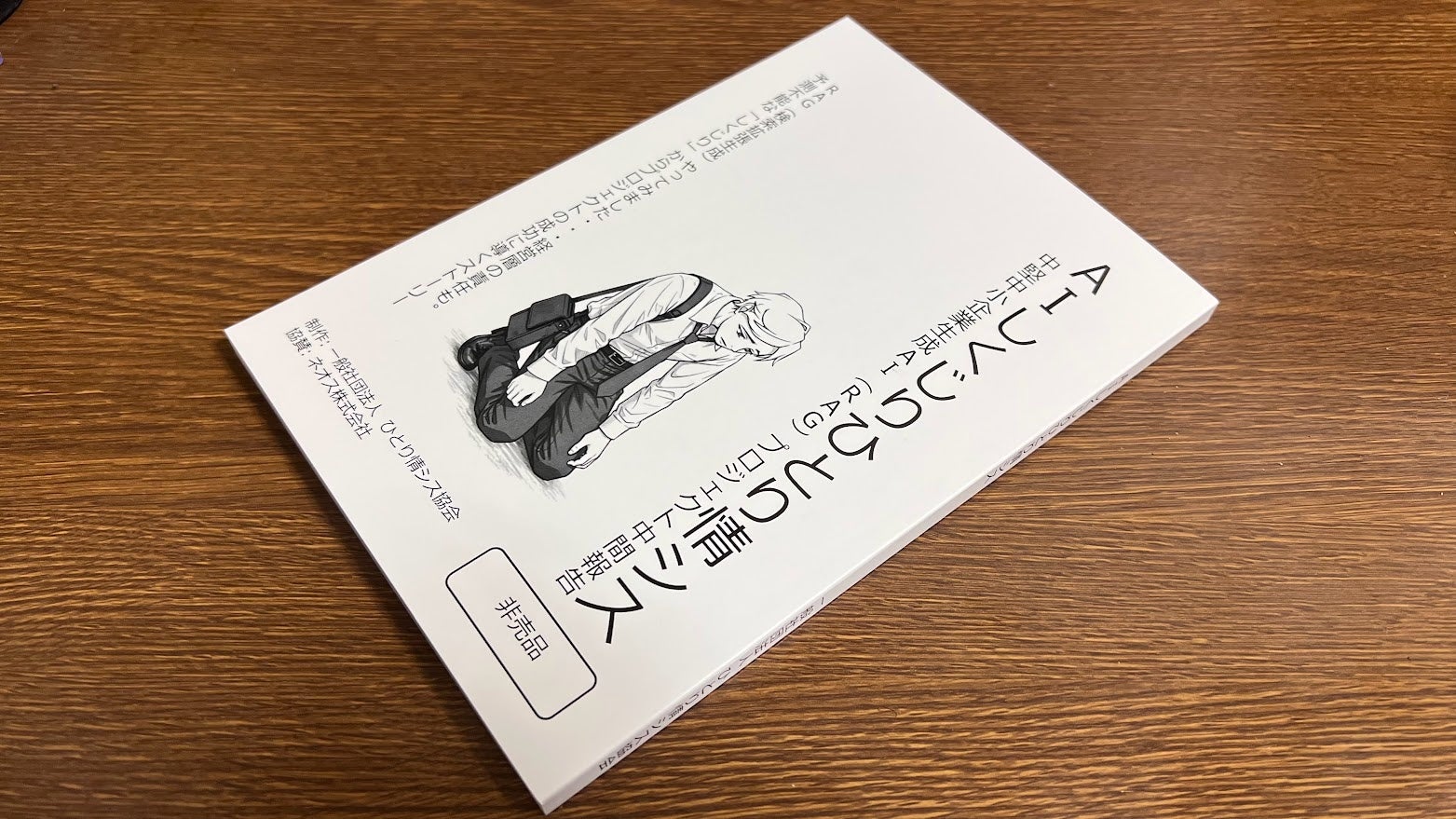
The Solo IT Staff Association (Headquarters: Chiyoda-ku, Tokyo; Secretariat: Hiroshi Shimizu), with the sponsorship of Neos Co., Ltd. (Headquarters: Chiyoda-ku, Tokyo; President and CEO: Masashi Ikeda), a group company of TechMira Holdings, has created a 125-page booklet titled 'AI Failures for Solo IT Staff.' This booklet compiles five failure cases experienced by solo IT staff in mid-sized and small enterprises during the adoption of generative AI (RAG). This book is a practical learning resource edited based on real voices from the field. It will be distributed for free in a limited edition of 200 copies at the Neos booth during Japan DX Week Spring, held at Tokyo Big Sight from April 8th (Wednesday) to 10th (Friday), 2026.
Background of Publication Approximately three years have passed since the advent of generative AI, including ChatGPT. The utilization of generative AI is rapidly expanding not only in large corporations but also in mid-sized and small enterprises. A survey conducted by the Solo IT Staff Association (Target: Mid-sized and small enterprises with 500 or fewer employees) revealed that while 78.3% of companies consider AI utilization essential, many staff members face unpredictable challenges during actual implementation.
However, the shortage of human resources is progressing without pause, and many companies have high expectations for AI as a solution. There is strong interest in RAG (Retrieval-Augmented Generation), which can be implemented using existing internal data. On the other hand, we have received requests for case studies to reference.
Especially in 'solo IT staff' environments, where there is a lack of abundant IT personnel, individuals often bear the responsibility for AI adoption decisions and operations alone. Opportunities for sharing failure cases and cross-sectional learning have been limited. This booklet frankly shares the 'failed' experiences of such on-site staff, condensing wisdom to avoid making the same mistakes. As these are all ongoing projects, you can experience real interim reports.
Features of the Booklet 【1】 Includes Real-World Failure Cases Across Industries The booklet includes failure points encountered during the actual implementation of generative AI RAG projects in mid-sized and small enterprises across five industries: food manufacturing and sales (180 employees), wholesale (140 employees), manufacturing (160 employees), medical/caregiving (180 employees), and construction (85 employees). It is structured along actual business scenarios, detailing how issues were addressed and the process of promoting implementation to the field. 【2】 Practical Format Clearly Stating 'Failure Points' and 'Lessons Learned' Each case study is organized in a format that includes project overview, problem occurrence, cause analysis of failure, lessons learned, 'solo IT staff' failure points, management's reflections, and the current status, making it easy to relate to your own company. The content allows for verification of 'why it failed' and 'how it should have been handled.' 【3】 Content Considers Dialogue with Management and Organizational Transformation Numerous cases are included that involve not only technical failures of AI tools but also difficulties in gaining consensus with management, resistance from the field, and organizational contradictions. We believe the content will be valuable not only for IT staff but also for management and those involved in AI promotion.
Booklet Overview Title: 'AI Failures for Solo IT Staff' - Interim Report on Generative AI (RAG) Projects for Mid-sized and Small Enterprises Production: Solo IT Staff Association Sponsorship: Neos Co., Ltd. Pages: 125 pages Target Audience: IT staff, solo IT staff, AI promotion staff, and executives of mid-sized and small enterprises.
Distribution Location
FACT BOX
- Source: PR TIMES
- Category: News