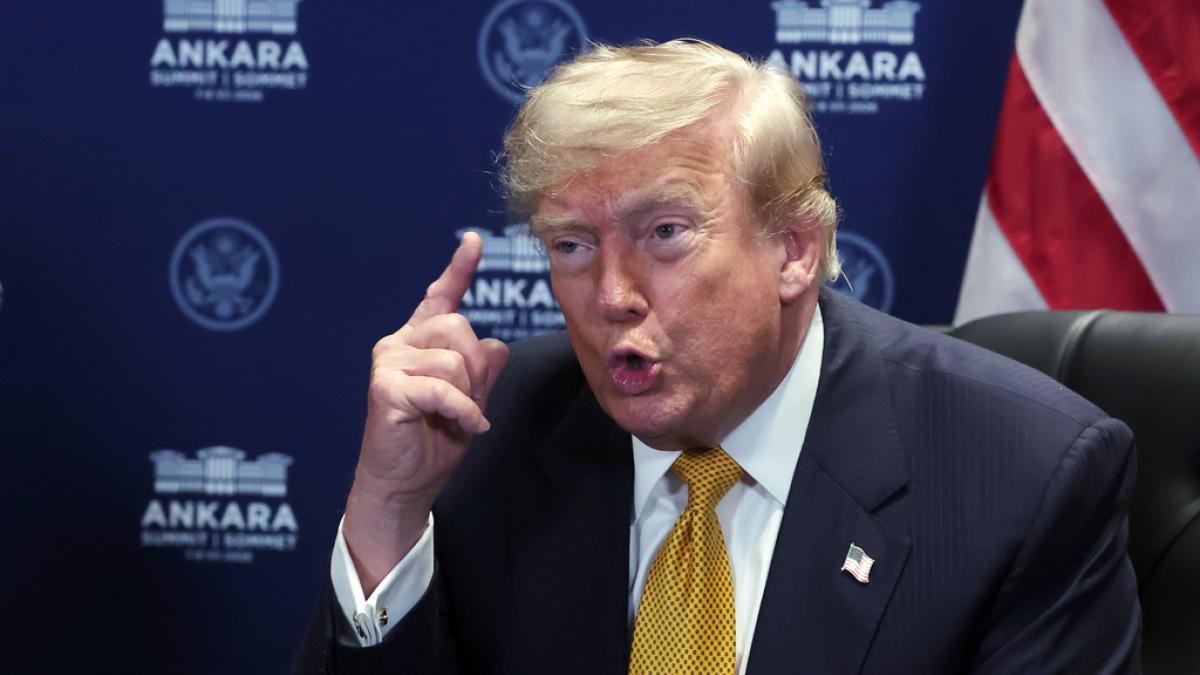
Former U.S. President Donald Trump attempted to restrict 'birthright citizenship' through an executive order, but the U.S. Supreme Court has rejected it. Trump responded today, calling the Court's decision 'absurd,' and declared he will petition for the case to be reheard. According to AFP, a petition for rehearing must be filed within 25 days of the ruling and is rarely granted.
While returning to Washington, D.C. aboard Air Force One from Ankara, Turkey, where he attended the NATO summit, Trump posted on his social media platform 'Truth Social,' stating, 'The Supreme Court ruling is wrong. I will immediately petition the U.S. Supreme Court for a rehearing.'
Trump added, 'If they do not reverse this utterly absurd decision, this judicial injustice will destroy America.'
On June 30, the U.S. Supreme Court rejected Trump's executive order aimed at limiting birthright citizenship, delivering a blow to one of his signature anti-immigration policies.
Demonstrators held signs demanding the court protect the legal principle of birthright citizenship. (AP)
Birthright citizenship, rooted in the Fourteenth Amendment of the U.S. Constitution, grants automatic citizenship to anyone born on U.S. soil, regardless of their parents' immigration status. Trump's proposed executive order sought to override this long-standing interpretation by requiring at least one parent to be a citizen or lawful permanent resident.
Legal experts widely criticized the move as unconstitutional, arguing that only Congress or a constitutional amendment could alter the scope of birthright citizenship. The Supreme Court's refusal to allow the executive order underscores the judiciary's role as a check on executive power.
The decision has reignited national debate over immigration, constitutional rights, and the limits of presidential authority. Civil rights groups have welcomed the ruling, calling it a victory for equality and the rule of law, while some conservative figures continue to support Trump's stance, framing it as necessary for border security and national sovereignty.
Trump's push to challenge the ruling further reflects his ongoing influence in American politics and his strategy of mobilizing his base around immigration issues ahead of the upcoming election cycle.
The rehearing petition, if filed, is expected to face significant legal hurdles. Historically, the Supreme Court grants rehearing petitions in less than 1% of cases, typically only when there is a clear error or significant legal inconsistency.
Nonetheless, Trump's announcement serves a political purpose, reinforcing his image as a fighter against what he describes as a broken system and an overreaching judiciary.
As the debate continues, the issue of birthright citizenship remains a flashpoint in American political discourse, symbolizing broader tensions over identity, inclusion, and the interpretation of constitutional principles in the 21st century.
FACT BOX
- Source: PR Times
- Category: News