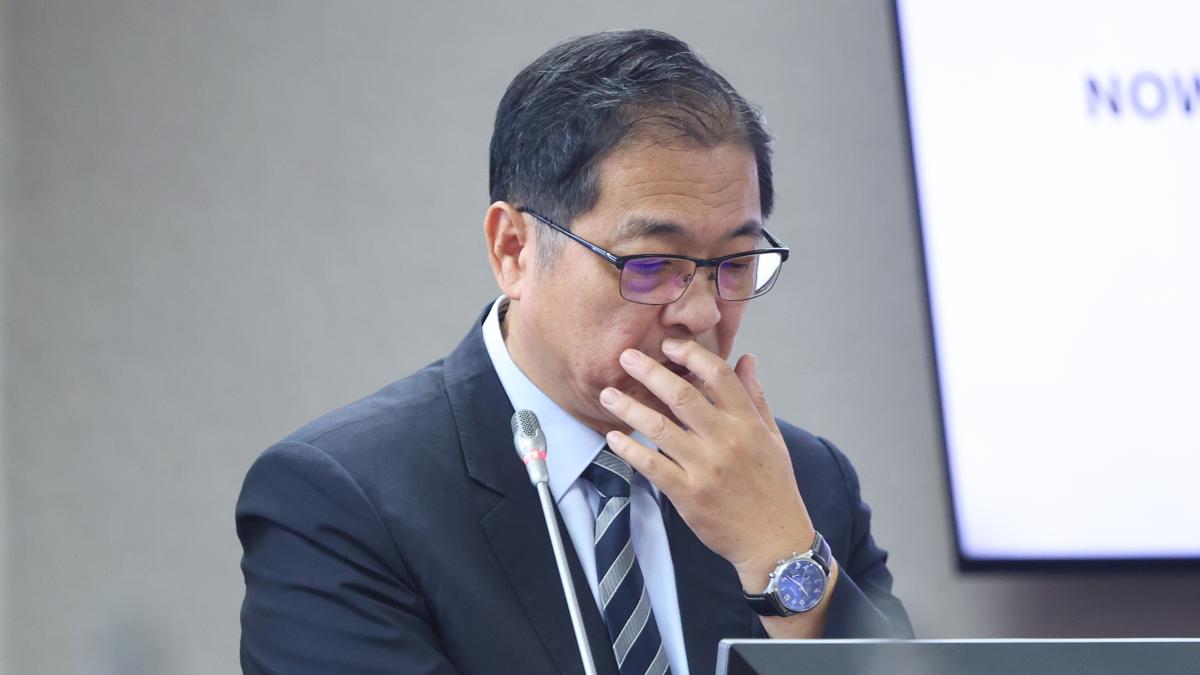
Since the outbreak of the Chung Lian carcinogenic oil scandal, the Food and Drug Administration (FDA) announced 257 affected businesses on the 5th, which surged to 360 by the 6th. The '20% removal standard' was repeatedly reversed under public pressure. Kuomintang legislator Hsu Yu-chen questioned Justice Minister Cheng Ming-chien on how thoroughly the case would be investigated, to which Cheng replied, 'Due to administrative discretion, the Justice Ministry cannot intervene.'
Hsu revealed that a survey commissioned by the Justice Ministry showed 81% of the public believe prosecutorial misconduct stems from political influence (76.4% in online surveys). Faced with these figures, Cheng repeatedly denied political interference, stating, 'The public simply doesn’t understand us enough.'
On how far the investigation will go, Hsu emphasized that the Chung Lian case directly impacts public food safety. During a Judiciary Committee hearing, she pressed the Justice Minister on the political neutrality of prosecutors, urging the system to recognize its flaws and prevent collusion and injustice in this and future cases.
Hsu asked whether the investigation would only target Chung Lian and downstream companies or also examine the Ministry of Health and Welfare and the FDA’s initial administrative decisions. Cheng responded, 'Due to administrative discretion, the Justice Ministry cannot intervene.'
Hsu criticized the Justice Ministry for refusing to intervene when its own officials are at fault, while prosecutors act swiftly against opposition figures—leading to accusations of selective prosecution and political persecution. This double standard, she argued, is the root of public distrust in the prosecutorial system.
The '2025 Taiwan Public Perception and Satisfaction Survey on the Prosecutorial System,' commissioned by the Judicial Training Institute under the Justice Ministry, found that 81% attribute prosecutorial unfairness to political influence (76.4% online), 91% cite 'mutual protection among officials' as the main reason for perceived corruption, and 90% point to selective prosecution. In response, Cheng reiterated, 'There is absolutely no political interference,' and claimed, 'The public just doesn’t understand us.'
Hsu urged parallel investigations into both corporate crimes and administrative negligence, warning against only prosecuting businesses while letting officials off the hook. She called for reforms in prosecutor selection and evaluation mechanisms, criticizing the Justice Ministry for dismissing concerns with mere 'humble acceptance.'
'Judicial fairness isn’t determined by the minister’s words,' Hsu said, 'but by whether the public feels the same standards apply to allies and opponents.' She vowed to continue monitoring the issue in the legislature and demand concrete action from the Justice Ministry, not rhetorical evasion.
FACT BOX
- Source: PR Times
- Category: Survey