What if the United States no longer sends troops to defend Europe? A question once too taboo to discuss openly has now become the most urgent security concern for European nations. On July 7, the UK’s Financial Times reported that amid former President Trump’s repeated skepticism toward NATO and reduced U.S. military commitments, Europe is accelerating preparations for a future without American protection. From increasing defense spending and restructuring command systems to adopting Ukraine’s drone tactics and low-cost warfare models, Europe is comprehensively reshaping its defense capabilities. It aims to build a new, self-sufficient strategy capable of standing up to Russia’s persistent pressure.
With the U.S. military becoming unreliable and Russia watching closely, how can Europe fight on its own?
On July 7, the NATO summit opened in Ankara, Turkey’s capital. World leaders lined up, shook hands, and posed for photos, maintaining the outward appearance of alliance unity. Yet behind closed doors, European military powers were sweating. They are now being forced to confront a nightmare they once dared not even imagine: if U.S. forces truly become unreliable, how can Europe defend itself?
According to the Financial Times, the summit was filled with anxiety because European governments have, over the past year, completely lost confidence in President Trump. A senior French official stated that Trump uses Iran as a shield, claiming, “NATO never supported us!” regardless of Europe’s actions. Faced with a U.S. that no longer guarantees support—and may even act with hostility—European diplomats and defense officials are holding intense, private discussions to reassess their defense strategies.
Confronted by Russia’s relentless advance, many European officials describe feeling “their scalp tingling.” A senior British official warned that Trump could suddenly and unpredictably withdraw U.S. troops stationed in Europe, allowing Moscow to exploit the vacuum—an “abnormally dangerous moment.” However, both Ukraine’s counterattacks against Russia and Iran’s ability to tie down U.S. forces prove that traditional overwhelming military superiority is no longer a guarantee of victory. Experts and officials agree that Europe must develop its own low-cost, high-efficiency “European way of war” and craft a unique anti-Russian strategy.
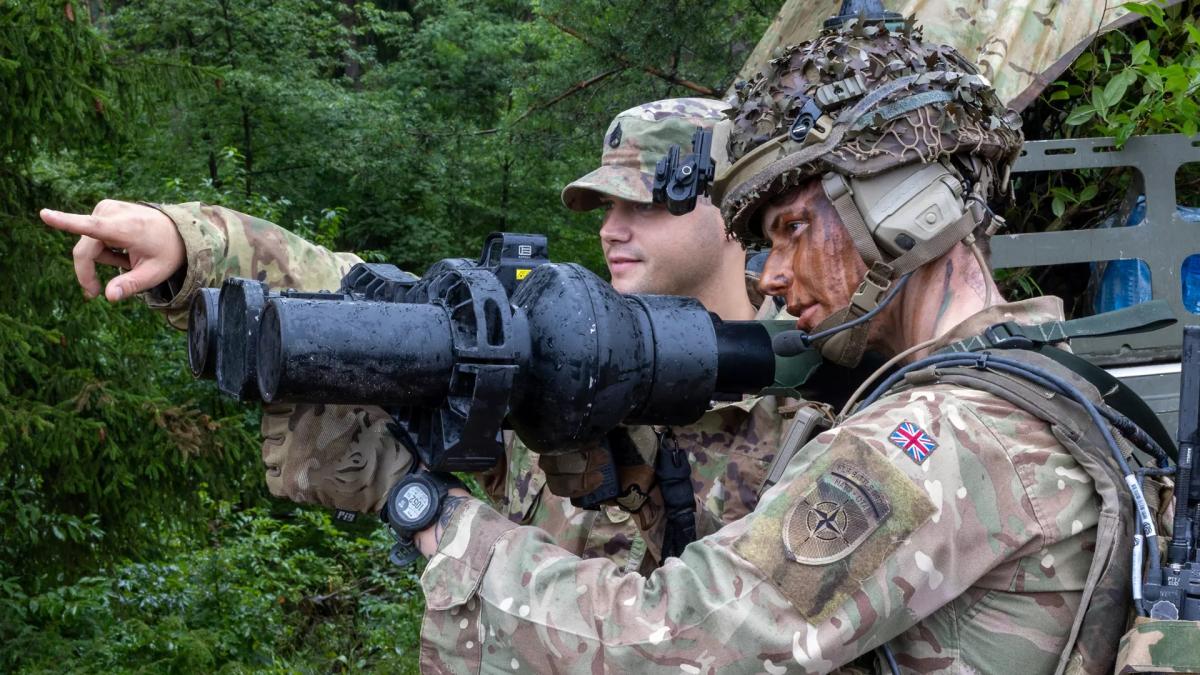
In March 2026, NATO conducted the “Cold Response 2026” joint military exercise in Norway and Finland, designed to demonstrate allied operational capabilities in the extreme cold of the Arctic. (NATO official website)
While some European countries avoid public preparations for fear of making the scenario a self-fulfilling prophecy, Alexandra de Hoop Scheffer, president of the German Marshall Fund, believes Europe should treat this turning point as an opportunity. Instead of panicking, it should adopt more proactive defense measures to buy time.
Attaching Europe’s muscles to an unreliable American brain?
To reassure Trump, NATO has recently worked hard to prove it is “doing its part.” NATO Secretary General Mark Rutte stated that non-U.S. members have increased defense spending by 20% annually for two consecutive years, creating nearly 200,000 jobs in the U.S. Europe is rapidly boosting its military capabilities—but only on the condition that U.S. conventional forces remain stationed in Europe. However, this protective umbrella is clearly no longer sustainable.
Top 15 countries by defense budget. (Financial Times)
The Financial Times noted that at last year’s Hague summit, European leaders pledged to raise defense spending to 5% of GDP in exchange for Trump’s support. That promise quickly collapsed. Trump now not only insists on pushing a Russia-Ukraine peace deal unfavorable to Ukraine but has even threatened to use force against Denmark to seize control of Greenland.
In response, U.S. Defense Secretary Pete Hegseth has launched a six-month review to reduce America’s share of NATO’s combat missions by 40%. Coupled with the U.S. military’s depletion of weapons due to conflicts in Iran, European nations have been informed that weapons deliveries will be delayed by several years—forcing them to urgently seek domestic alternatives.
“The Greenland and Iran incidents have made ‘Europeanization’ the only path to save NATO,” said a French official. While European nations do not want the EU to directly intervene in military affairs, they agree on reducing NATO’s dependence on the U.S. and increasing Europe’s role in NATO’s command structure.
However, Europe cannot replace key U.S. military capabilities—such as intelligence, reconnaissance, air defense, and aerial refueling—in the short term. Despite Germany, Nordic, and Baltic nations drastically increasing budgets—with Germany aiming for defense spending at 3.5% of GDP by 2029—major military powers like the UK and France are clearly lagging, projected to reach only 2.5% and 2.7% respectively by 2030. Even Germany faces challenges due to a lack of long-term financial planning.
Puglirin, a researcher at the European Council on Foreign Relations (ECFR) in Berlin, argues that the real issue is not just whether Europe is willing to spend, but whether NATO can gradually shift to European leadership. She warns that merely increasing military resources while keeping core decision-making dependent on the U.S. amounts to “attaching Europe’s muscles to an unreliable American brain.” She advocates that NATO’s three main operational headquarters must gain the independent ability to command large-scale operations, fully breaking free from reliance on the U.S. Supreme Commander.
Learning from Ukraine: Moving Beyond Old Thinking Toward ‘Porcupine Defense’
In April this year, the British Army conducted a simulation exercise at the Copehill Down training area: Challenger 2 tanks advanced across borders toward enemy trenches, while the sky filled with drones and loitering munitions. Ironically, the so-called Russian T-90 tanks in the exercise were actually just Land Rover Jeeps covered with tank-shaped tents.
During the ‘Daredevil Eagle’ and ‘Daredevil Tank’ exercises in Estonia, Challenger 2 tank crews from the UK practiced tactics and tested rapid-response defense capabilities with allied forces.
This reveals NATO’s core dilemma: after 30 years of counterterrorism and counterinsurgency operations, NATO’s tactical thinking has largely stagnated since the 1991 Gulf War. In contrast, the current battlefield in Ukraine—where cheap drones combined with networked data have completely rewritten the rules of war—has already transformed warfare. In a Swedish exercise, Ukrainian drone units easily defeated traditional Swedish forces.
The International Institute for Strategic Studies (IISS) warns that without U.S. support, European forces’ coordination and intelligence surveillance efficiency would plummet. Especially without U.S. capabilities to suppress Russian air defenses, Europe would struggle to gain air superiority.
A senior British official admitted that Europe cannot replicate the U.S. military’s strategy of “destroying the core with overwhelming firepower.” Instead, it must adopt “porcupine defense”—layered resistance tactics that raise the cost of Russian offensives. NATO has already begun adopting Ukraine’s experience, shifting toward a new defense model that integrates fortifications, 24/7 surveillance, AI target recognition, and large numbers of low-cost drones and missiles.
During the ‘Spring Storm 26’ exercise in May 2026, British soldiers carried the ‘AR3 Evolution’ reconnaissance drone. (NATO official website)
Military leaders across nations emphasize that NATO’s operational doctrine must be updated, as traditional armored units face severe survival challenges under relentless drone attacks. European army officials note that future battlefields will not be a choice between “tanks or drones,” but rather combined operations between the two. British Brigadier General Olly Brown warned that preventing armored vehicles from being disabled by drones is an urgent priority, and Europe must avoid repeating the same mistakes that led to prolonged attrition warfare on the Ukrainian battlefield.
Can Ukraine tie down Russian forces while European nations fail to cooperate?
As the Russia-Ukraine war enters its fifth year, a senior NATO military official stated that the conflict has become a testing ground where global powers—Russia, China, Iran, and North Korea—exchange technology and refine tactics. For NATO, it is imperative to learn these lessons before entering the battlefield themselves.
The Financial Times reports that to master new forms of warfare, NATO has established an analysis center in Poland, collaborating with Kyiv to study Russia’s mass-deployed “glide bombs” and develop countermeasures. Meanwhile, continued EU support for Ukraine is also buying Europe time to rearm. A British official frankly admitted that Ukraine’s ability to tie down large Russian forces has become far more critical to European security than it was a year ago.
At Camp Jomsborg in Poland, Ukrainian soldiers practice advancing through trenches during infantry tactical training. The camp was established by ‘Operation Legio,’ supported by eight nations including Poland, the Baltic states, and Nordic countries, aiming to provide training, equipment, and funding to Ukrainian forces. (NATO official website)
Moreover, Ukraine’s “good enough, fast” weapon development philosophy is profoundly impacting Europe. Compared to Europe’s cumbersome, slow defense procurement systems, Ukraine certified and deployed its new ‘Flamingo’ cruise missile in just five weeks. This highly innovative model has attracted defense companies like Germany’s Diehl Defence, seeking to collaborate with Ukraine and Turkey to establish factories in Europe.
However, the Financial Times argues that the biggest gap between Europe and Ukraine is that Ukraine clearly understands the nature of the war it is fighting, while European nations still have no clear vision of what future warfare will look like.
FACT BOX
- Source: PR Times
- Category: News