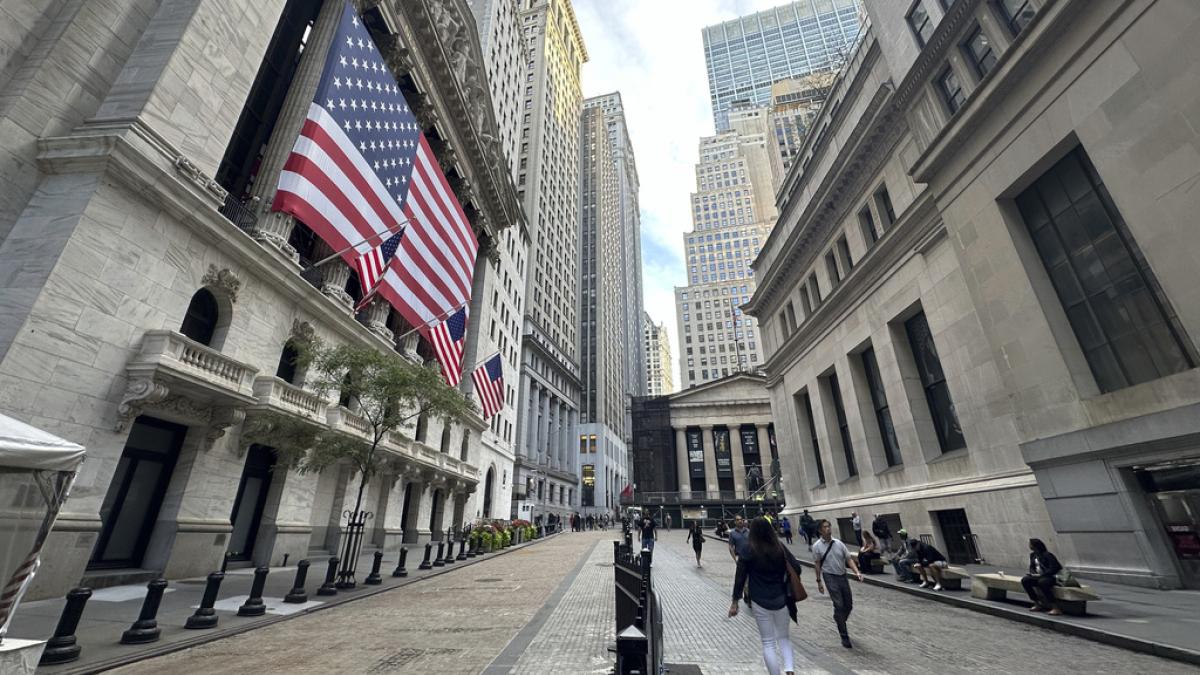
The U.S. Federal Reserve released the minutes from its Federal Open Market Committee (FOMC) meeting held on June 16–17 on July 8. The minutes revealed that policymakers remain sharply divided over the direction of interest rates this year. One faction believes that if inflation cools, there could be room for rate cuts by year-end. Another faction argues that further rate hikes may still be necessary if price pressures persist. At the same time, more officials have, for the first time, identified the surge in corporate investment driven by artificial intelligence (AI) infrastructure development as a significant factor continuing to push inflation higher.
In response, Hu Wei-Yao, product manager at Alliance Investment Trust, predicted on the financial program 'Wake Up Call' that the Federal Reserve will not raise interest rates this year. Hu stated that the post-meeting remarks by Fed Chair Kevin Warsh and the content of the minutes show little difference, allowing two major conclusions. First, the economic fundamentals: the tone in the minutes is relatively optimistic, with statements such as 'although there is uncertainty in the Middle East, overall economic expansion continues at a steady pace; productivity and capital expenditures are clearly growing.'
Second, the labor market: employment growth and overall labor force participation are advancing in tandem, providing a strong reassurance to the markets. Hu emphasized that what people truly fear is not inflation itself, but 'stagflation'—a scenario where inflation is high but economic growth is insufficient. However, the minutes suggest that Fed officials believe the probability of stagflation is clearly declining. Regarding energy supply, despite some disruptions, the Fed continues to emphasize its commitment to price stability, further reinforcing confidence in the economic foundation.
Hu noted that two key factors—tariffs and oil prices—that previously raised concerns have both cooled on a year-over-year basis. Earlier, Bank of America had argued for a rate hike due to worsening tariff and oil price conditions, to which the Fed has low tolerance. But from a year-on-year perspective, both factors have now eased. Hu stressed, 'The Fed has already endured the worst-case scenarios. Is it still necessary to deploy a scorched-earth tool like rate hikes to control inflation? The necessity appears to have diminished.'
Citing Warsh’s speech at the European Central Bank’s (ECB) annual forum, Hu pointed out that the Fed Chair has recognized that inflationary pressures are slowing. Additionally, the U.S. June non-farm payroll data showed the unemployment rate falling to 4.2%, indicating that the labor market has not collapsed, but the economy is cooling slightly—exactly the scenario markets prefer. A modest economic slowdown reduces the Fed’s inflation pressure. Hu emphasized, 'The FOMC minutes indicate that U.S. economic growth is not problematic. Therefore, the Fed will not raise rates this year.'
FACT BOX
- Source: PR Times
- Category: Survey