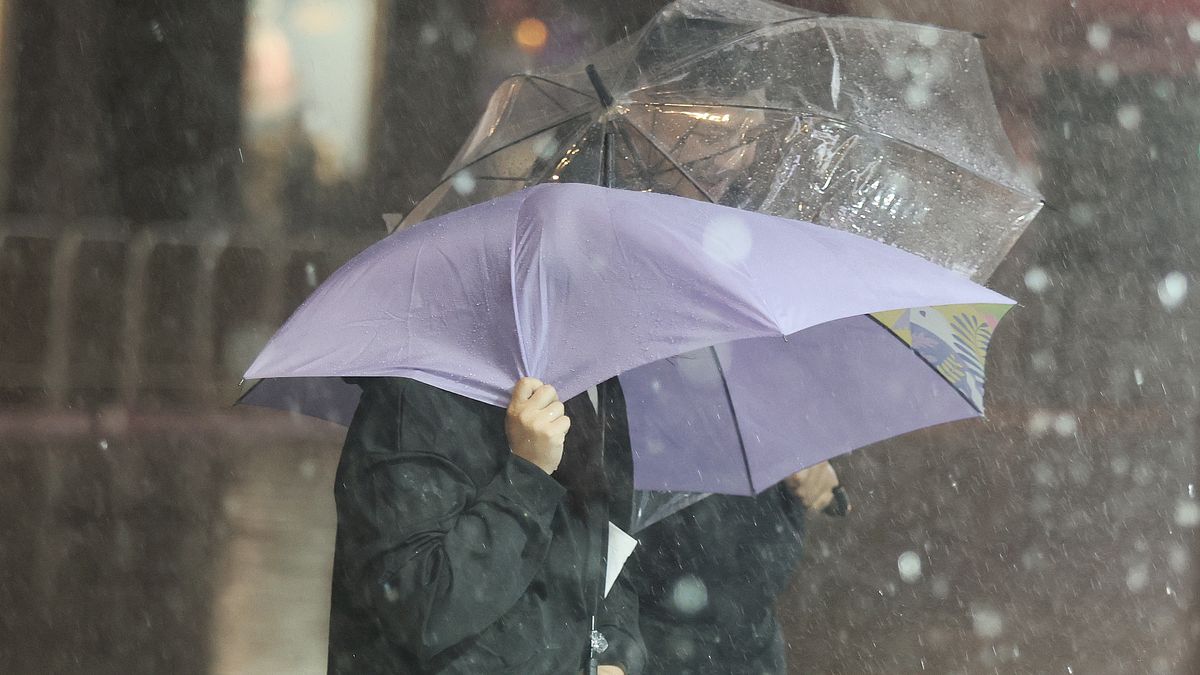
Typhoon Bavi is intensifying, and the Central Weather Bureau issued a land warning at 5:30 a.m. on the 10th. The initial warning zone includes New Taipei City, Yilan County, and Hualien County. Although Typhoon Bavi weakened to a medium typhoon on the evening of the 9th, the bureau continues to urge vigilance. On the 10th, multiple counties and cities across Taiwan announced work and school suspensions. Before official announcements, author Piao Lang Dao Yu posted on Facebook titled 'Will Typhoon Bavi Favor Capital Over Labor?' reflecting on the history of typhoon holidays in Taiwan. He emphasized that typhoon holidays are not mere 'days off' but disaster response measures, often sparking political and social debates.
According to the latest update on the 10th, although Typhoon Bavi continues to weaken, rainfall will intensify in northern and northeastern regions during the day, with the heaviest rain and wind expected from evening to the next morning. At 6 a.m., the typhoon's center was located about 720 kilometers east of Eluanbi, with maximum sustained winds of 45 meters per second and a 7-level wind radius of 380 kilometers. Waves exceeding 6 meters have already been observed in Taitung County and Lanyu Island. The bureau stresses that despite the shrinking intensity and wind field, wind and rain will continue to strengthen, requiring ongoing caution.
With the typhoon approaching, the public's biggest concern has been whether work and school will be suspended. The status for Friday, the 10th, is as follows:
- Suspended work and school: Keelung City, Taipei City, New Taipei City, Taoyuan City, Hsinchu County, Hsinchu City, Miaoli County, Lienchiang County - Suspended from 6 p.m.: Taichung City, Nantou County - Normal operations: Changhua County, Yunlin County, Chiayi City, Chiayi County, Tainan City, Kaohsiung City, Pingtung County, Taitung County, Penghu County, Kinmen County, Green Island, Lanyu Island
Many residents closely monitored the typhoon's path. As conditions remained relatively calm during the daytime of the 10th, online discussions arose questioning whether the typhoon holiday was unnecessary. In response, Piao Lang Dao Yu ironically remarked, 'Typhoons also have a bias—favoring labor or capital.' A holiday on Friday benefits workers, but one on Saturday results in no makeup day, simply ruining a weekend. He pointed out that historically, most typhoons hit Taiwan on weekdays, inadvertently giving workers a 'bonus holiday.'
Looking back, typhoons like Herb in 1996, Morakot in 2009, and Tembin in 2013 approached on weekends, canceling holidays without compensation—seen as 'favoring capital.' In terms of typhoon holiday records, Typhoon Nari in 2001 holds the longest record, lingering over Taiwan for nearly 50 hours, with some areas in Taipei suspending activities for up to a week. In 2023, Typhoon Sanba, moving slowly, caused some areas in Kaohsiung to suspend operations for four days.
Piao Lang Dao Yu emphasized that typhoon holidays are disaster prevention measures, not mere 'holidays,' determined by meteorological standards and official judgment. However, decisions are often delayed or deemed 'unnecessary,' placing local leaders in a difficult position.
FACT BOX
- Source: PR Times
- Category: News