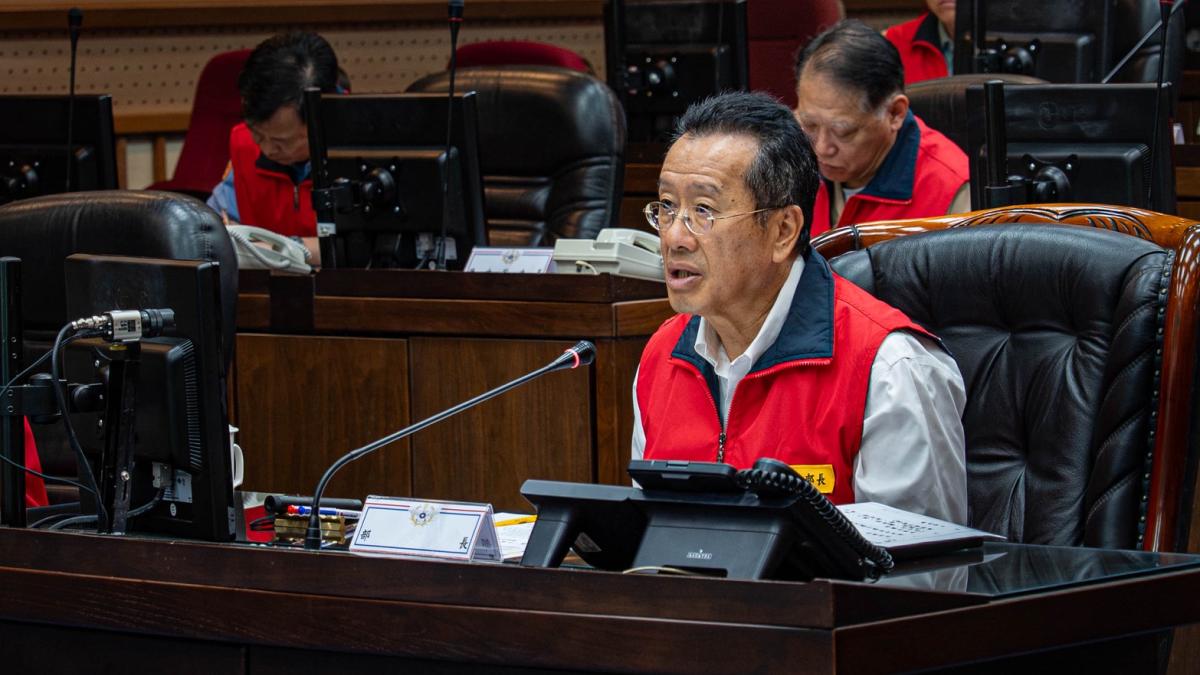
With Typhoon Bavi intensifying, Defense Minister Ku Yu-hsiung inspected the Ministry of National Defense's Disaster Response Center on the 10th. He urged all operational zones to complete preparations and stand ready to respond to potential typhoon-related disasters. Under the premise of ensuring safety, the military will actively cooperate with the Central Disaster Response Center and local governments to carry out rescue operations, jointly safeguarding the lives, property, and homes of the people.
Approximately 20,000 troops are on standby, supported by over 2,000 units of disaster response equipment across 33 categories, including AAV7 amphibious assault vehicles and rubber boats.
During the inspection, the minister first received briefings on meteorological conditions, disaster response execution status, and preparedness reports from each operational zone. Minister Ku commended frontline personnel for their dedication and instructed all units to follow President Lai Qing-de's directive: 'The core mission of the military is to ensure the safety of people's lives and property.' He emphasized maintaining close coordination with local governments and standing ready to provide necessary support for disaster prevention and relief efforts.
Minister Ku specifically expressed concern over potential risks in Hualien's landslide-dammed lake and outlying islands. He urged all units to continuously monitor the typhoon's latest path, rainfall, and disaster developments, ensuring full preparedness and pre-positioning of personnel, vehicles, and engineering equipment. High alert must be maintained so that forces can be immediately deployed upon command. He also reminded all commanding officers that during rescue operations, the safety of troops must be prioritized. Risk management and safety protection must be strictly implemented to ensure missions are carried out under secure conditions.
The Ministry announced that a total of over 20,000 military personnel are on disaster standby, with 33 types of equipment—including AAV7 amphibious assault vehicles and rubber boats—amounting to over 2,000 units fully prepared. Forces and equipment have been pre-positioned in disaster-prone and low-lying areas for immediate response. Additionally, military hospitals have organized medical rescue teams ready to provide emergency medical support at any time.
FACT BOX
- Source: PR Times
- Category: News