Preface
Taiwanese people have a tendency to compartmentalize—not only politically between blue and green camps, but even on scientific issues related to food and health. This fragmented thinking has created an extremely complex market order. Only certain health supplement manufacturers benefit, as they bypass the difficult drug approval process by marketing products as food under a 'shell,' taking advantage of the government's policy of self-regulation for food manufacturers.
Why have pharmaceuticals rarely caused problems over decades, while food safety scandals continue to emerge?
The root lies in a fragmented, multi-track regulatory system that applies double or even multiple standards to drugs and food. It's as if our bodies—and regulatory authorities—were intelligent enough to categorize everything we ingest (food, medicine, traditional Chinese medicine, Western medicine, imported drugs, domestic drugs) into separate tracks. Let me explain how we should rethink the fundamental act of 'humans consuming substances.'
Taiwan's drug and food regulation suffers from a fundamental logical blind spot: a product-centric, siloed management approach. (Author's photo)
Drug or 'Yao'?
During a visit to Beijing's State Drug Administration (SDA), I once gave a speech saying I dislike simplified Chinese characters—except for the character '葯' (yao). Both 'drug' and 'food' share the radical '艸' (grass), and the concept of 'food and medicine sharing the same origin' emphasizes that in the act of 'humans consuming substances,' the 'human' is paramount, and 'how we consume' is most important. Thus, '葯' implies 'controlled use of grass.'
Yet in modern society, driven by economic growth, we've abandoned the 'human' and the 'act of eating.' Drugs and food have become mere 'products,' turning the object into the subject. Without a human-centered approach, risk becomes irrelevant. The character '藥' now encourages consumers to 'happily consume grass,' enabling bottomless marketing that uses people's bodies to boost the economy.
A lack of risk awareness will cost society dearly. (Author's photo)
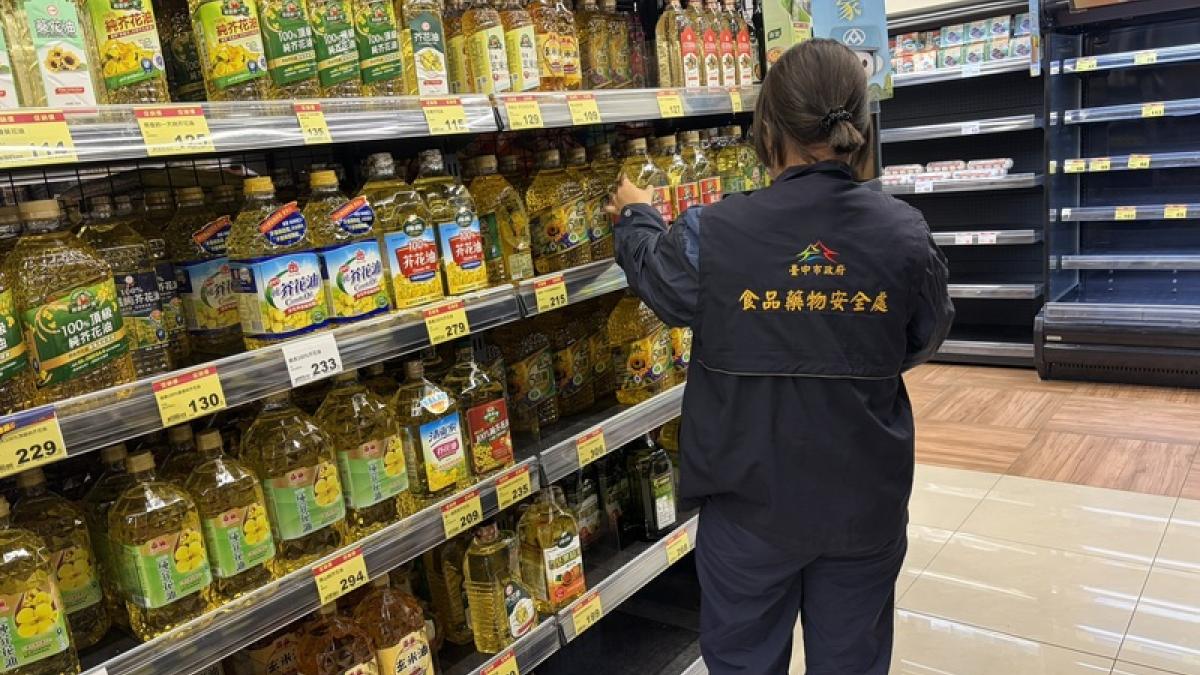
But 'humans consuming substances' is an inseparable whole. The body does not distinguish between food and medicine, or between traditional Chinese and Western medicine. When product quality is unregulated (e.g., self-regulation) and marketing is unchecked (e.g., NCC failing to monitor advertisements), problems are inevitable. Individual cases become health damages; societal-scale incidents (e.g., ractopamine pork, nuclear-contaminated food, vaccines, toxic eggs, Sudan red, sprouted potatoes, tainted oil) become epidemiological crises; and regulatory failures become signs of incompetent governance.
Knowledge-Economy Products
Drugs and food are not just products—they come with instructions specifying how and when to consume them. As knowledge-based economic products, they carry invisible risks. Poorly managed rollouts can cause massive health threats. Preventing these risks is the responsibility of regulatory authorities, not consumers, who lack the expertise to avoid dangers.
Yet our environment is full of anomalies. Governments focus only on product management, not risk prevention. For example, as the Ministry of Economic Affairs pushes economic growth, the Ministry of Health and Welfare follows suit by allowing food manufacturers to self-regulate—using people's bodies to drive product-based economic growth.
How Policy Affects Risk Levels
In terms of user population, frequency, opportunity, and volume of consumption, food far exceeds drugs. Poor management therefore poses a much greater risk than poorly managed drugs. Thus, food regulation standards and rigor should not be lower than those for drugs—should they?
Recall the era of the Department of Health, where product management dominated and each bureau focused only on its own domain, lacking a cross-sectoral approach to building a risk-prevention environment. During the Chen Shui-bian administration, the Pharmaceutical Affairs Division worked to modernize pharmaceutical regulations and align them with international standards. We evolved Taiwan's 'Good Manufacturing Practice' (GMP) from non-GMP to GMP, cGMP, API-GMP, and finally PIC/S GMP—a process that took 50 years (1977 to present).
GMP refers to government-issued guidelines that companies use to build their own Standard Operating Procedures (SOPs), at significant cost. With GMP as a foundation, government oversight becomes possible, and people are protected from exploitation. This is a clear-cut regulatory issue.
To enforce GMP, we classified all drugs produced in non-compliant factories as substandard drugs (2005), amended the Pharmaceutical Affairs Act to include criminal penalties—up to 7 years imprisonment and fines up to NT$25 million (Article 82). We even defied the U.S. Department of Commerce to require imported drugs to meet the same standards as domestic ones, including overseas GMP inspections.
As a result, half of all drug manufacturing licenses were revoked, and market order became clean and controllable.
Taiwan's pharmaceutical regulatory progress has been a journey toward aligning with international standards. (Author's photo)
Meanwhile, the 'Food Safety and Sanitation Management Act' at the time only imposed fines of NT$30,000–60,000 for violations, with no criminal penalties. Because the Chen administration prioritized economic growth, regulatory agencies were disarmed, delegating authority to manufacturers through self-regulation, certified by private associations and approved by the Department of Health with a 'Smile Mark.'
It wasn't until the September 2014 'gutter oil' scandal that the Ma administration amended the law to include criminal penalties (up to 7 years imprisonment, fines up to NT$80 million, and life imprisonment if deaths occur)—a full decade after similar penalties were introduced for pharmaceuticals. The scandal led to a change in government in 2015, but the policy of manufacturer self-regulation for food remained unchanged—and still does today.
At the time, I wrote, 'It's all about eating: Food GMP should be managed just like drug GMP.' (Author's photo)
Repeated scandals involving products with the 'Smile Mark' prove that the government has failed to address the chronic problem of dual and multiple standards in drug and food regulation. The absurdity of a 'one country, two (or multiple) systems' approach to drugs and food has caused national outrage—yet like ripples fading, nothing has changed.
Conclusion
When true expertise fails to enter society, pseudo-expertise takes its place—this is instant karma. National economic development is the Ministry of Economic Affairs' job. The Ministry of Health and Welfare must balance growth and prevent economic distortions from harming people. It must not dance to policy tunes and use people's bodies to drive the economy.
Based on consumer protection, modern citizens have the right to demand that the government fulfill its duty to protect people and respect human rights. Otherwise, what is government for? If the people—the true owners—do not seriously take ownership and continue to tolerate irresponsible governance, the same stories will repeat.
*The author holds a Ph.D. in Pharmacy from the University of Michigan, USA. He formerly served as Professor and Chair of the Department of Pharmacy at National Taiwan University College of Medicine, Dean of the College of Pharmacy at Taipei Medical University, Founding Director of the Institute of Natural Medicines at Chang Gung University College of Medicine, and Director of the Pharmaceutical Affairs Division at Taiwan's Department of Health, Executive Yuan.
FACT BOX
- Source: PR Times
- Category: News