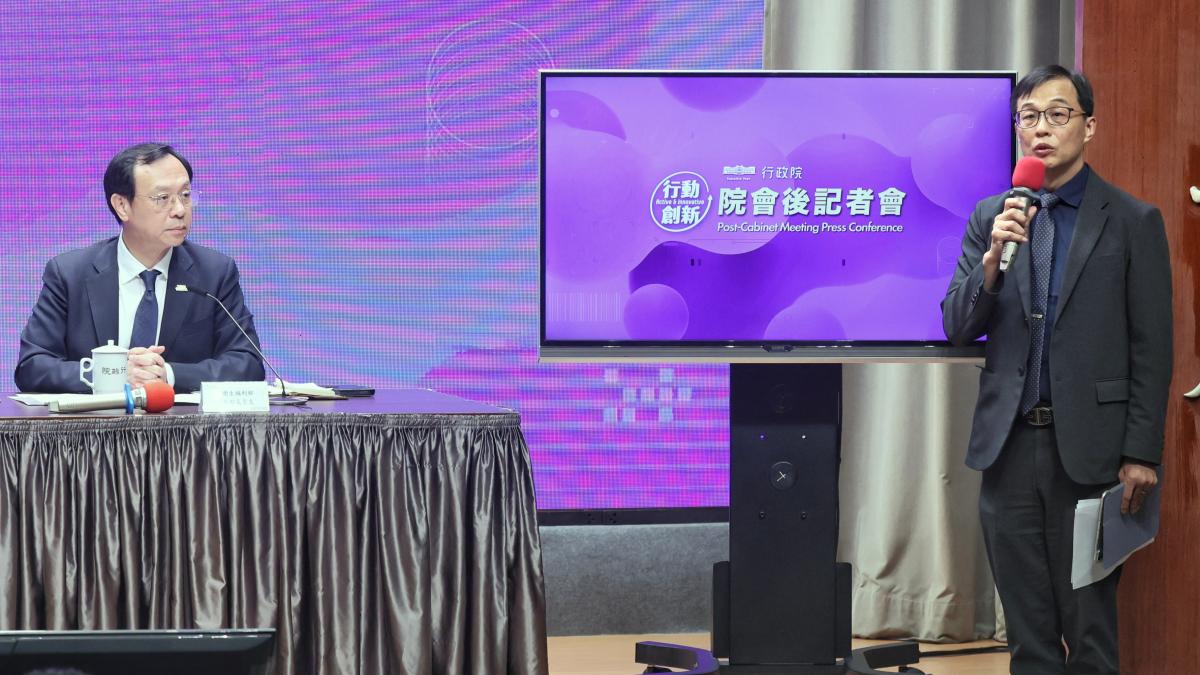
The recent poison oil incident that shocked the entire island of Taiwan not only exposed the collective malicious concealment by upstream manufacturers but also revealed the extreme incompetence and absurdity of the Democratic Progressive Party (DPP) government's handling of the situation under precise political calculations! Under the DPP's premise of 'protecting businesses and not offending the powerful and wealthy...', the health and lives of more than 23 million people across Taiwan are treated as insignificant as ants and grass! The Central Oil incident revealed that the food oil contained 4 times the standard limit of benzene biphenyl. Amazingly, after the internal management knew about the excess, they held a meeting and ordered a 'cover-up' - no reporting, no shutdown, and publicly stating that they were waiting for the re-inspection results... During this period of concealment, at least 8,478.88 tons of poison oil continued to flow into the market. Just during the 'cover-up and regulatory vacuum period' from April to June, the actual total production volume was as high as 30,881 tons. Most of it has already been consumed by the public in the form of salt and pepper chicken, processed foods, and stir-fries. The slow-moving Food and Drug Administration (FDA) has only managed to recall 30% so far. Even more absurdly, in the face of the poison oil that had been sneaking into Taiwan for several months, the DPP government's response was always 'deal with it as public opinion dictates'! On July 3rd, the 82nd day after the poison oil entered the market, when faced with media questions about why the downstream flow was concealed and why the list was not published, the FDA Director-General Jiang Zhi-gang emphasized that Taishan, Fushou, Fuma, and more than 200 other downstream food processing factories had unknowingly purchased the poison oil raw materials from Central Oil. Therefore, he concluded that 'they are also affected businesses and victims and the list should not be made public to avoid being searched and boycotted by the public.' This serious collusion between officials and businesses is harming and slowly killing the entire population! Finally, under public pressure, as of the latest date, the number of downstream manufacturers affected by the 'carcinogenic oil' storm from Central Oil has rapidly risen to 1,322. The FDA even threw out the bizarre standard of 'only needing to recall if the usage exceeds 20%.' It was not until local leaders rebelled and public outrage boiled over that the policy was forced to make a U-turn. Although a fine of over 100 million was later imposed and an indefinite shutdown was ordered, during the initial stages of the incident, the decision-making process, and system defense, the competent authority ignored this national security event that shook the foundations of the country, exposing serious administrative deficiencies and inability to respond. The food safety five-ring system with a budget of hundreds of billions of dollars has completely failed! 'Officials look at data in their offices, upstream manufacturers engage in black-box operations in meeting rooms, and in the end, it is always the lowest-level common people who ingest carcinogens.' In contrast, when the U.S. and Japan handle major food safety incidents like poison oil, their response speed is almost measured in 'hours' and 'days,' actively using extremely strict regulatory mechanisms to compress any possible window for expanding the disaster. Once an oil factory in the U.S. knows that its products pose a serious carcinogenic or acute toxicity risk, it must proactively upload the information to the FDA's Reportable Food Registry (RFR) system within 24 hours. Such acts as holding a product quality meeting and ordering a 'cover-up' like in the Central Oil case are considered serious federal crimes in the U.S., and the CEO and related senior executives will be directly arrested and prosecuted by the Department of Justice within a few days, with possible prison sentences of several decades. The RFR system for nationwide recalls in the U.S. is also digitally linked to the backends of chain supermarkets (such as Walmart, Costco) and large food processing plants. Once the system confirms an alert, all POS systems at the end of the supply chain across the U.S. will automatically lock the product batch number within a few hours, preventing it from being scanned and paid for, directly killing the poison oil at the front line. In Japan, the government will directly cut off the source of contamination. Upon receiving a complaint or abnormal inspection, it will immediately issue an 'order for inspection' to the oil factory. Before the inspection results and reasons are completely clear, the oil products 'from this moment on' are not allowed to be transported out of the factory, completely eliminating the mentality of 'hurry up and continue shipping, sell one more day' before the net closes. Once the Japanese Consumer Affairs Agency confirms the presence of poison oil, it will hold a press conference that evening to announce the names of the involved companies and their responsible persons to the public. Japanese society has extremely high demands for business reputation. Major chain supermarkets, catering, and restaurants will 'preventively stop using' all oil products from the factory that evening. Usually within 24 to 48 hours of the official announcement, the oil factory will face nationwide returns and social annihilation, being forced to declare bankruptcy and permanently shut down. When facing major crises like first-level carcinogens, the U.S. and Japan usually adopt a 'presumed guilty across the board, recall all products first, and then slowly clarify the batch numbers' approach of saturated defense, which is vastly different from the traditional investigation speed of 'find one line, follow one line.' Not to mention, under the DPP's 'politics-first' administration, 'all officials are incompetent,' administrative work is based on appearances, and the speed is as slow as an old cow pulling a cart. Former U.S. Secretary of Agriculture Tom Vilsack once said: 'If we cannot trust our food, we cannot trust anything.' People rely on food for their lives. Facing major food safety incidents that have risen to the level of national security, we hope the DPP government will take political responsibility and stop disregarding human lives, losing the hearts of the people forever! *The author is a Taiwanese person living in the U.S., the president of the Autism Spectrum and Learning Disabilities Care Association in the U.S.
FACT BOX
- Source: PR Times
- Category: Survey