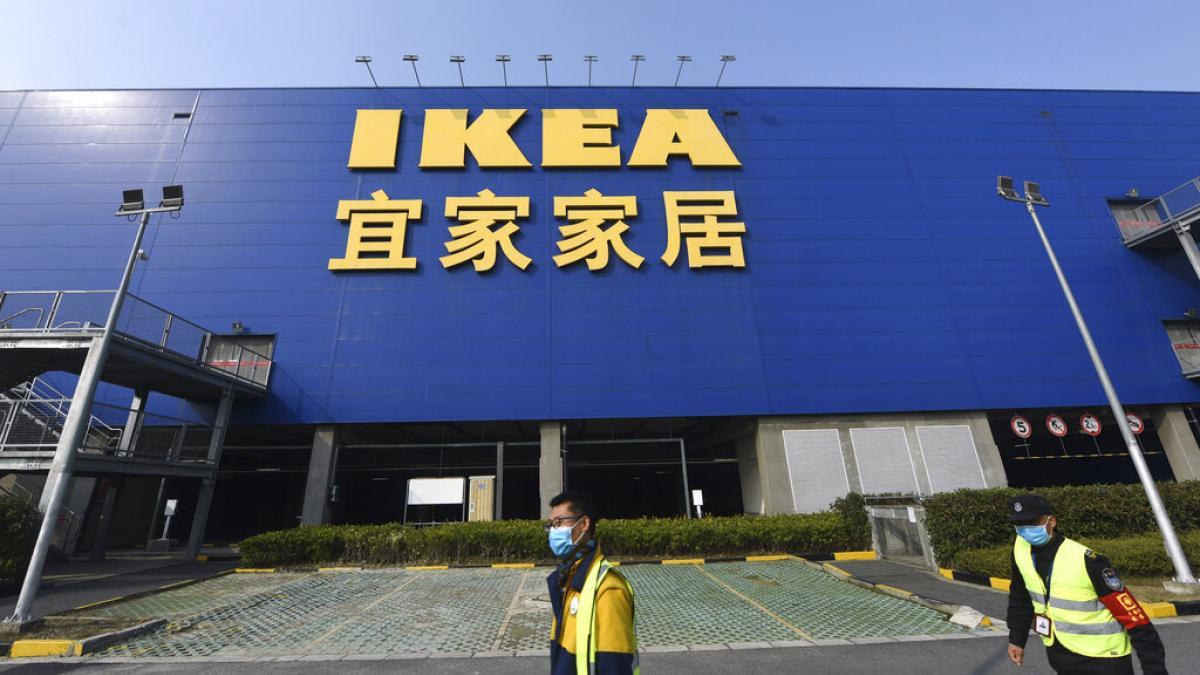
IKEA China is planning to sell eight self-owned idle assets, marking the largest-scale disposal of its own assets since entering the Chinese market nearly 30 years ago. In February this year, IKEA China abruptly closed seven physical stores, aiming to optimize costs and enhance operational efficiency.
According to a report by Chang'an Street Zhi Shi, a WeChat public account under the Beijing Daily Group, on the 18th, IKEA China is currently selling eight assets located in Shanghai, Guangzhou, Tianjin, Harbin, Nantong, Xuzhou, Guiyang, and Ningbo. This represents the largest centralized disposal of self-owned assets since IKEA entered the Chinese market nearly three decades ago.
Ingvar Kamprad, founder of IKEA, passed away on January 27 at the age of 91. (AP)
Real estate services firm JLL has been entrusted with the sales process. JLL stated that all eight assets are now fully vacated, free of lease restrictions, and available for immediate handover in as-is condition. Each property is situated in mature commercial districts or key development zones within their respective cities, making them suitable for conversion into long-term rental apartments, community retail spaces, cultural-tourism complexes, or corporate headquarters.
Of the eight assets up for sale, seven were the stores collectively closed in February this year; the Guiyang IKEA store, which ceased operations in 2022, has also been included in this round of asset disposal.
For over two decades, IKEA China pursued a capital-intensive expansion model of acquiring land on city outskirts and constructing its own stores.
In 2022, the war in Ukraine prompted Western multinational companies, including IKEA, to withdraw from Russia. The photo shows mass shopping by Moscow residents before the IKEA store closed on March 4. (AP)
The report notes that in recent years, online home furnishing e-commerce and local instant retail platforms have diverted customer traffic, leading to declining footfall at large shopping malls. Combined with persistently high costs for land, property operations, and labor, inefficient stores have continued to squeeze profit margins. IKEA China’s sales in fiscal year 2024 dropped 7.6% year-on-year, shrinking by over 30% compared to its peak in 2019.
IKEA China previously stated that the closure of seven physical stores in February was not due to operational failure, but rather a proactive transformation focused on cost optimization, efficiency improvement, and resource reallocation. Going forward, the company will concentrate on expanding smaller-format stores and developing instant retail services.
FACT BOX
- Source: PR Times
- Category: News