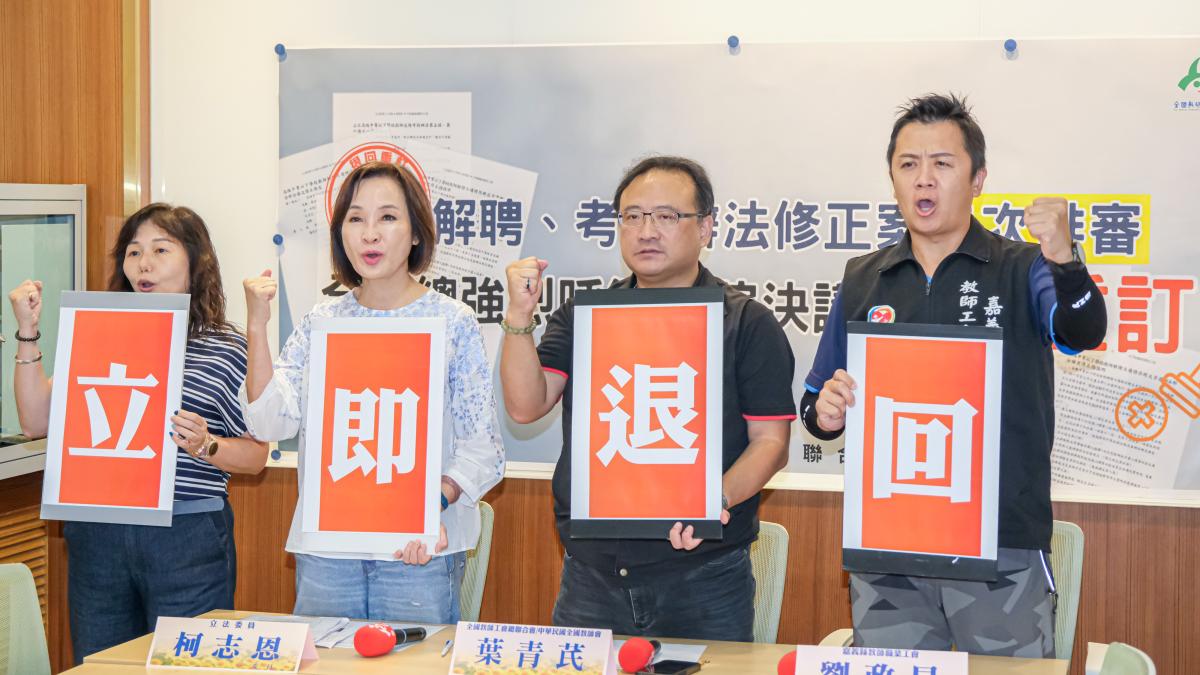
Recent public discourse has focused on the distorted phenomenon of 'private schools overflowing despite declining birthrates,' with one core issue being public schools mired in 'campus litigation abuse.' An endless stream of investigations has drained teachers' enthusiasm, and some educators falsely accused have been forced to leave the profession even after being legally exonerated. These harrowing individual cases have not only shattered frontline morale but also driven countless teachers into 'defensive teaching.' This campus atmosphere is not baseless; according to a recent survey of over 5,000 elementary and secondary school teachers across Taiwan, a staggering 96% fear being reported due to misunderstandings, and nearly 80% admit they prioritize 'procedural legality' over actual educational outcomes when disciplining students. Even more astonishingly, the Ministry of Education's talent pool for handling disciplinary disputes now exceeds 1,400 members—more than the total number of prosecutors nationwide. Deploying criminal investigation-level resources against schools raises serious questions about whether our education system has lost its way. The Ministry claims its new campus affairs meeting system has drastically reduced the proportion of cases entering formal investigation, suggesting litigation abuse is under control. However, in practice, nearly half (45%) of cases are merely 'diverted' into internal school evaluation procedures. The root cause of litigation abuse remains unaddressed, with external pressure merely transforming into administrative inertia within schools. Historical data shows the actual dismissal or suspension rate for substantiated unfit cases is only about 3.3%. Disproportionate administrative resources are consumed for an extremely small number of unfit individuals, diverting resources from normal educational operations and leaving most diligent educators silenced. Worse, this preventive mechanism often devolves into decontextualized, courtroom-style public trials. For instance, a teacher who instinctively raised their hand to block a student's prank physical assault—while in pain and shock—was judged by an investigation panel as having committed improper discipline and given a reprimand, ignoring the fact they were the victim. When the system strips teachers of their basic right to self-defense as human beings, self-preservation becomes the most rational choice in the face of misconduct, leaving the educational rights of the majority of students unfulfilled. The fundamental solution lies in boldly abolishing cumbersome campus affairs meetings and centralizing substantive dispute reviews under local governments' already well-functioning 'Teacher Professional Review Committees' (TPRCs). Composed of government officials, scholars, principals, parents, and teacher organization representatives, TPRCs can maintain objective external oversight while upholding educational professionalism. Basic education is both a right and an obligation, not a transactional consumer service. Only by abandoning extreme preventive thinking, stopping the judicialization of schools, and guiding systems toward relationship restoration and professional review can we mend the trust gap between parents and teachers—the practical solution to rescuing public education and truly safeguarding the next generation's right to education. *Author is Deputy Director of Policy Department, All Taiwan Teachers' Union
FACT BOX
- Source: PR Times
- Category: News