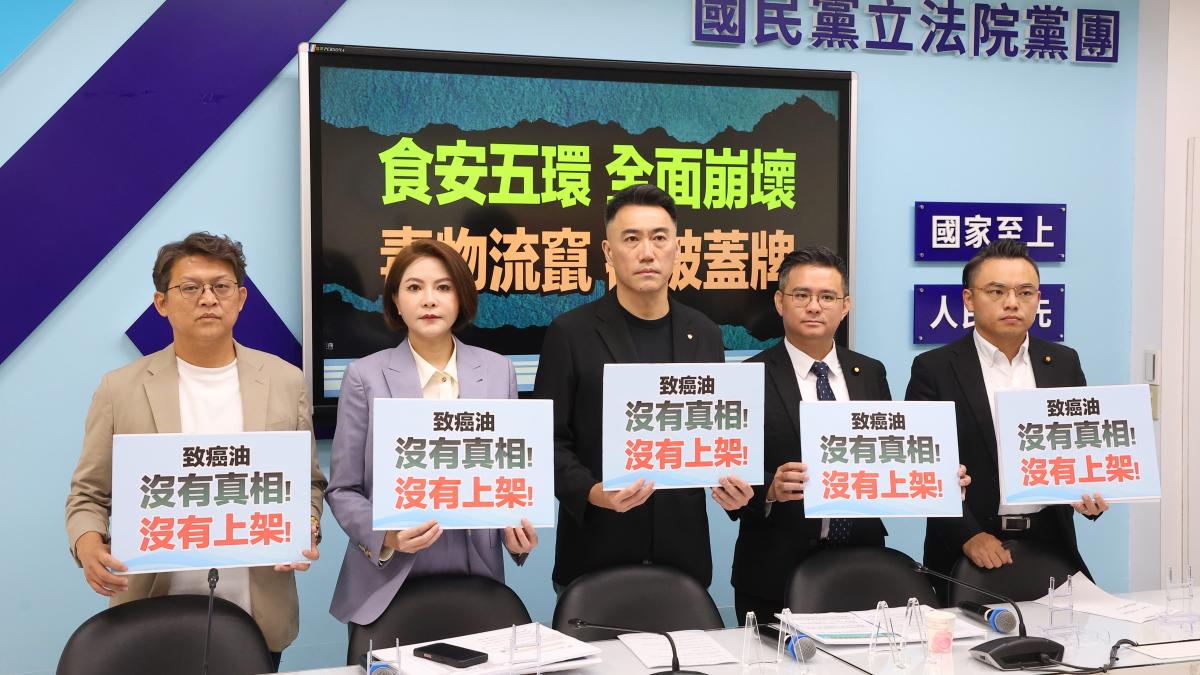
The 2014 Chang Kuei gutter oil incident made Taiwanese society collectively realize that edible oil is not just a single kitchen commodity, but a supply chain spanning raw materials, refining, transportation, processing, and food service. At the time, discarded low-quality fats were mixed into edible lard, affecting over 1,200 downstream manufacturers, with products reaching fast food, pastries, and noodles.
What truly damaged public trust was not only the fraud by unscrupulous operators, but also the chaotic information tracing after the incident, the difficulty in determining the scope of affected products, and the lack of clear thresholds for preventive recalls.
More than a decade later, the risks to edible oil safety in Taiwan have changed in nature. While traditional gutter oil remains a problem, modern refined oils carry more hidden co-generated contaminants, including 3-MCPD esters, glycidyl esters (GE), and benzo(a)pyrene (BaP). These substances are often linked to high-temperature refining, raw material contamination, or process control issues, and cannot be assessed solely by traditional indicators like acid value or peroxide value.
The European Union has already established stricter regulations for different oil types and infant formula applications. If Taiwan continues to focus on sporadic random inspections, it will fail to respond to the food safety risks of the modern refining era. The benzo(a)pyrene (BaP) limit in finished oil should be strictly managed at or below 2.0 μg/kg. Limits for 3-MCPD esters and GE should also be legally established promptly, rather than remaining in administrative research or case-by-case monitoring.
Logistics is another often-overlooked area. Bulk edible oil should not enter regulatory oversight only after packaging; contamination risks exist earlier, during tanker transport, storage tanks, and warehousing. Taiwan's current system does not explicitly prohibit chemical tankers from carrying edible oil. If the same vehicle previously transported chemicals and is then used for edible oil, residue risks and cleaning records cannot rely solely on industry self-regulation.
In contrast, China has issued GB 44917-2024, 'Specifications for Bulk Transportation of Edible Vegetable Oils,' requiring food-specific containers and 'edible oil only' labeling. This is not a political gesture to be mimicked, but a basic technical requirement for food logistics oversight. Taiwan has no reason to lag behind in this area.
Waste oil recycling also requires institutional thresholds. When total polar compounds (TPC) in frying oil exceed 25%, the oil has severely degraded and should be mandatorily channeled into waste oil recovery, disposal, or biodiesel systems—not left to operators' discretion under vague terms like 'unsuitable for use.' Without digitalized traceability, waste oil may still be collected and resold through underground channels, re-entering the food chain. The lesson from the Chang Kuei case is that once waste oil enters a legitimate-looking supply chain, downstream processors and consumers struggle to identify it.
Therefore, edible oil safety reform must move beyond 'strengthened inspections' as the primary solution. The TFDA and the Legislative Yuan should at least advance five institutional fixes:
First, establish mandatory limits and regular review mechanisms for 3-MCPD esters, GE, and BaP.
Second, enact mandatory regulations for bulk edible oil transportation, prohibiting the mixed loading of chemical tankers.
Third, clearly define preventive recall thresholds when problematic oils enter processed foods—e.g., requiring time-limited public announcements and recalls when usage ratios reach certain levels.
Fourth, introduce third-party independent oversight to prevent downstream manufacturers from relying solely on supplier declarations.
Fifth, set up high-value whistleblower rewards and identity protection to empower insiders to expose underground waste oil workshops and illegal adulteration.
The focus of food safety governance should not be how many businesses were inspected after each crisis, but whether enforceable standards, traceable flows, actionable recall procedures, and sufficient incentives to break silence exist under normal conditions. Over a decade has passed since the gutter oil scandal. Taiwan cannot afford to wait for the next oil incident to prove that systemic gaps are harder to bear than a single unscrupulous operator.
FACT BOX
- Source: PR Times
- Category: News