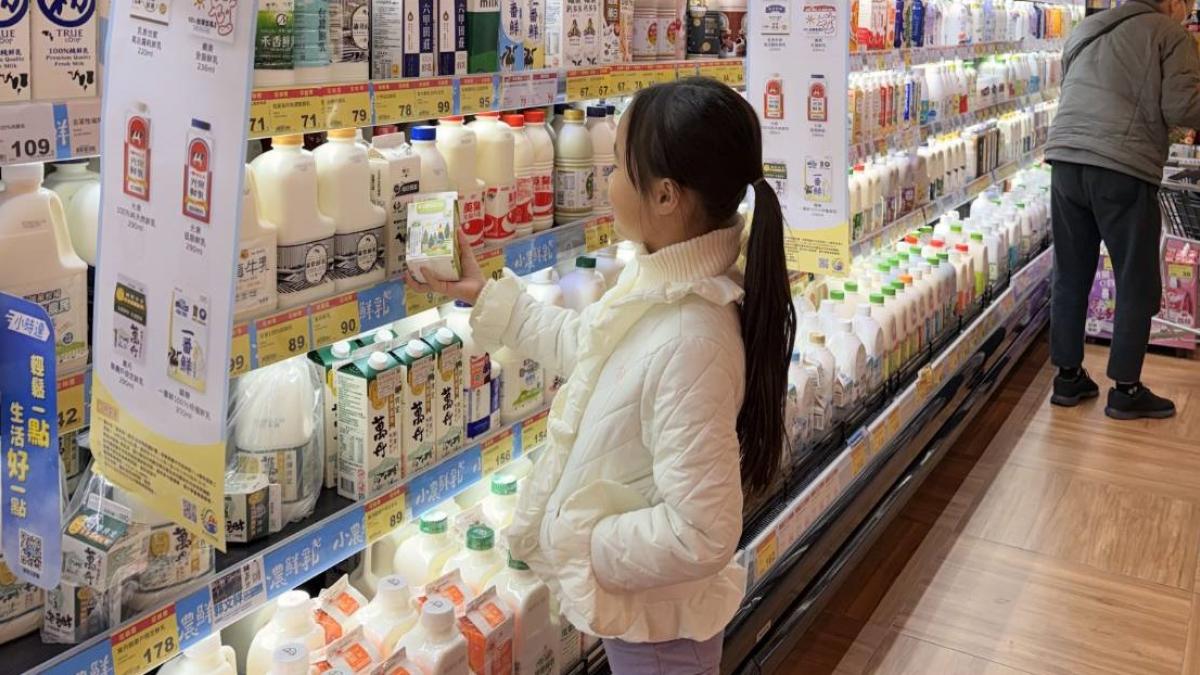
Taiwan's fresh milk prices rank second highest in the world, and many consumers willingly pay for the 'fresh milk certification' label on bottles in pursuit of high-quality nutrition. However, a closer examination of the 'sterilization method' listed on the back of commercial fresh milk packaging reveals a startling truth for the general public: what we are paying a high price for may not be 'true fresh milk' by scientific definition.
The 'Fake Fresh Milk' in the Refrigerator: The Dominance of UHT Sterilization
Inspecting the refrigerated sections of major retailers, nearly all products labeled as 'fresh milk' by Taiwan's large domestic dairy manufacturers use UHT (ultra-high temperature instantaneous sterilization, at temperatures of 125°C to 135°C) technology. From a food science perspective, this level of sterilization is sufficient to eliminate bacteria and spores. When combined with aseptic packaging, the milk can be stored at room temperature for several months.
Yet, to maintain the marketing myth of 'freshness,' large Taiwanese dairy producers and retailers artificially shorten the shelf life to within 14 days and mandate storage at 7°C. This means consumers are paying high cold-chain logistics costs and retail markups for what is essentially 'refrigerated long-life milk'—a product subjected to intense heat treatment, with significant loss of trace nutrients like β-lactoglobulin.
Deliberately Engineered Flavor Gap: Why Long-Life Milk Tastes Different
Consumers naturally wonder: if the large manufacturers' 'fresh milk' is essentially the same as long-life milk, why does domestically produced long-life milk have a strong 'caramelized flavor,' unlike refrigerated fresh milk?
This is likely a 'deliberate differentiation' under commercial strategy. To reinforce the public's established perception that 'fresh milk equals high quality, long-life milk equals inferior,' manufacturers may intentionally extend heat treatment time during long-life milk production, maximizing the Maillard reaction to create a distinct flavor gap. This successfully leads consumers to mistakenly believe that UHT fresh milk—only slightly caramelized and kept in refrigerators—is the 'freshest standard,' making them willingly pay a premium.
The Truth in Blind Tests: Imported Long-Life Milk and Taste Reevaluation
This commercial manipulation becomes evident when tested against imported milk. For example, when New Zealand-imported long-life milk is chilled and subjected to blind taste tests, its flavor closely resembles that of premium-priced local 'fresh milk' in Taiwan—sometimes even tasting cleaner and more natural due to pasture-based farming practices.
This fact proves that if sterilization methods are similar, refrigeration does not affect the essential flavor of milk. Taiwan's dairy market has built a price barrier based on 'forced refrigeration' and '14-day short shelf life,' which is essentially a marketing facade that cannot withstand scientific scrutiny.
Returning to Scientific Principles: Taiwan's Dairy Industry Needs a 'Rebranding Movement'
Reviewing the new dairy labeling regulations implemented on July 1 this year, the policy forces high-quality imported long-life milk to be downgraded and labeled as 'milk.' This is tantamount to using administrative resources to protect local large manufacturers' 'fake fresh milk.'
The true definition of fresh milk should not depend on 'origin' or 'whether it's displayed in a refrigerator,' but should return to science. Internationally recognized true fresh milk (pasteurized milk) must use HTST (high-temperature short-time, around 72°C for 15 seconds) mild sterilization. Only this method preserves the raw milk's activity, natural flavor, and valuable immune nutrients—and only then is it truly 'dependent' on strict cold-chain technology to maintain quality.
If the government intends to correct the distorted dairy market, the first step should be promoting 'fresh milk rebranding': clearly stipulating that only milk products using HTST sterilization can be labeled as 'fresh milk.' Products sterilized at 130°C should be honestly labeled as 'ultra-high-temperature sterilized milk,' removed from the protection of refrigerated shelves, and allowed to compete based on market mechanisms. The right to information and choice must be truly returned to Taiwanese consumers.
*Author: Grassroots government employee, public policy and legal researcher
FACT BOX
- Source: PR Times
- Category: News