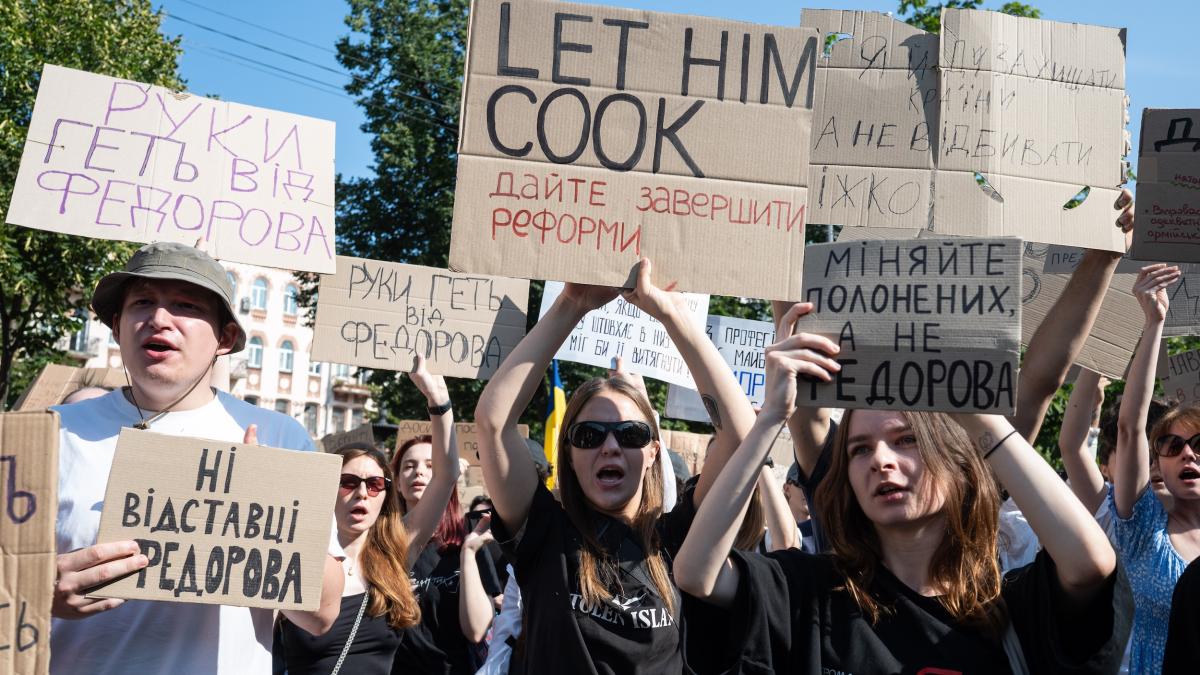
The war in Ukraine has been ongoing for four and a half years, and the situation has shifted this year, with Ukrainian forces showing signs of recovery. A key factor has been the success of Ukraine’s 'drone swarm long-range strike' tactics, coupled with growing domestic energy and livelihood pressures within Russia.
However, Ukraine recently underwent a cabinet reshuffle. After the Prime Minister resigned, Defense Minister Fedorov was unexpectedly 'asked to resign.' This is surprising because Fedorov had only taken office in January and was the architect behind replacing heavy armor with drones and shifting from frontal assaults to targeting enemy logistics networks.
Many analysts point to 'operational doctrine disagreements' between Fedorov and several senior military leaders as the main reason for his removal. One key point of contention is whether his 'robotic warfare vision is too idealistic' versus the belief that 'infantry combat remains indispensable.' The leading figure among these senior generals is Ukrainian Commander-in-Chief Syrskyi, making this appear to be a classic case of civil-military friction, with Zelenskyy choosing to side with Syrskyi.
Yet other analyses suggest the conflict stems from 'military procurement reform,' particularly digital transformation aimed at increasing transparency in supply distribution and logistics. This shifts the issue beyond mere tactical differences between drones and infantry, touching on entrenched interests. Thus, Zelenskyy’s decision will critically shape the future of the war, and understanding his motivations is paramount.
During the Qing Dynasty, the Taiping Rebellion initially advanced rapidly, crossing the Yangtze River and shaking Beijing. The Qing’s Eight Banners were outdated, and the Green Standard Army was corrupt. Only local militias, organized to 'protect home and village,' held the line. Hubei Province was the most devastated, with three successive governors killed in action. Hu Linyi stepped into this crisis as the new governor of Hubei. His first move was to reconcile with Guanwen, the Viceroy of Huguang. Guanwen, a Manchu official, had technically obstructed previous governors, paralyzing their efforts.
Hu Linyi threw a lavish birthday celebration for Guanwen’s favorite concubine, giving him full face. The concubine then lobbied Guanwen nightly, leading him to stop obstructing Hu. He handed over full military and civil authority, reserving only formal approval. Meanwhile, Hu treated Guanwen with outward respect, yielded benefits when possible, and listed Guanwen’s name first in official reports.
With Guanwen aligned, Hu Linyi implemented sweeping reforms: cleaning up bureaucracy, increasing tax revenue through the likin system, eliminating land tax abuses, suppressing bandits, and raising and training local troops. Hubei quickly stabilized. The provincial treasury recorded a surplus of 4 million taels in one year. Historical records state: 'Within a few years, food and troops were sufficient; the entire southeastern front quietly pivoted on Hubei.' This cooperation was called 'unity between governor and viceroy,' and bureaucratic integrity was seen as 'the foundation of military funding.' Ukraine’s situation follows the same logic—the difference being that the one who must enact change is not Hu Linyi, but Zelenskyy.
In other words, if Zelenskyy supported the senior generals due to 'ideological differences,' as president, he should have mediated to align the new defense minister and the old-guard commander, forging a winning strategy. That would bode well for Ukraine’s future. But if the dismissal stemmed from Fedorov’s reforms threatening entrenched interests, and Zelenskyy chose to side with 'no reform,' this is a fundamental problem. The recent favorable conditions may not last.
FACT BOX
- Source: PR Times
- Category: News