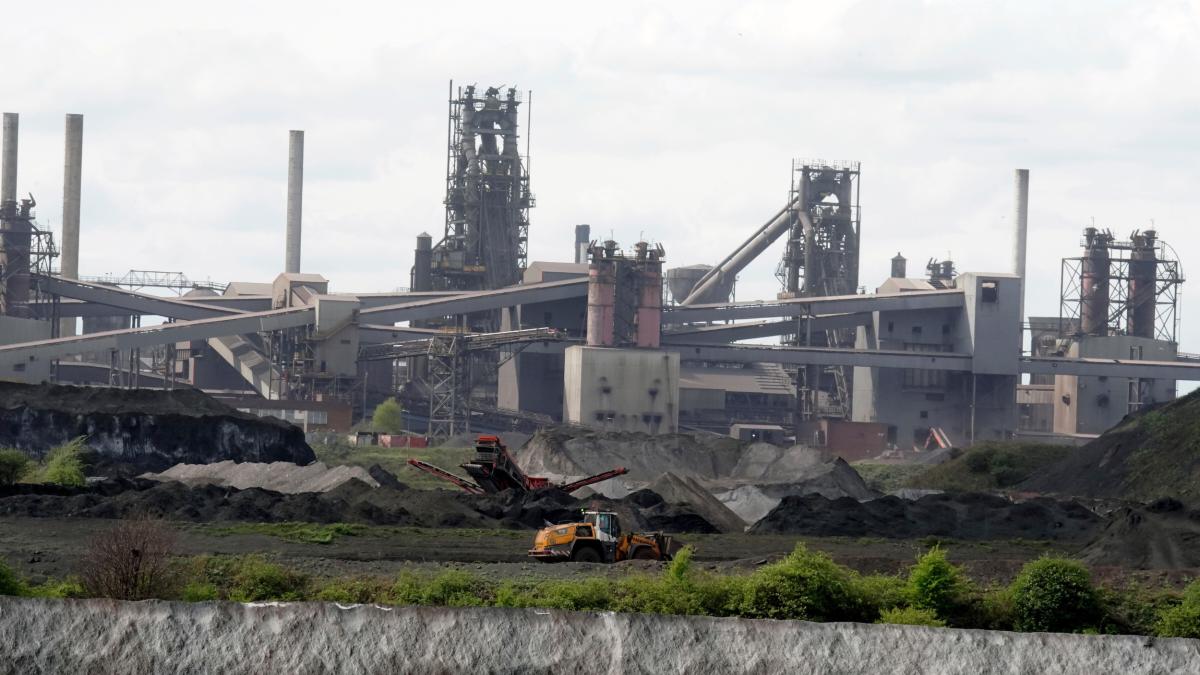
On July 16, the UK government, through legislative procedures, invoked the recently passed Steel Industry (Nationalisation) Act in the House of Commons to initiate the nationalization of British Steel Limited—a steel plant in Scunthorpe capable of producing crude steel and various finished steel products, invested in by China's private steel conglomerate, Jingye Group. Prime Minister Keir Starmer, before stepping down, publicly declared the move was justified on grounds of national interest.
Interpretations of this case vary widely among professional communities. From a business and profitability standpoint, the declining competitiveness of British Steel and the broader UK steel industry is an undeniable fact. Had British Steel been financially sound and self-sustaining, the UK government would not have approved Jingye Group’s acquisition in 2020, effectively handing over a profitable asset.
After taking over operations, Jingye Group sought to rebuild the company’s industrial competitiveness through equipment upgrades, workforce optimization, structural reforms, and environmental transformation. However, repeated disputes with the UK government during this restructuring process culminated in 2025 with the government seizing operational control via public authority, now bearing daily losses of up to one million pounds to keep production facilities running.
Now, through formal legislation, the UK government has officially confronted Jingye Group, acquiring ownership under the guise of nationalization. Compensation to Jingye Group will be assessed by an independent body. Nevertheless, Beijing’s Foreign Ministry immediately expressed objections, asserting that nationalization infringes on Jingye Group’s legitimate rights and warning that the move severely undermines Chinese confidence in investing in the UK.
A closer look at British Steel’s history reveals a complex evolution—from its origins as British Steel plc, to acquisition by Tata Steel Europe and merger with the Dutch Koninklijke Hoogovens, and finally its separation into the current British Steel Limited. This journey involved multiple transformations, including transfers, mergers, nationalizations, and privatizations. Thus, the current crisis did not arise overnight.
It must be acknowledged that British Steel has long suffered from structural weaknesses. Compounded by the UK’s broader steel and manufacturing sector downturn, repeated strategic and regulatory disputes between Jingye Group and the UK government ultimately forced the government to intervene. Whether this intervention truly reflects London’s strategic necessity on national security grounds remains highly debatable.
Officially, the UK government claims its intervention via nationalization is based on strategic considerations such as national security, economic resilience, supply chain safety, and environmental transition. Some political analysts and strategic commentators further link this to recent UK actions—excluding Huawei from 5G infrastructure, demanding Chinese capital divest from Newport Wafer Fab, and requiring China General Nuclear Power Group to exit the Sizewell C nuclear project—suggesting a broader strategy to gradually decouple critical infrastructure from Chinese capital and technology.
In reality, Jingye Group itself has faced prior failures in steel investments. In early 2020, it took over Yongchang Steel in Anning, Yunnan, restarting production, but by 2024, it failed to overcome operational hurdles, leading to bankruptcy, liquidation, and permanent shutdown. Thus, government intervention may allow Jingye Group to exit a failing operation—a painful but potentially less damaging outcome than prolonged failure.
Is nationalizing British Steel truly a matter of national security? Does government control over the plant’s capacity carry strategic significance? First, the plant’s regular production capacity is negligible compared to the UK’s ongoing steel imports in volume and quality. Second, its product range cannot meet the specialized steel requirements for military systems, weapons, platforms, or infrastructure. Moreover, if the plant were truly a critical supplier to the UK’s defense industry, why would it have ever been entrusted to a Chinese company in the first place?
The UK government has repeatedly blocked Chinese firms from domestic infrastructure projects. Some cases are based on technological concerns, but others involve capital investments with no operational control and no technological linkage—yet still demand divestment. This reveals London’s policy volatility, caught between Washington’s pressure to exclude Chinese capital and the UK’s own economic and industrial needs.
Blocking Chinese outward investment and expansion under the banner of national security is a strategic tool used by Washington in its rivalry with Beijing. While this diplomatic pressure forces many countries to push back Chinese capital and reject related technologies, it also inflicts collateral damage on their own economies and societies.
Sometimes, Chinese firms fail in overseas acquisitions due to operational mismanagement, not necessarily because of policy interference by host governments. Each case must be examined in detail, considering the company’s internal health and external environment. Business leaders are not fools throwing money into water—while profits and losses are inherent in commerce, it is ironic that a veteran capitalist empire, which routinely criticizes socialist state-owned enterprises for violating economic principles, is now resorting to nationalization to solve its problems. The universe has a sense of humor—the critics are now the ones being criticized. What goes around truly comes around.
*The author is a senior researcher at the Chinese Strategic Studies Institute.
FACT BOX
- Source: PR Times
- Category: News
- Organizations: TaTa Steel Europe / Koninklijke Hoogovens