Soybean salad oil produced by Chung Lien Oils was found to contain benzopyrene, a carcinogenic substance, at levels exceeding the safety standard by four times. The contaminated oil has entered the market, affecting an increasing number of downstream food businesses and triggering public panic.
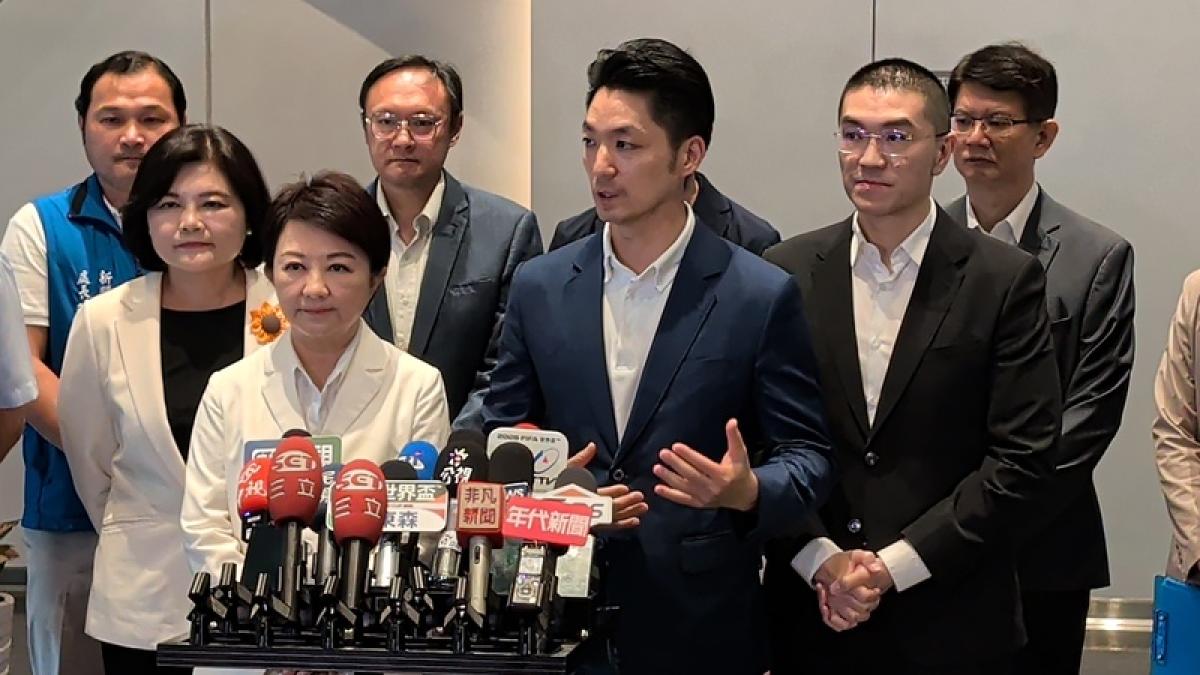
On the 19th, Taipei Mayor Chiang Wan-an, Keelung Mayor Hsieh Kuo-liang, and Yunlin County Magistrate Chang Li-shan gathered in Taichung to meet with Mayor Lu Shiow-yen. The group announced a joint decision to convene a 'county and city mayors’ Anti-Toxic Oil Online National Conference' this week.
In response, Professor Niou Tse-hsün of Chinese Culture University analyzed the situation in a Facebook post, stating this marks a major follow-up to Chiang Wan-an’s call for the July 25th 'March on Ketagalan Boulevard,' and signals the formation of the KMT's 'Anti-Toxic Oil F4.' He argues that this coordinated 'anti-toxic oil' campaign offers the KMT four key strategic advantages, placing significant political pressure on the Lai administration.
First, it accumulates powerful momentum for a 'local encirclement of the central government.' With KMT-led counties and cities accounting for roughly two-thirds of Taiwan’s municipalities, the F4’s call is prompting more KMT-affiliated mayors and magistrates to voice support. For example, Chiayi Mayor Huang Min-hui has announced her participation in both the July 25 march and the online national conference. New Taipei mayoral candidate Lee Szu-chuan and Kaohsiung mayoral candidate Ko Chih-en have also voiced support, while Taoyuan Mayor Chang Shan-cheng has not ruled out joining street protests. As more KMT mayors and candidates continue to express support for street actions or the online conference, the 'local encirclement of the central government' dynamic will intensify, increasing pressure on the Lai administration.
Second, it places Green camp mayors and candidates in an awkward dilemma. The F4’s call for a national conference forces Green camp leaders to decide whether to participate. If they join, they enter a battlefield set by the Blue camp. If they decline, they risk being accused of indifference and inaction on a toxic oil crisis. Either way, they face political backlash. Moreover, Green camp mayoral candidates face a major challenge in how to respond. Food safety is a top public concern. If candidates dismiss the issue as mere 'political manipulation' without actively addressing food safety, the public is unlikely to accept such an explanation.
Third, it expands the frontlines and strengthens mobilization for the July 25 march. Mobilizing large crowds within a week is a major challenge. By continuously driving the narrative—such as the F4’s meeting in Taichung and the call for a mayoral online conference—the issue remains in the public eye, sustaining momentum and increasing public engagement. This strategy aims to boost turnout for the July 25 demonstration.
Fourth, it demonstrates the KMT mayors’ determination to safeguard food safety while establishing a multifaceted attack strategy. For instance, Keelung Mayor Hsieh Kuo-liang emphasized protecting Keelung’s street food and night market culture, while criticizing Deputy Health Minister Lin Ching-i’s comment discouraging people from eating fried chicken cutlets. Hsieh argued that food safety concerns should not lead officials to tell the public to stop eating fried foods, linking the government’s perceived lack of empathy to the Blue camp’s attack narrative.
Chiayi Mayor Huang Min-hui proposed three demands: strict source regulation, transparent information disclosure, and assistance for vendors and consumers seeking compensation. Chang Li-shan criticized government officials for their 'arrogant attitude.' These mayoral statements help build a comprehensive offensive, forcing the Green camp into a defensive and reactive posture. By focusing on food safety—a highly sensitive public issue—the KMT is extending the conflict and creating a wide-ranging political firestorm.
Additional exclusive reports from Storm Media: - FDA reveals 257 downstream companies affected by carcinogenic oil; 'famous businesses' listed, sparking outrage: 'No wonder they tried to cover it up immediately' - Convenience store onigiri and hot pot ingredients contaminated! List of carcinogenic oil products revealed; one person compiles top 10 well-known items, shocked: 'I eat these almost daily' - After carcinogenic oil, imported 'poisonous apples'? Someone reveals pesticide residue limits relaxed sixfold, lamenting: 'Taiwanese livers must be tougher'
FACT BOX
- Source: PR Times
- Category: News